


Paying subscribers can listen to me reading this here


Every time I go through an airport, I’m reminded that they are condensed microcosms of the worst parts of global capitalism. We’re herded through body-scanning surveillance checkpoints before being steered into the scented consumerism of perfume alley. The rich peel off into the flagship stores to browse the Rolexes and Chanel bags before retreating into the hidden airport lounges. From these luxury bunkers they can look down on all the economy-class commoners getting price-gouged by the chain restaurants.
Sitting in one of those chains, I’m also reminded of the stark division between workers and bosses in our system. The branded uniform of my waiter marks him out as an appendage of some larger entity that owns his time. In my piece Bufferland, I explored how these service staff are used as an emotional shock-absorber - a buffer - to absorb all the frustration of distressed customers so that conspicuously absent managers and shareholders will never have to experience it.

From their distant perches, bosses seek to cut costs and raise prices if they can. This inevitably leads to tension between frontline workers and customers, who are the ones left to deal with the lived reality of that. In this crowded airport, stressy flyers and stressy staff encounter each other in restaurants and boarding gates, while - sitting in the comfort of the world’s 5-star lounges - the major shareholders scrape the residual profit from that without having to experience the angst of either side.
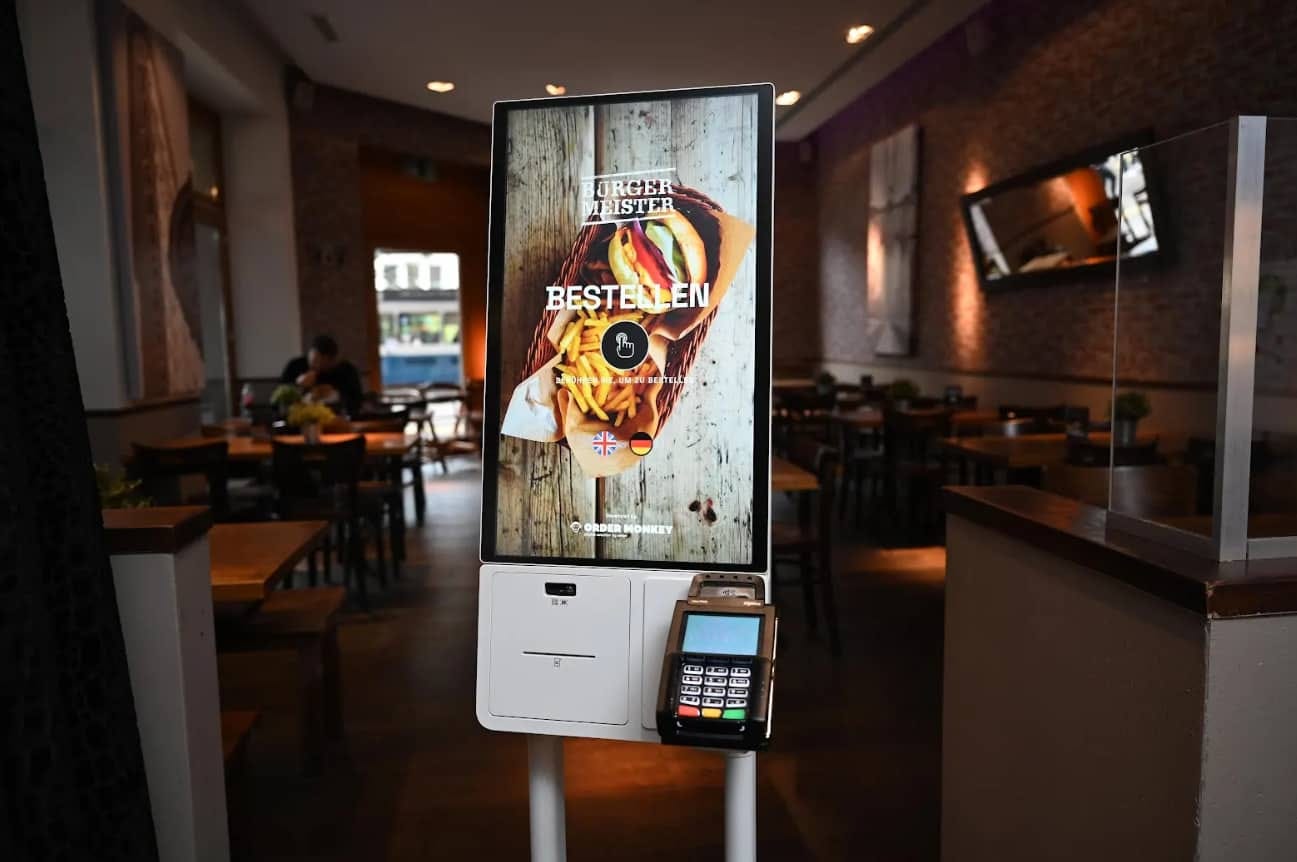
Despite their invisibility, the mark of these bosses is everywhere. I see their decisions in all the automation tech pushed out to enshittify the customer experience under the guise of convenience. Almost every chain restaurant in a London airport now has a touchscreen self-service system, or a QR code on the table for ordering via your phone. These are no longer optional, and their purpose is not to make your life easier. Their purpose is to reduce the amount of labour the corporation has to buy. After all, self-service means that you now get to do the service.
Over time, it’s cheaper for bosses to buy machines than to hire people, so that’s what they will do like clockwork. The automation spreads, not because there’s some great upwelling of human desire for it, but rather because it’s the default path of least resistance in our economic system. Like a gravity well that pulls you in, it only takes effort to go against automation.

So, when the senior managers of a restaurant chain take the decision to start buying self-service kiosks they’re not being ‘innovative’. They’re simply slavishly following the expected path to optimise profits. This inherent systemic tendency for bosses-as-a-class to foist automation tech at consumers-as-a-class means the latter largely has nowhere to escape to and no choice but to comply. The customer might grumble about it at first, but eventually they’ll have to release resistance and just go along with the touchscreens, after which they will slowly forget what it was like before and come to expect the tech. For the kids who are born into it, they will know nothing else.
The end result of this is that people slump into a loveless marriage with all the self-service machines. They vaguely think that maybe this marriage was the result of their desire, but they cannot recall any point in time when some active choice was made to get engaged. That’s because there wasn’t a point in time when a choice was made. The economic system simply defaulted to this.
Nevertheless, the senior bosses of firms do loosely have to think about how to introduce new waves of automation without antagonising customers too much (at least at first). That’s why the management of Goodman and Filippo - an Italian restaurant chain here at Frankfurt Airport - have decided to buy a machine with a cat face and ears.
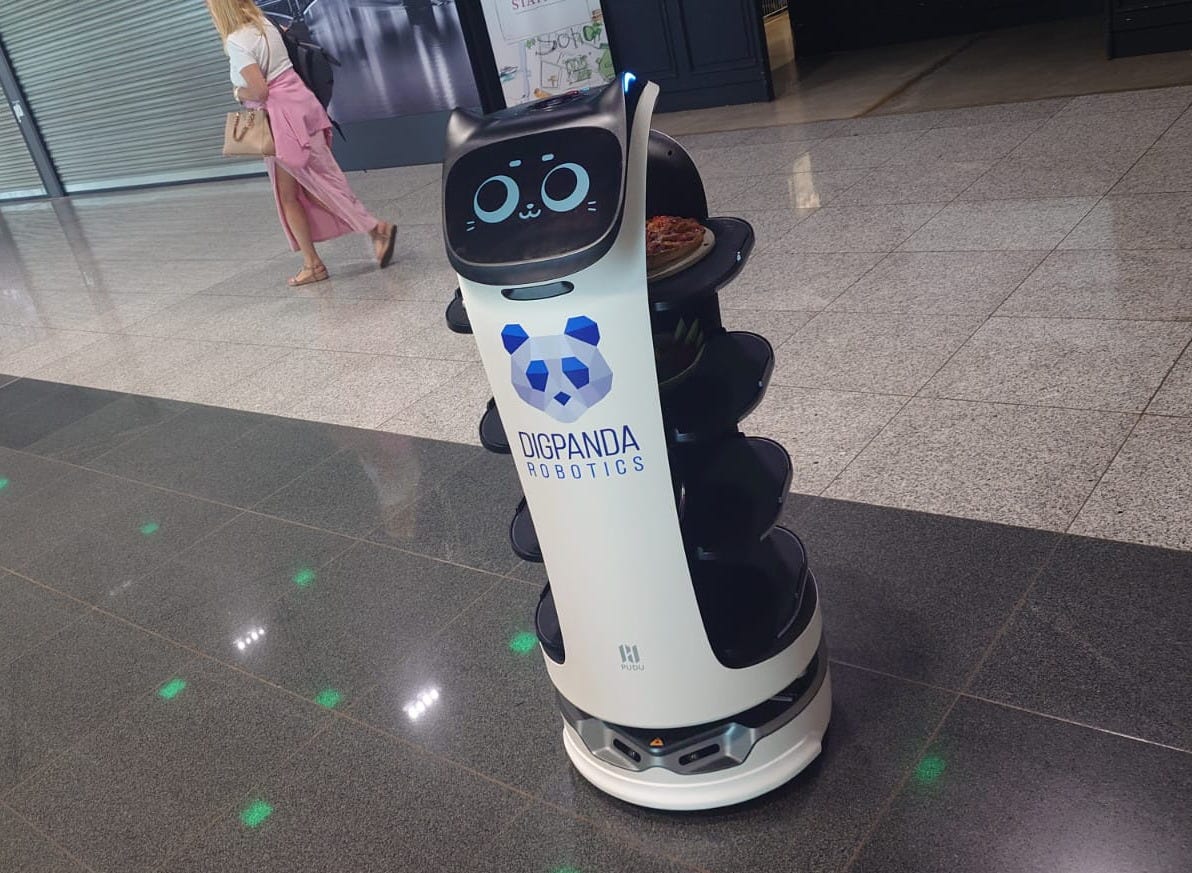
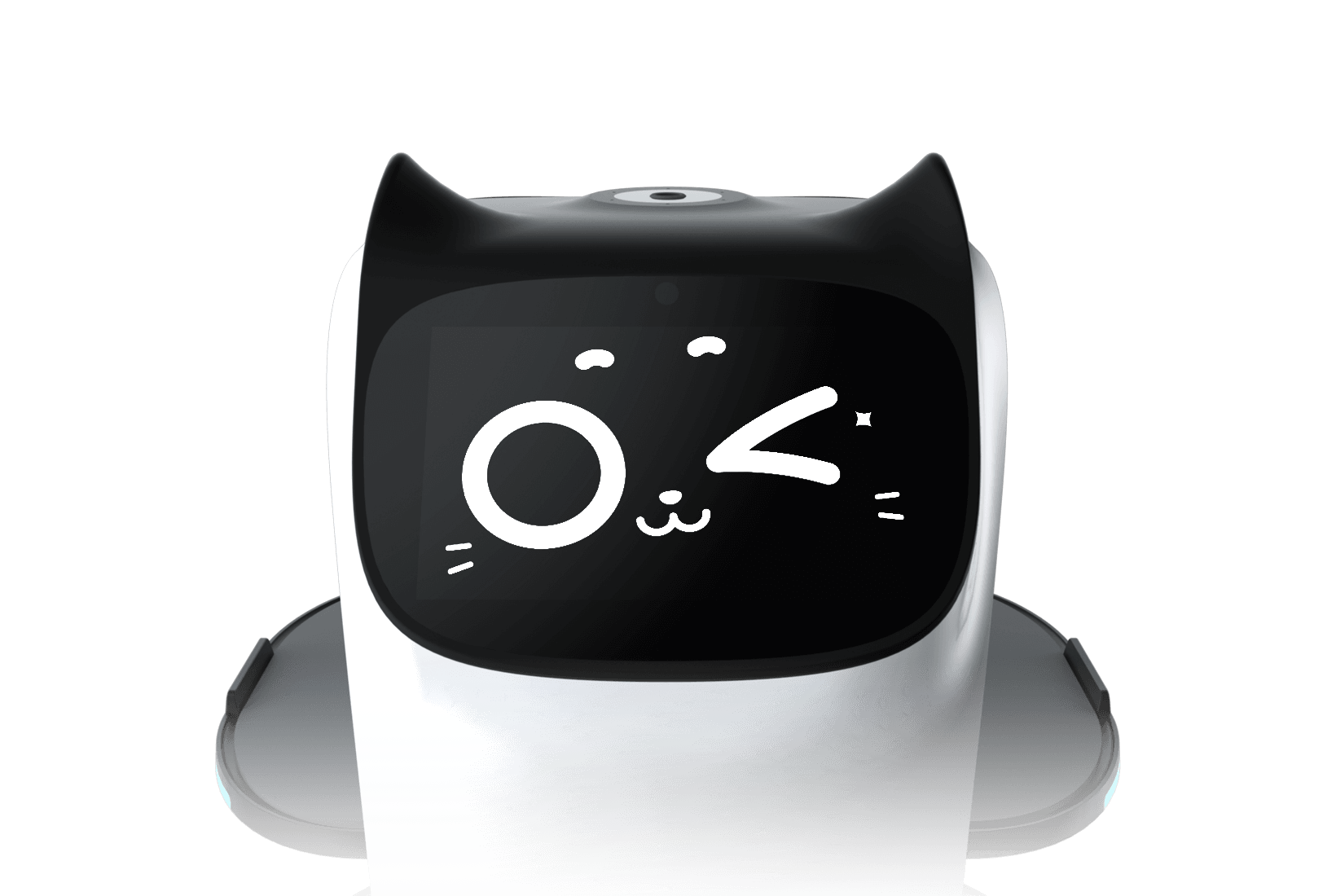
The machine is a motorised tray delivery system that carries pizzas from the kitchen to the dining area. It’s an automated waiter. It is the BellaBot Pro from Digpanda Robotics. It’s a machine programmed to pretend to not be a machine, primarily by having big doughy eyes on its screen and a cutesy digital voice. I hear its speakers playing stock messages like, “Here I am! Please take your plate from my tray” and “Dear guest, your meal is ready.”
Its use of first-person pronouns irritates the shit out of me, but that’s also because I can be a dark existential type of person. I imagine the engineers programming it to appear ‘warm’. This simulacrum of friendliness inspires warlike feelings in me.
Not everyone is having this response though. I notice that kids are laughing and pointing at it and that their dads are taking videos of it with big grins. It is a novelty after all.
It occurs to me how disturbingly easy it is to hack our brains. We have an ancient faculty for recognising faces, forged in the prehistoric wilderness. Now, a motorised computer with shelves and a speaker gets mistaken for a sentient being simply because it has cartoon eyes and a smile.
My inner animist finds this arbitrary. If it’s true that computers have feelings, then they should all be given equal amounts of affection, regardless of whether they have a face pasted over them (hell, why stop at computers, why not recognise the feelings of the table and chairs and menu?) Nevertheless, the payments terminals and screens showing the flights are receiving no love, because they’re not programmed with fake emotional responses, like the shy blush that BellaBot Pro gives when you wave at it.
As with all automation technology, the novelty of BellaBot will wear off once society becomes dependent upon such machines. After all, a ‘novelty’ is something that can cause delight but which is not required. The Internet, for example, was novel in the 1970s. It was something that could cause wonder and make people point, but that’s only because nobody’s life depended on it back then.
Now, however, the Internet is dark, precisely because it holds your entire life hostage, and because everything around you will fall apart if it stops. We got sucked into its proverbial gravity well, a process during which the entire economy recalibrated into total dependence upon it, which means we now cannot escape it.
So, in a future world where these bots are the only means of service, the programmed smiley faces will bring us no more joy, and the emptiness in the voices will ring loud. For now, though, I see a family cracking up with laughter after their daughter pats BellaBot on the head, and it says: ‘Don’t touch my ears!’
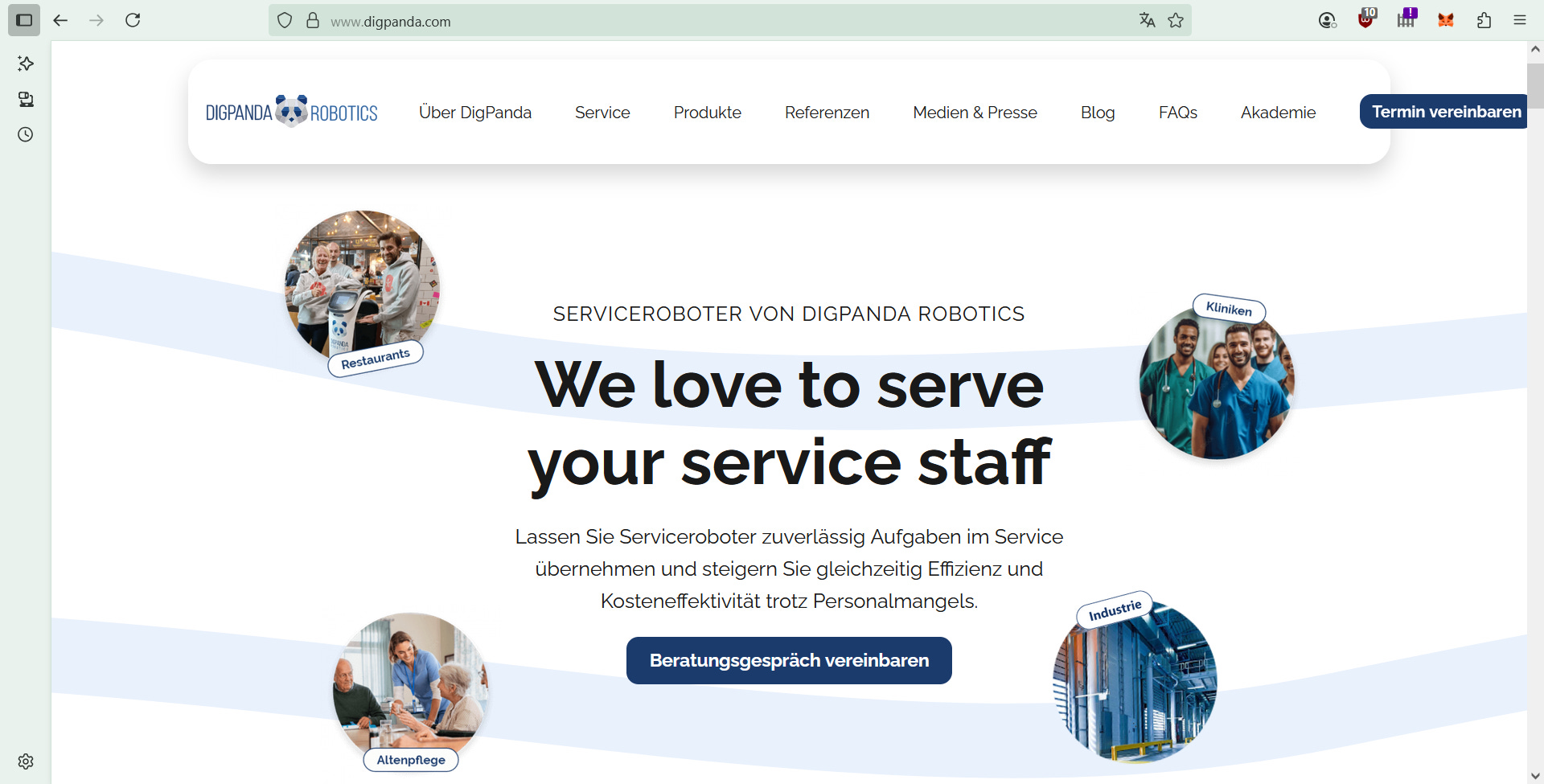
On its website, Digpanda Robotics claims to ‘serve your service staff’. That’s a classic piece of corporate spin, because of course the purpose of the BellaBot is to reduce the need for service staff. A Bellabot Pro costs €14,250 ($16,500). Company bosses are not laying out such sums to do their staff a favour.
The spin has a perverse logic though. It is true that if a boss fired half of their staff without buying the machine, the remaining staff would have to do double the amount of work, so, from some twisted perspective, buying the machine does ‘help’ the survivors. It stands in for their old colleagues.
There’s something particularly grim in this restaurant. Families are take selfies with the machine while an actual waiter stands unnoticed in the background, receiving no pats on the head. He finds himself not only an appendage of this chain, but bound as an unwilling caretaker of the BellaBot, a machine that’s in fact not very helpful at all.
I know this, because I ask him. There’s a bitter streak in his voice - a real voice - when he tells me that the robot doesn’t make his job easier. In fact, it’s obvious to see that it makes his life harder. It keeps getting stuck in the aisles - reversing backwards and forwards like a small lorry trying to negotiate a corner - and repeating the same phrase over and over again in its plastic voice.
Once you’ve been in the restaurant for more than half an hour you start to realise that BellaBot’s human touch is gratingly thin, especially as it seems to only have about five stock phrases. This man, however, has to spend his entire eight-hour shift listening to that same automated laugh on repeat hundreds of times. It probably classes as some form of torture under the Geneva Convention.
I imagine him fantasising about smashing that automated waiter in its furry little face. It would be a symbolic way of lashing out at the faceless shareholders that made the decision to acquire it, and who instructed him to humiliate himself by helping it around, facilitating a machine whose explicit purpose is to eventually make him redundant.
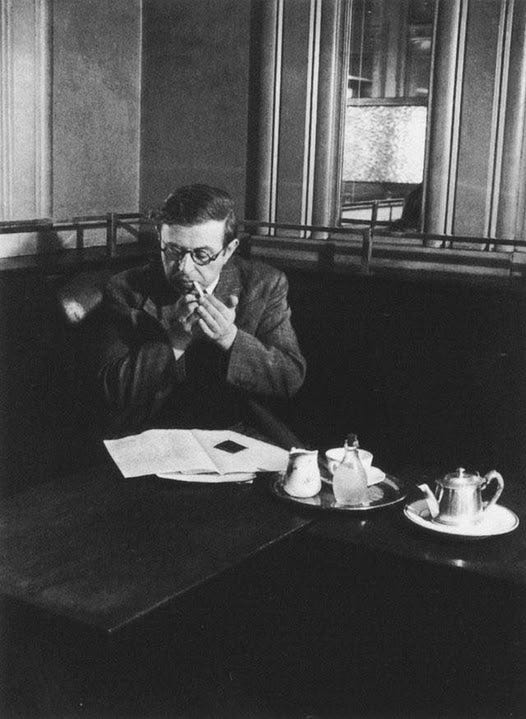
Being the moody existentialist that I am, I think about the French philosopher Jean Paul Sartre and his story of the waiter. Existentialist types like to sit in cafes and make observations about the world, but back in the 1940s when Sartre was doing this, his attention focused on the figure of the waiter who behaved too much like a waiter.
Much like the urban yuppie who buys all the gear to look like The Hiker, or the amateur who clads themselves in Lycra to conform to the image of The Cyclist, the person bringing Sartre his coffee would mould themselves into the outlines of some stock character called The Waiter. To Sartre, their gestures, voice and movement felt staged. Rather than seeing themselves as a subject with radical freedom, the person was treating themselves like an object.
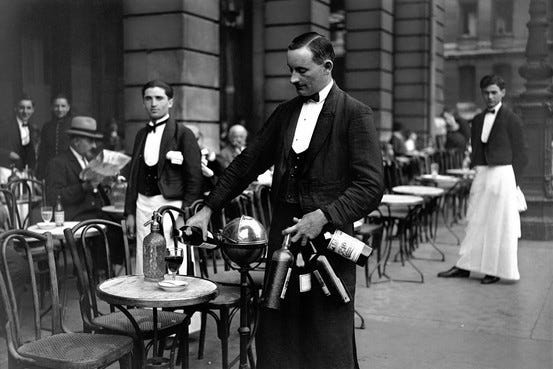
Sartre felt this was inauthentic, and he referred to this phenomenon of denying your own subjectivity as ‘Bad Faith’. Picture him saying “Just be yourself man! You’re not a Waiter, you’re a radically free human being!”
I wonder what Sartre would think now, however. My human waiter might still be acting out the part of The Waiter, but he’s 100% more authentic in his bad faith than this fucking machine put here by the capitalist class. In fact, while he plays out his part, my man is proud, trying to hold onto his dignity.
That dignity is tragically set against the fact that his distant bosses will not know his name, but will know the name of this robot, and will value it more. In fact, for a long time now, corporations have wanted their human employees to behave more like robots - obedient, unquestioning - and for their robots to behave more like humans - warm, approachable. We see this most starkly in call centres, where the radical freedom of a human employee is shut down by scripts that they cannot veer far from, while the AI bots that are replacing them are increasingly designed to handle open-ended free-form conversations.
The key difference between workers and robots is that it’s only the former who need to take toilet breaks, and only the former who harbour feelings of rebellion and who might join a union. Machines require an initial outlay, but are often cheaper and more predictable in the long term. Buying a machine is like a buying a slave - you pay once - whereas buying increments of human labour power is an ongoing subscription, and one that’s more volatile.
So, bosses will find themselves browsing the brochures of the bot companies, calculating the return on investment over time.
There is something disgusting about that, but I don’t necessarily judge these decision-makers. After all, they don’t really perceive themselves as having any agency to do anything else. They are in a war against other bosses, so they must go with the gravity of our system and act out the automation drive like any other. They might be aware that BellaBot sucks, but they’ll get it anyway, and hope that somewhere some new startup is figuring out how to upgrade it with a more convincing voice and a larger library of stock phrases. Maybe, one day, there will be fully AI-driven Bellas that can hold entire conversations.
I look at my laptop. My dad has forwarded me a promotional email. He’s worried about my future given the proliferation of AI, so he thought it might be relevant:
In a world where AI is doing more and more of the thinking… the differentiator isn’t how smart you are.
It’s how human you are.
For years, relational skills were treated like the “nice to have.” Soft. Secondary. Optional. Not anymore. Now they’re the edge.
Can you truly listen? Can you empathise without rushing to fix? Do people feel safe, seen, and respected in your presence?
AI can analyse. It can prepare. It can even coach.
But it can’t show up.
It can’t sit across from someone and make them feel understood.
It can’t build trust through presence.
The email is from Justin Cohen, a motivational speaker and author of business self-help books. He’s on tour selling speeches about how to commodify and sell your human touch like a product to differentiate yourself in the market.
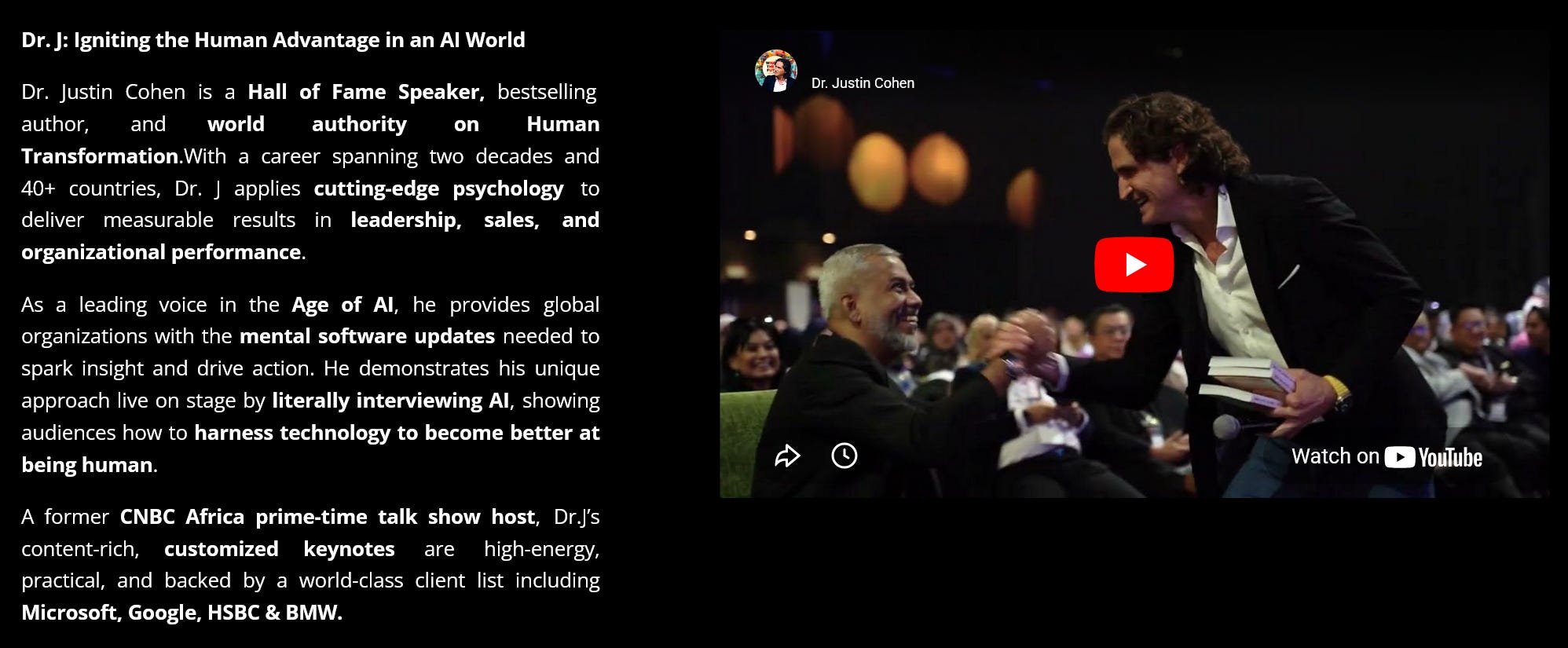
There’s big money to be made selling tips about how to survive in the future marketplace. People like Justin can get paid tens of thousands of dollars to appear on stage at the big business conferences, and he’s but one of many in this hustle. If we reversed time and went back a few hundred years, though, there wouldn’t be much need for keynotes like this, because capitalism was a much simpler game back then.
In the 1800s, in the old days of the industrial proletariat, workers sold their labour power to factory owners as a generic product. Over time, however, as industries and specialisation have skyrocketed, we’ve been asked to sell ever-more niche elements of our labour. In the eighties people would reach into themselves and find marketable hard skills and traits to commodify on CVs. Later, with the rise of isolated gig economy work, we were told to build a ‘personal brand’ and a social media presence. Now, in the age of AI, we’re being told to locate the essence of our humanity - the soft parts of us, not the hard skills - so that we can sell those.
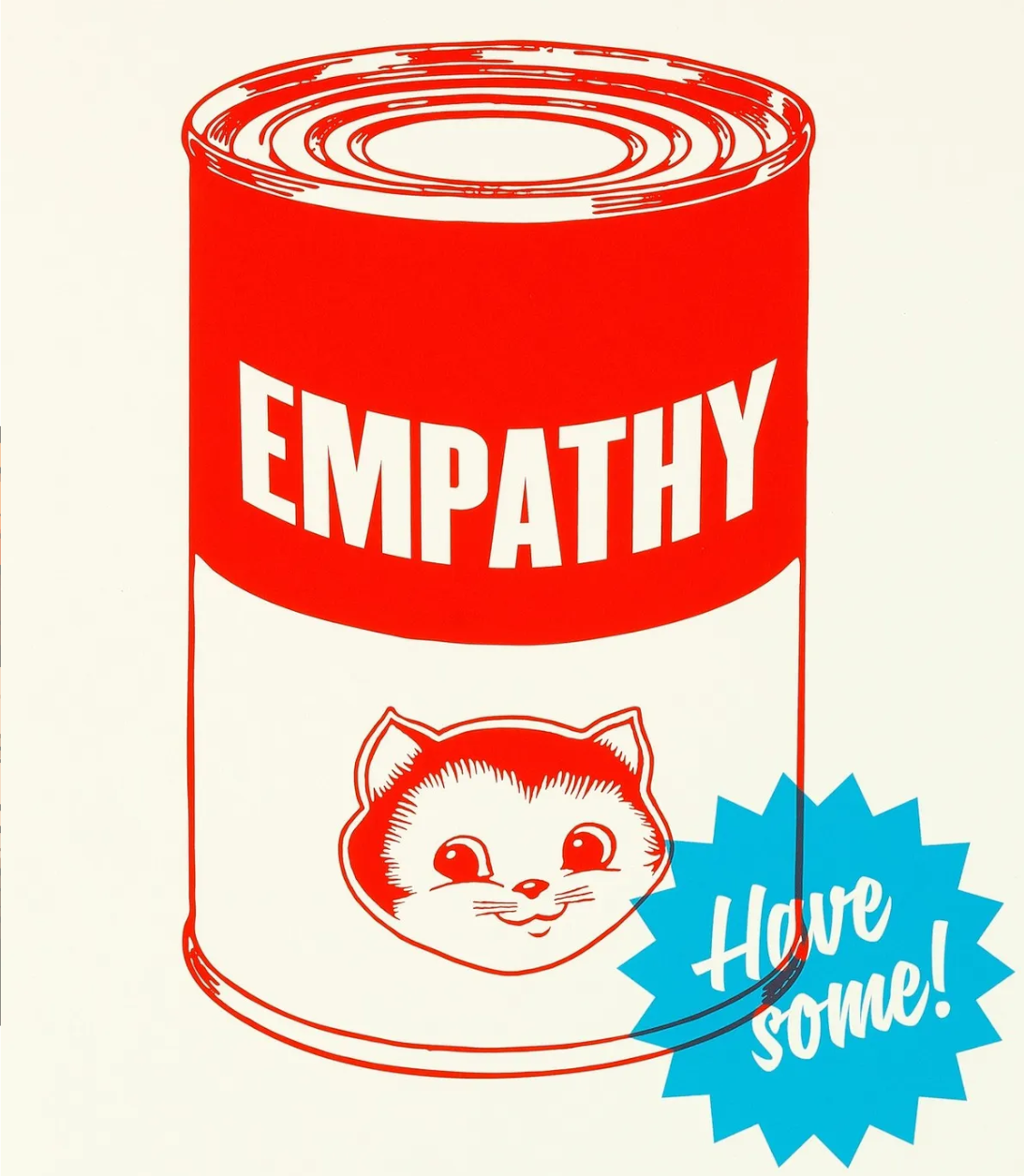
As Justin and many others will be arguing right now, you must lean into your humanity, package it, and present it as a sellable product.
All those old companies that used to boast about their edge in selling software-as-a-service must now pivot to selling humanity-as-a-service to differentiate themselves from the juggernauts of AI. Individual workers are being told to commodify their empathy, their listening skills, their stories about their kids and family, and anything that marks them out as not a machine.
As the territory of Mind gets taken over by the AI giants, Deep Humanity becomes the new product for the refugees. You are pushed to find this new commodity within yourself, and to haul it out like felled logs drawn from your inner, hidden rainforest.
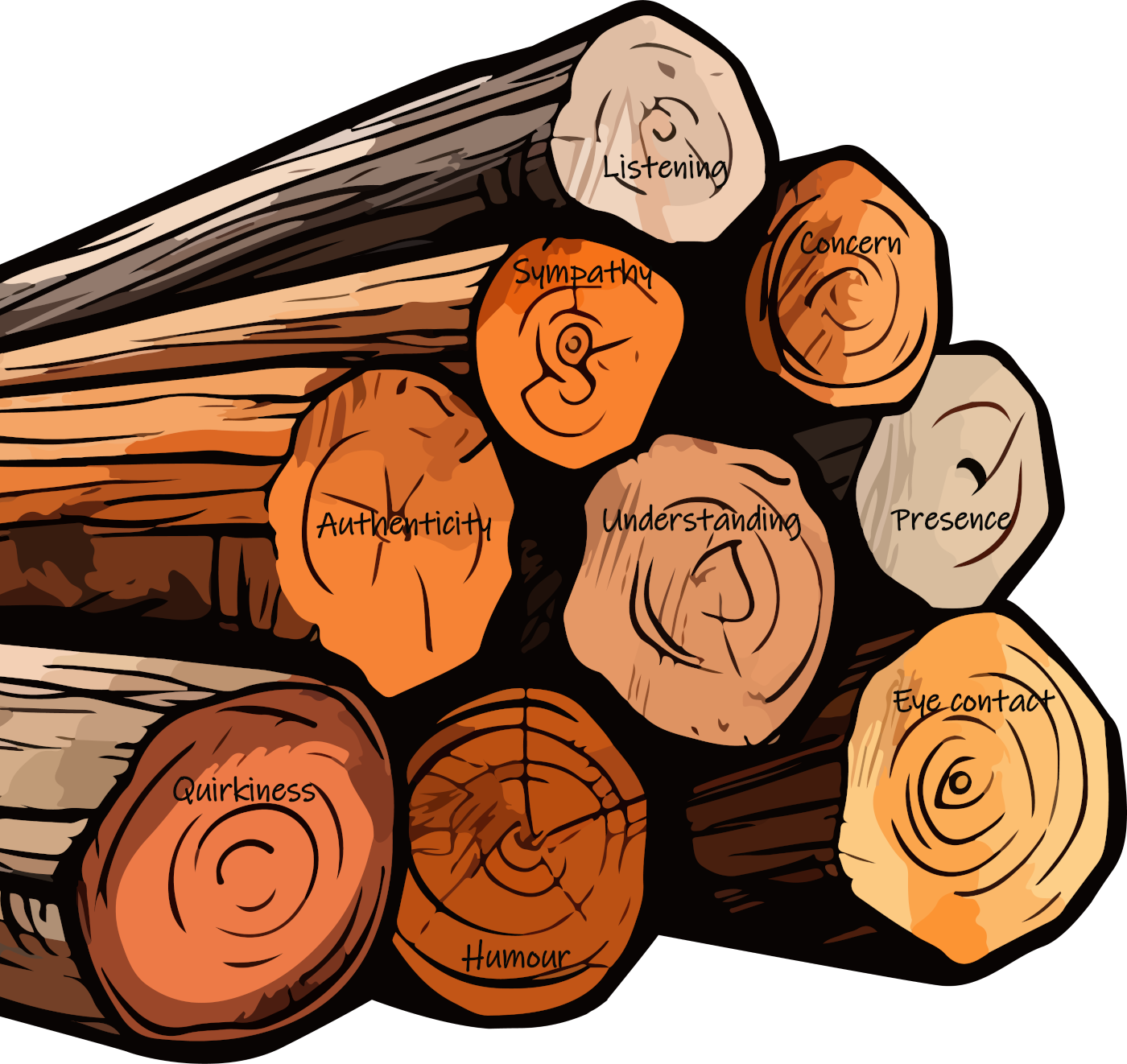
Ah, but like all frontiers of capitalism, beware. The default in our system is, firstly, to push people to create new commodities, but secondly, to cheapen their production. That latter process always eventually entails automation, to increase the scale and speed at which commodified units can be pumped out.
So, as you raid your inner humanity for a new market edge, the automators are right there behind you. They are studying your product, noting down the face gestures you make when empathetically listening, or the tones of voice you use when comforting someone. They are waiting to build a new machine that can streamline and speed up the production of these intangibles, and they are waiting to sell that to Digpanda, so that BellaBot can eventually sympathise with you if you’ve missed your flight.
This is why the Great Innovator Elon is dreaming about advanced humanoid robots. Like all servants of capitalism, he follows the pre-ordained path, which is to cheapen the production of the commodity, but he presents it as a visionary adventure undertaken by the inspiring and the bold. In reality, though, his bold thoughts are the human equivalent of a rock that drops to the floor in response to gravity - they go exactly where you’d expect them to go.
In fact, the entire venture capitalist class and startup sector are like this. I guarantee right now that all the Silicon Valley big-shots are getting hard-ons about funding some new group of data scientists, robotics grads and AI wizards to further simulate the human touch. They’re out there in all the incubation hubs with their pitch decks, dutifully laying out their latest plan to automate the commoditised world.
I leave a cash tip for my waiter, and as I walk out I take a photo of the BellaBot machine. I think about the VCs behind all these bots across the world. I imagine them popping champagne in their penthouses in Palo Alto, while my waiter goes home to his small rented flat on the outskirts of Frankfurt.
Thinking about those billionaires, my parting thought is, slow clap to you all.
"This simulacrum of friendliness inspires warlike feelings in me."
Oh, I feel you man!
Mind you, Substack makes me feel similarly, so maybe I've an even more violent soul ;)
I actively hate the "self-service" lines at my local stores, and always opt for the lines with An Actual Human. I'll succumb only when I have no alternative, at which point I will hate it even more. Don't be the person in line behind me at that juncture.