

The Scouring of Middle Earth
Why Tolkien would rename Palantir Technologies to Orthanc Inc.

Dearest ASOMOCO readers,
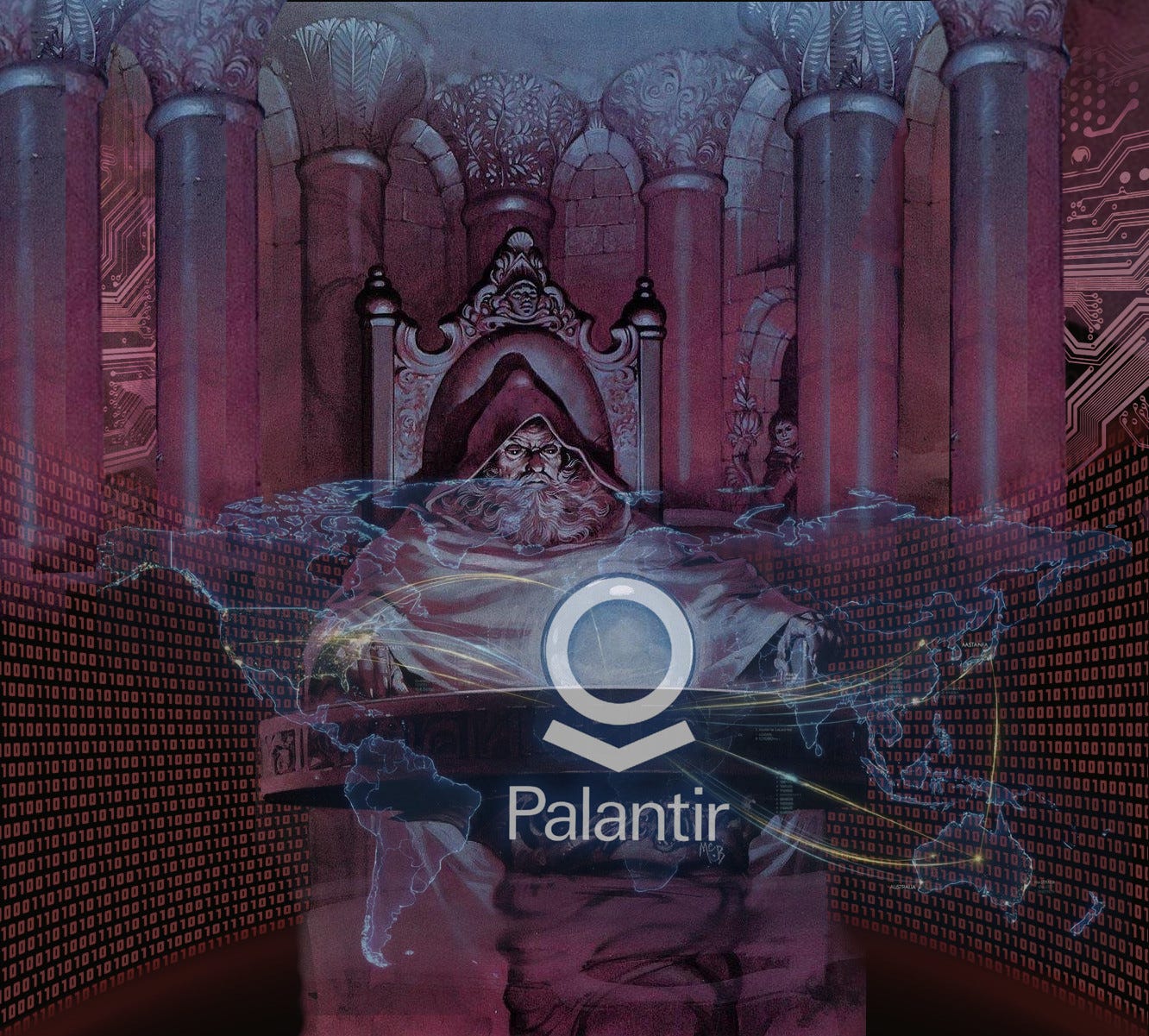
I have in recent weeks re-read J.R.R Tolkien’s The Lord of the Rings to compare its ethics to those of the Peter Thiel-backed military-AI companies Palantir and Anduril, which name themselves after magical artefacts from Middle Earth.
I open by explaining what these companies do. I then explore ten elements of Tolkien’s ethics, and conclude by comparing them to these Trump-associated companies.
It’s a big read, so if you’d prefer to listen to me reading it to you with a LOTR-inspired soundtrack, upgrade to a paid subscription and listen here.
You can find a free 6-minute preview of the audio here
19th century firms had three naming options. They could describe their activities - the American Fur Company - or could take on the title of their founders, like J.P. Morgan. The third path was to combine those into something like Carnegie Steel.
In the 20th century, though, companies increasingly took on metaphorical names. For example, in 1925 Caterpillar Inc named itself after the creepy-crawly mimicked by its tank-tread vehicles.
By the 1980s the adopted names became increasingly disconnected from activities. To a 19th century child, the word ‘Amazon’ meant misty rainforests, whereas a 21st century child imagines cardboard delivery boxes. Companies now extend this symbolic parasitism to the names of fruits - Apple - colours - Orange - and numbers - Three. Elon Musk’s X claims a whole letter. Alphabet claims them all.
Tesla and the biotech company Asimov have taken to grave-robbing the names of dead people, but increasingly companies raid the cultural treasure troves of science fiction and fantasy. Mark Zuckerberg wrenched Meta from Neil Stephenson’s ‘metaverse’, but the most exploited cultural mine is Middle Earth. It’s from this land, built in the imagination of J.R.R Tolkien and living on in ours, that Peter Thiel and his entourage have extracted Palantir, Anduril and Erebor.
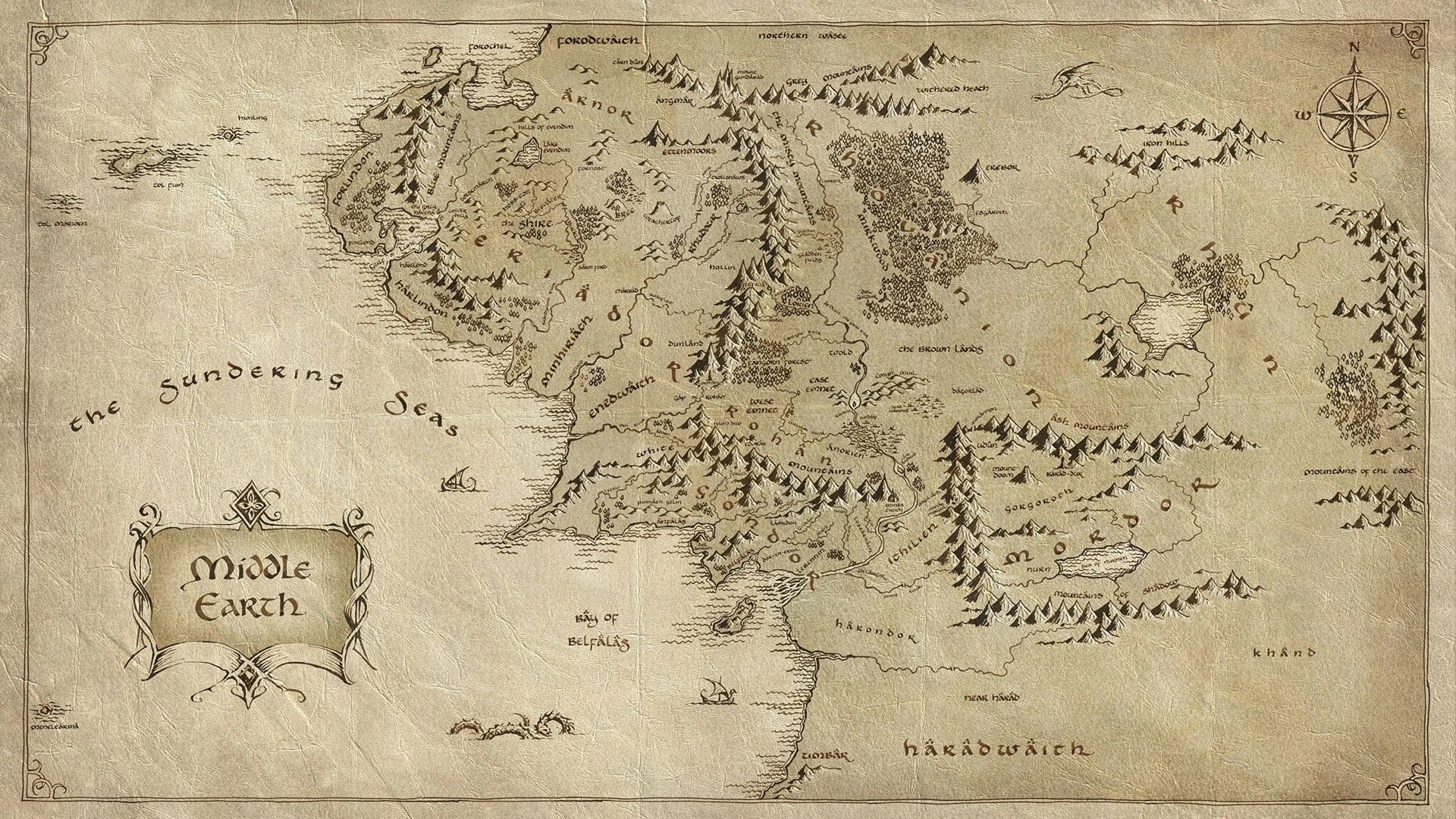
Let me offer Thiel a moment of empathy. I understand that he started life as a nerd, and perhaps imagined himself as a hero within a fantasy world to get through school bullying. I’ve experienced that. I read the Lord of the Rings when I was ten to escape the jock-filled reality of 1990s South Africa.
But let’s get one thing straight. If Palantir had been founded in the 19th century, they would have either called themselves The American AI Surveillance and War Company, or Thiel, Lonsdale, Cohen, Karp and Gettings Co. But, the 21st century gang names themselves after the ‘seeing stone’ found within The Lord of the Rings.
The palantír is a deeply ambiguous artefact in the Tolkien legendarium. There are seven palantíri in Middle Earth, each a powerful translucent ball enabling its holder to see across great distances and to communicate with other holders. These balls, however, also allow weaker users to be manipulated by stronger ones. The dark lord Sauron has captured one, and through it he corrupts the ‘white wizard’ Saruman, who also has one. Later it’s extracted from Saruman by the wizard Gandalf and passed to the hero Aragorn, who uses it to mess with Sauron. It’s half surveillance system, and half a psy-op device, used by forces of light and dark alike.
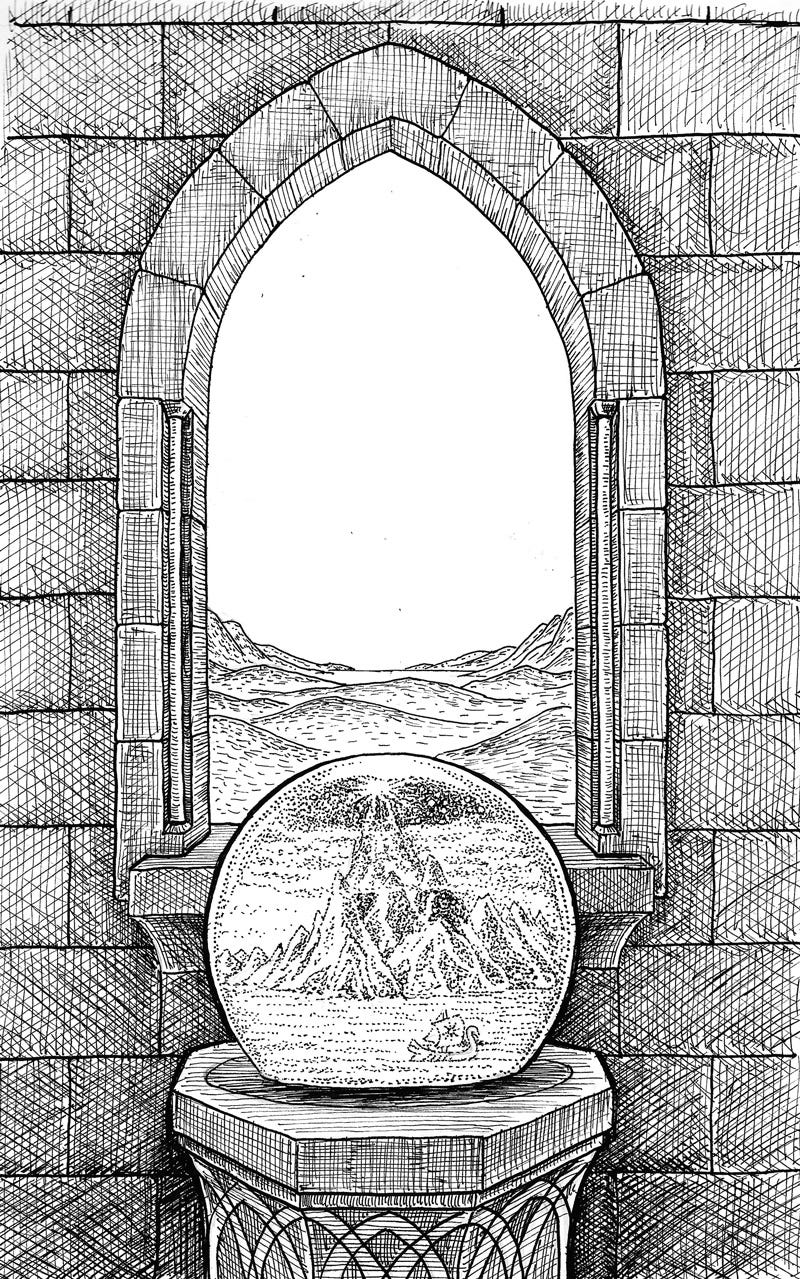
So, what do Palantir’s Peter Thiel, Joe Lonsdale and Alex Karp get by leeching off the imagery of this dangerous orb?
I once encountered Lonsdale when I was teaching at Singularity University in California in 2016. Set up by tech billionaires, the school brought in students from Asia, Africa and Latin America, fully funded by Google. Lonsdale arrived to give a fireside chat in which he laid out his vision for extending American hegemonic power, before talking about his role - alongside his mentor Thiel - in promoting seasteading, stateless settlements built on the oceans.
Lonsdale was smart but seemed arrogant, and several students noted to me that he creeped them out. Through African and Asian eyes, his mix of America-First jingoism and fantasy libertarianism was disconcerting. He seemed to believe in American Exceptionalism, that the US was a standard-bearer of Freedom that needed enhanced surveillance capacities to auto-delete its enemies. His company was making a fortune from government contracts, and he wasn’t going to give up his plush life to go live on the open oceans, but he liked the heroic story - the larp - of seasteading.
There was something macabre about this mix between fantasy larp and deathly reality. He described Palantir’s data surveillance products as promoting Freedom, yet their purpose was clearly to incarcerate people, eliminate them, or - in the corporate realm - to monitor employees. This eerie vibe turned up in the name of the firm’s primary product: Gotham.
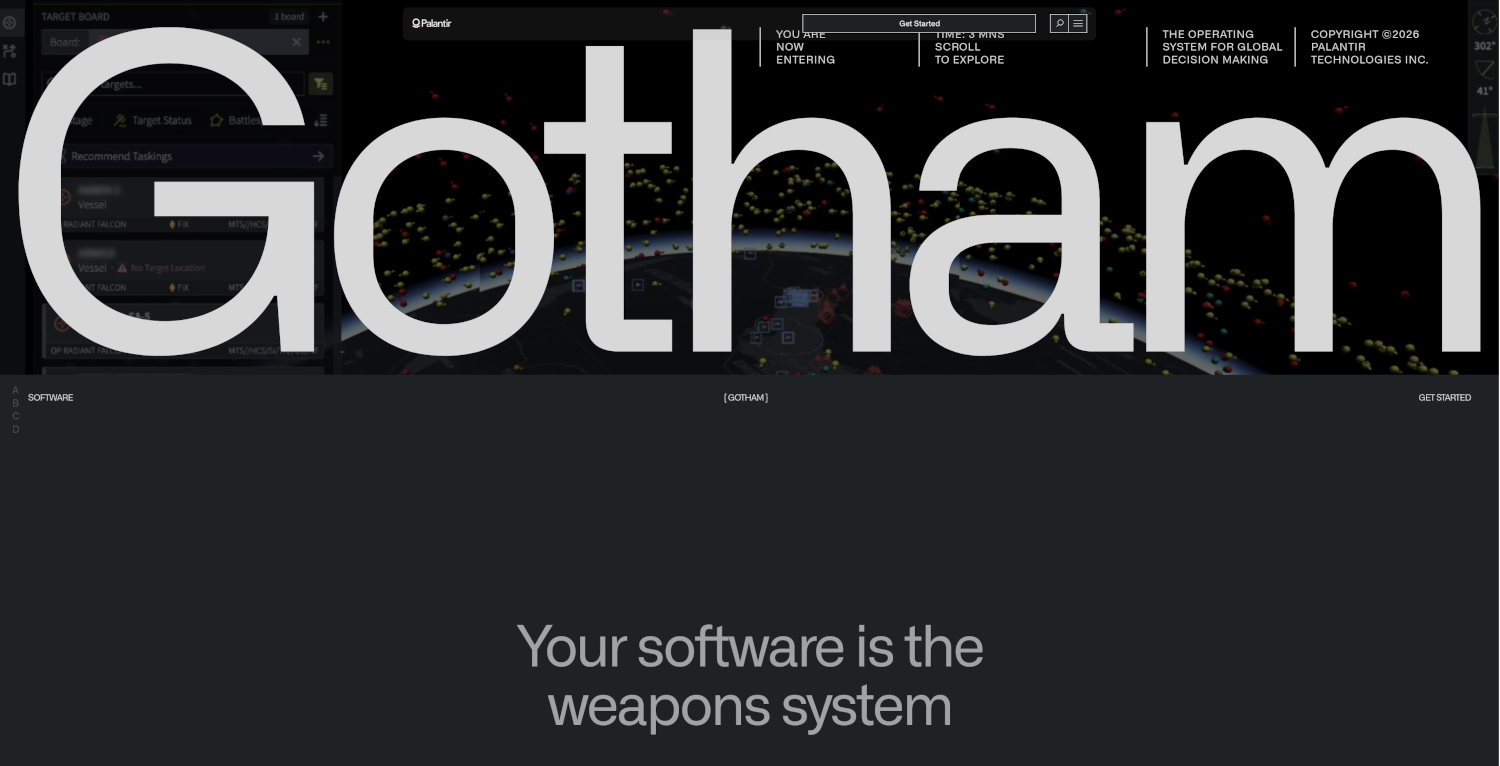
Gotham users, such as the FBI, ICE or US Army, are meant to picture themselves like Batman, bound to his lonely mission to clear out the trash in the crime-ridden city. Unlike the masked hero, however, the company now openly talks about killing, noting that the product ‘powers the kill chain’.
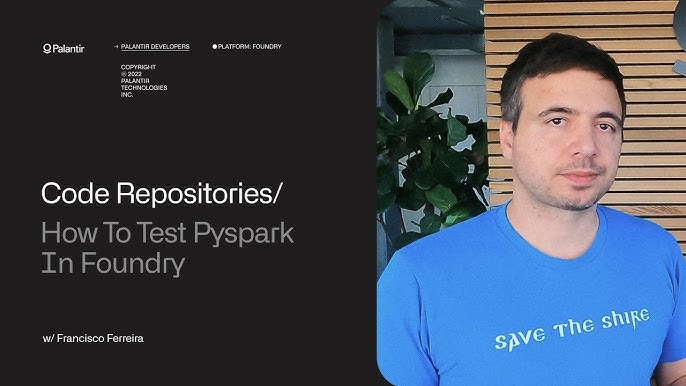
This dark image sits alongside the metaphor of Middle Earth. Palantir’s offices are named after Tolkien havens like Rivendell, and their employee shirts say ‘Save the Shire’.
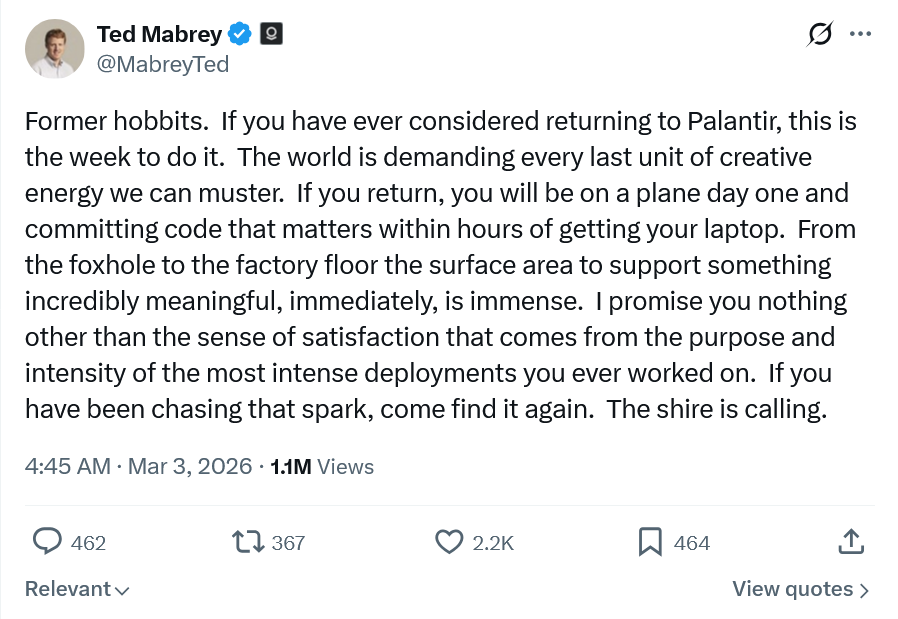
In March 2026, Ted Mabrey, head of Palantir Commercial, tweeted out to ‘hobbits’ - former employees - saying the ‘shire is calling’.
This twilight zone between childlike fantasy and very adult reality is exploited by another Thiel-backed company, Anduril Industries. The firm makes autonomous killing machines, drones, and surveillance towers that monitor the Mexican border.
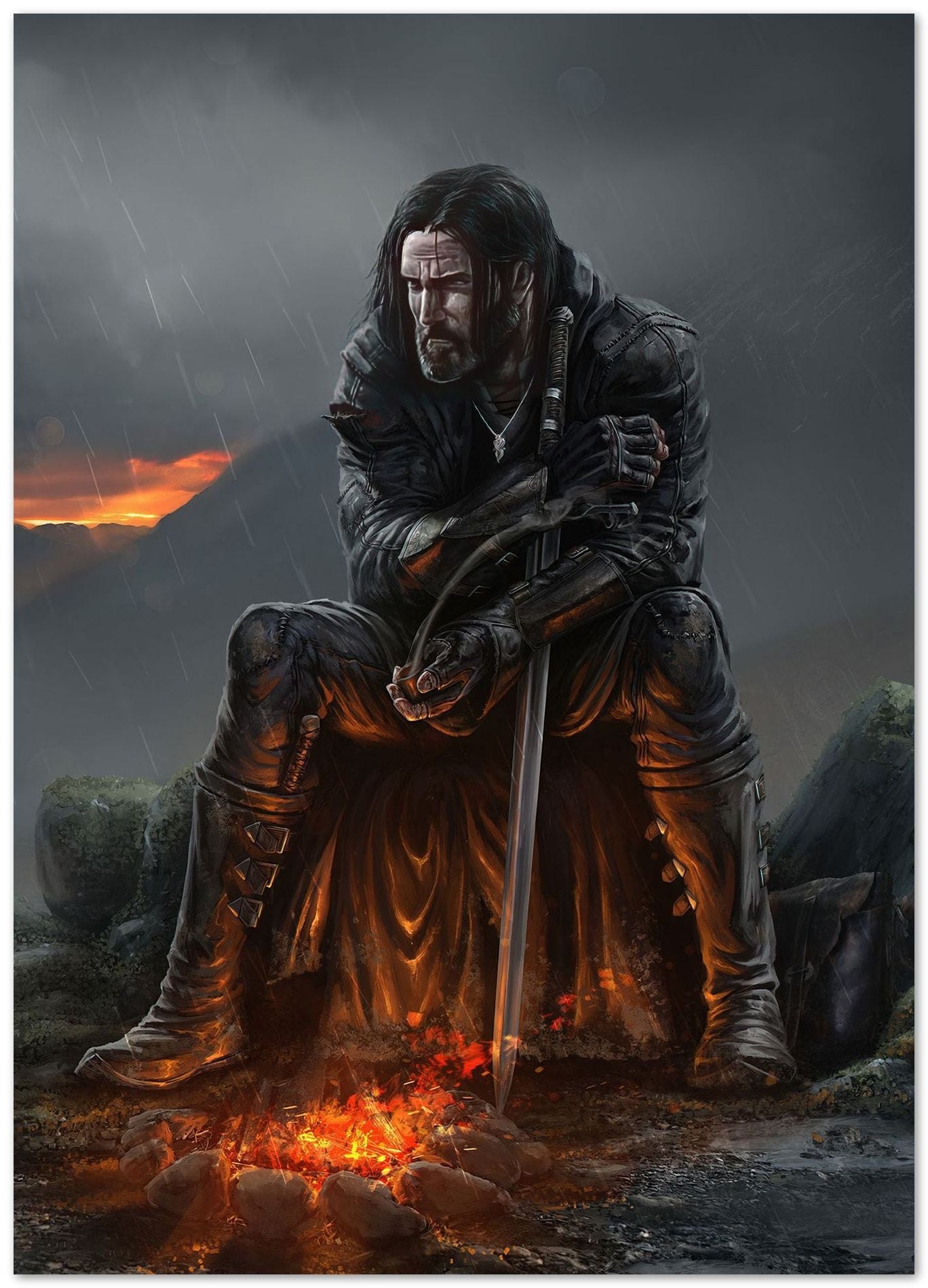
Anduril is named after a LOTR sword, the ‘Flame of the West’ which was broken in battle against Sauron. Its jagged shaft was picked up by Isildur, who used it to cut the Ring off the dark lord’s finger. Later, after Isildur’s fall, the broken sword passes through thirty-nine generations to Aragorn, who recasts it in the forges of Rivendell.
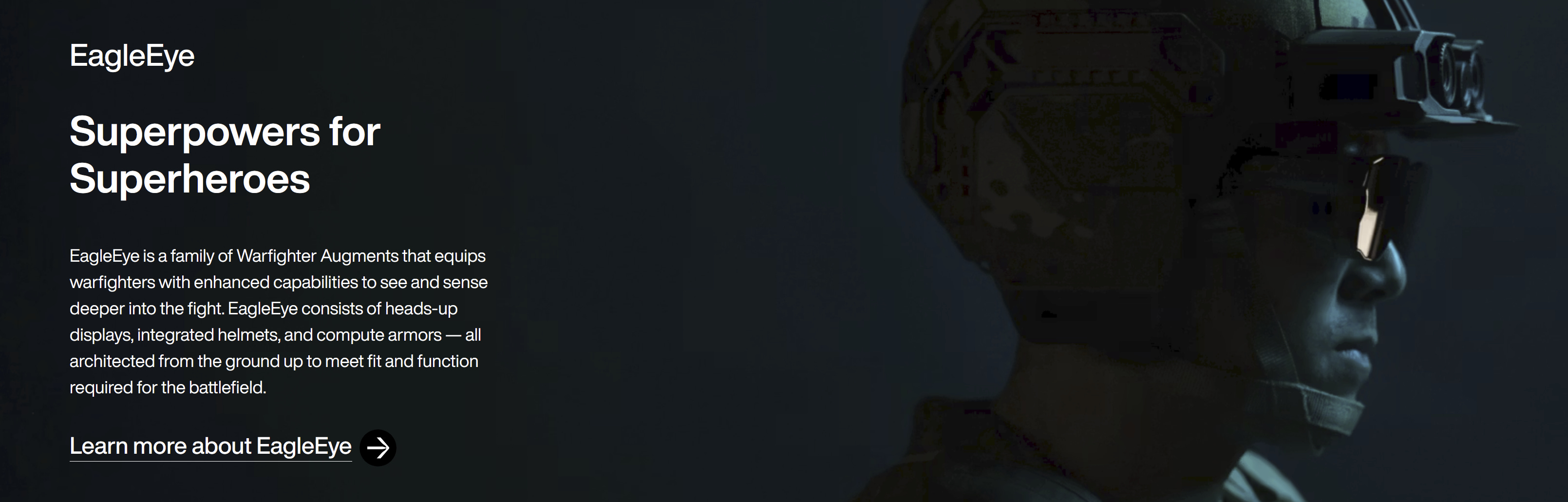
Anduril was co-founded by former Palantir employee Trae Stephens and the two companies work closely together. Like Palantir, it uses mixed metaphors, flipping between LOTR and comic book imagery, with products that grant ‘superpowers for superheroes’.
Anduril’s other co-founder is Palmer Luckey, a virtual reality entrepreneur and Trump fundraiser, who is on record for saying “Societies have always needed a warrior class that is enthused and excited about enacting violence on others in pursuit of good aims.”
I am the son of a special forces soldier who would very much disagree with that characterisation of the warrior class, but Luckey’s larpy gamer vibe is also exploited by Trump’s Department of War, which uses Call of Duty imagery in social media posts about Iranian strikes. The net effect of this strategy is to liken Iranians to NPC forces of fantasy evil. You, American Soldier, are the hero who gets a new high score by using Palantir-powered Anduril drones to blow the head off a 19-year old orc from the slums of Isfahan.
Both companies have gone all-in on promoting an America-First AI-Military-Industrial Complex to Make America Great Again. They position Trump as an Aragorn character wielding their products. Anduril’s Luckey and Stephens are full MAGA, as is Palantir’s Lonsdale, Thiel and CEO Alex Karp. The latter used to oppose Trump, but now harangues the last remaining liberals of Silicon Valley. They play into rhetoric of an existential war to protect Western Civilization against China, Islam, Globalists and Leftists who dilute the vigour of the American Warrior Ethos.
But how does this relate to Tolkien, and what would he think about their technologies named after his magical artefacts?
I love the LOTR for its own sake, but I now scan it for clues of Tolkien’s politics. Fantasy novels don’t have to reflect their author’s beliefs, but there are unmistakable ethical vibrations repeating themselves throughout Tolkien’s works. Let’s isolate ten of them.
The moral compass of Middle Earth
What follows below is an exploration of Tolkien’s politics, but for those of you who wish to skip over it, here is the summary.
Tolkien has a distinct Christian influence, seeing Good and Evil as stand-alone forces battling each other, and revering humility and mercy.
He does have a ‘libertarian’ anti-state streak, but it’s not individualistic or market-orientated. Rather, it’s centred on the self-governing community. This traditionalist Burkean conservatism is represented by the Shire
He blends this with a vision of idealised aristocracy, represented by Aragorn, a leader pure of heart who inspires love - not fear - from those who serve him. In this sense, Tolkien is anti-authoritarian but not anti-hierarchy.
He is patriarchal, but has a liberal streak, even allowing for touches of feminism.
He reveres the Past, and most revered is the sacred environment. He believes humankind loses its way through vulgar self-interest, industrialisation, deforestation, and pride at our cleverness. He believes the Precautionary Principle should be elevated.
1) Good and Evil are essential forces
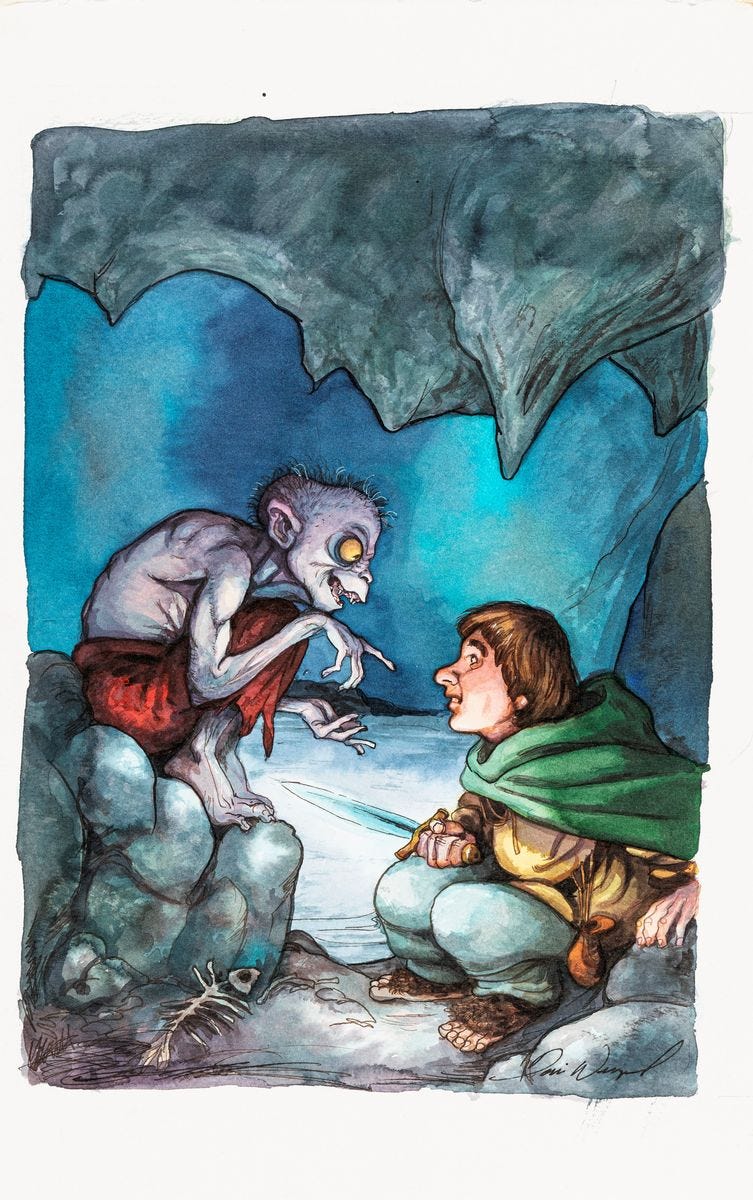
A materialist Marxist would ask why an orc has come to be an exploited henchman of the Dark Lord, but Tolkien doesn’t. He was Christian, and so imagines Good and Evil as stand-alone spiritual essences that each person must wrestle with. There’s no deep analysis of the material conditions for why someone may be pushed one way or the other.
The orcs are just inherently evil, because they lack the strength of character to fight off the dark side. Aragorn is just inherently good, his inner strength inherited through his blood line. Smeagol-Gollum represents a struggle between good and evil: his Smeagol personality wants to be good, but is racked by self-loathing as his Gollum side dominates.
2) Hierarchy is OK
The LOTR is full of subservient people hailing their masters. Men pledge their swords in service to their lords, and the hobbit Merry promises fealty to Théoden, King of Rohan.
The character of Sam is the epitome of the Faithful Servant. He’s always putting himself down while romanticising ‘Master Frodo’, his angelic superior who gives meaning to his life.
Tolkien, therefore, is no radical leftist who seeks pure equality and redistribution. After all, the reason why Frodo is the ‘master’ is because his uncle Bilbo became filthy rich, both from inheritance, and from his hoards picked up in the lonely mountain Erebor (as recounted in The Hobbit). It’s obvious that neither Bilbo nor Frodo work, while Sam and his dad - Hamfast - do.
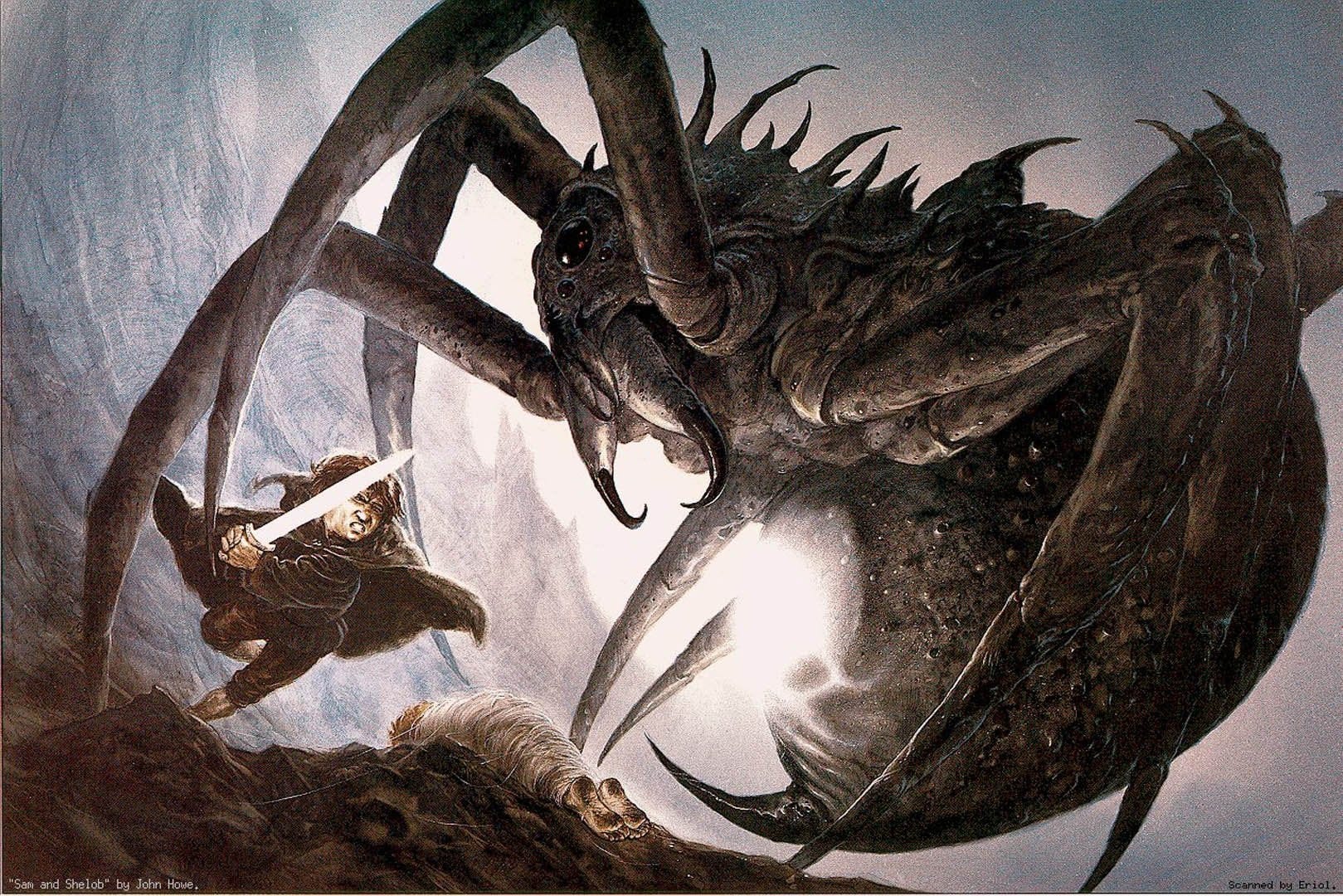
Bilbo passes on to Frodo a chain-mail coat of invaluable mithril from Erebor, which, according to Gandalf, is worth more than the entire Shire, making Frodo a billionaire of sorts. Later, after Frodo and Sam try to escape Shelob’s Lair, Frodo is poisoned by the giant spider, and Sam, thinking his master dead, decides in anguish to go on without him. He takes Frodo’s sword, but leaves the mithril, eschewing his own safety for the sake of respecting Frodo’s property and position in the hierarchy.
Tolkien, though, has a liberal streak. When stuck on the brutal road to Mordor, Sam tries to lighten the mood by spinning stories about the future ballads that children might sing about Frodo. Frodo smiles, but suggests that maybe Sam will be the true hero sung about. Frodo isn’t the kind of master who beats his servants. He wants to uplift Sam.
In the end, the question hanging over almost everyone in Middle Earth is which Lord you will serve. The most notable wildcard is Gandalf, who is neither master nor servant, but rather a lone wolf sigma who serves only his moral conscience.
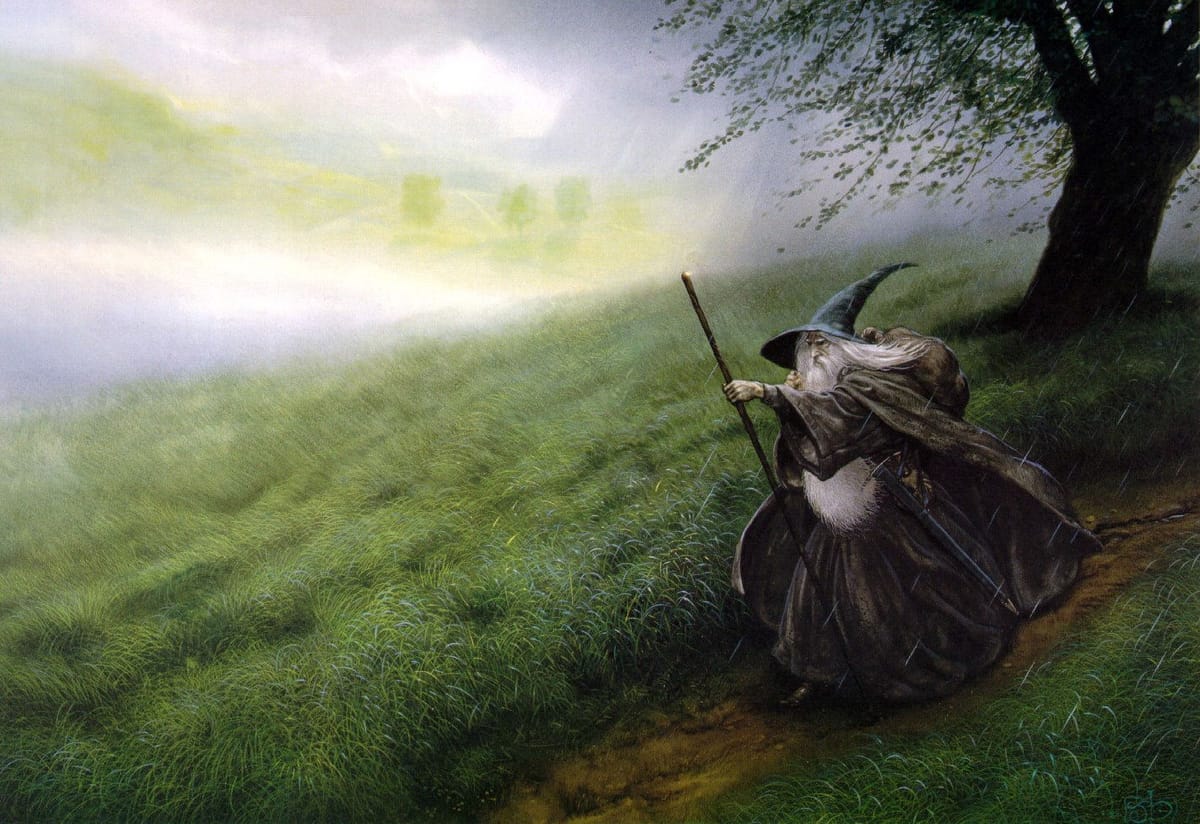
In his biting rebuke to Denethor, the bitter Steward of Gondor, Gandalf says:
“The rule of no realm is mine, neither of Gondor nor any other, great or small. But all worthy things that are in peril as the world now stands, these are my care… For I also am a steward. Did you not know?”
3) Noble power and love is good. Authoritarianism and fear is bad.
Tolkien has a strong sense of how those in power should behave to be worthy of it. They must be strong, resolute and decisive, but also humble, fair, and kind, taking wide counsel to build wisdom and good judgement. They must be bound by a rigorous code of ethics, keeping their word and always prioritising the greater good over themselves.
Crucially, they must have a particular temperament. Boromir, for example, is brave, but he’s ambitious and reckless. This makes him susceptible to the dark side. That’s why he attempts to forcibly steal the ring from Frodo, while justifying this as being for the Greater Good.
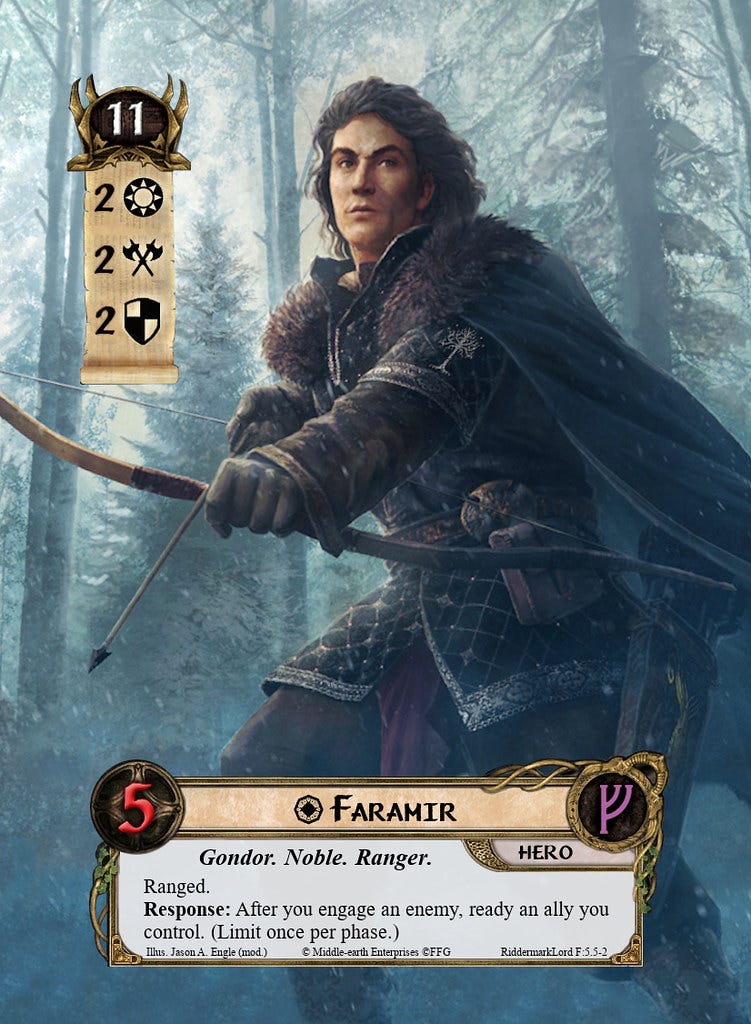
Furthermore, a lord is only legitimate when loved. The hearts of followers must feel joy and pride, not fear. In one of the book’s most famous speeches, Faramir spells this out. Faramir was reputedly modelled on Tolkien himself, who fought in the First World War. He says:
I do not love the bright sword for its sharpness, nor the arrow for its swiftness, nor the warrior for his glory. I love only that which they defend
It’s an open critique of any warrior class that’s become enamoured by themselves, and likely to abuse their power. He goes on to explain that the thing he wants defended is his city, and to:
… have her loved for her memory, her ancientry, her beauty and her present wisdom. Not feared
In this version of the warrior ethos, the purpose of the warrior is to protect things that inspire love, rather than to demand respect through domination and fear. The latter is the behaviour of authoritarians with followers who cower and suck up. The authoritarian isn’t bound by codes of honour, and lords themselves over the weak while demanding loyalty and respect through the threat of punishment. Authoritarians cultivate sycophants, and cannot make a distinction between the Greater Good and Themselves.
4) Vulgar self-interest is bad. Aristocratic decorum is good
The jeering nature of evil is an ongoing theme in the book. For example, Sam comes to love Bill the Pony, a malnourished creature they bought for an extortionate price from Mr. Ferny in Bree. Ferny works with agents of the Dark Lord, abuses innocent creatures, takes advantage of people in the market, and gloats mockingly at Aragorn as the company leaves the town. Aragorn - by contrast - maintains a noble decorum.
Similarly, the orcs bicker, elbow each other, and snivel at the feet of Sauron while bitching about the Nazgûl - the ringwraiths - who have their lord’s favour. They’re disrespectful and enforce discipline through violence.
Tolkien channels an idealised aristocratic ethos. Those who are vulgar protect their own backs and promote their own self-interest, while those who uphold decorum rise above these ‘base’ elements of themselves. The true aristocrat is above crassness. They don’t shout ‘fuck you retard’ or slap women on the ass. They don’t sway between truth and lies, or practice manipulation and one-upmanship. They’re not fixated on haggling for individual advantage.
Aragorn has wandered the hills for years wearing a battered coat. He’s not a bragging city merchant fixated on the petty ‘art of the deal’. His world is based upon honour. You must do the Right Thing, even when it goes against your self-interest.
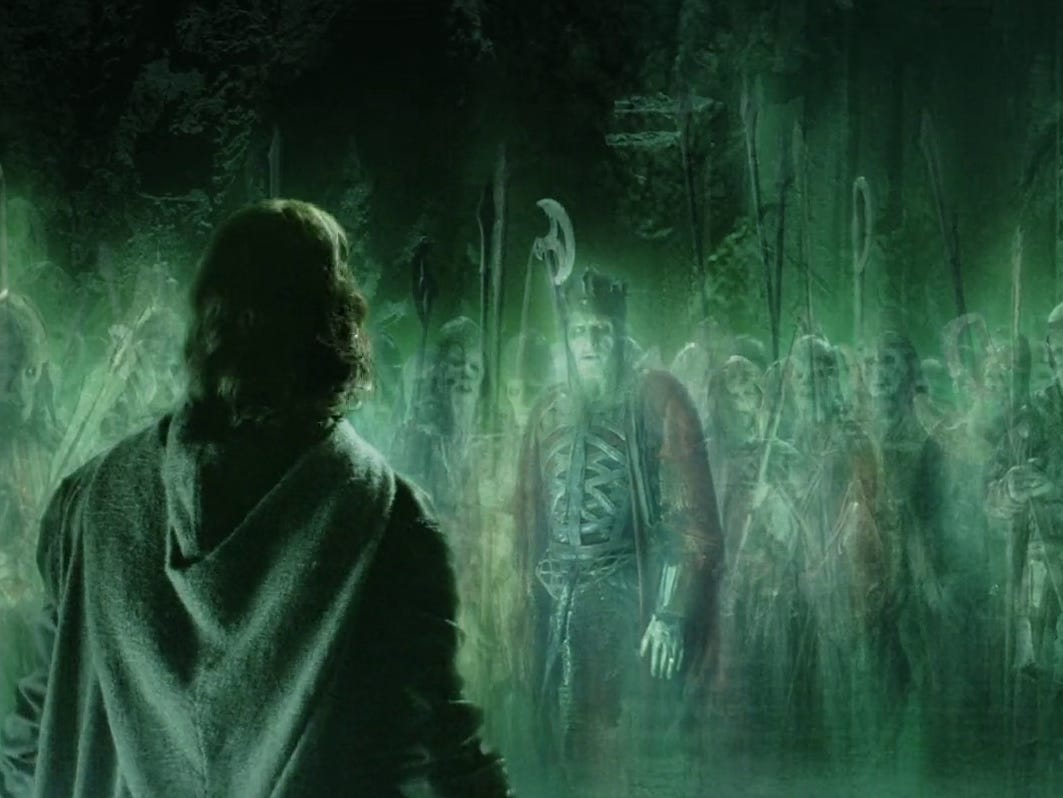
For example, Aragorn ventures into the Paths of the Dead. He’s told that doing so is almost certain death, but he believes it to be Right path. Moreover, he goes in to call on the tortured spirits of men who broke their oaths. He risks his own life to offer those who did not take the right path a chance to redeem themselves.
5) The powerful should be merciful
Tolkien’s idealised aristocrat, therefore, is slow to anger and shows magnanimity towards apparent enemies, especially weaker ones. While it’s true that there’s an epic pay-back theme going on between Aragorn and the Dark Lord, there’s no petty revenge against contemporaries or subordinates who may slight you, and no jeering at the bodies of dead orcs. Frodo shows pity to Gollum, and the men of Rohan show mercy to the wild folk roused to fight for Saruman. People who’ve made mistakes are given chances to redeem themselves.
6) Women are strong
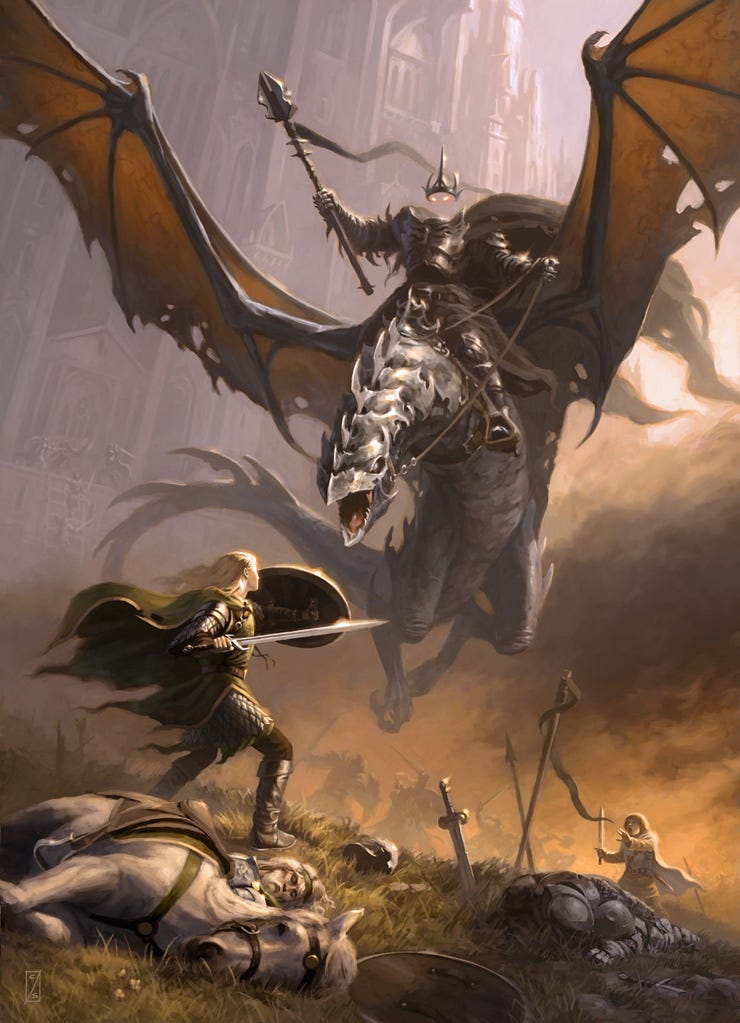
The LOTR is patriarchal in its endless references towards Men, Sons and their Fathers (‘Gimli son of Gloin’, ‘Frodo son of Drogo’ etc), but it does have notable slivers of feminism through powerful characters like Galadriel - feared by men - and the character of Éowyn. The latter, in a fiery dialogue with Aragorn, rejects the idea of women as precious objects of male protection. She scorns living in ‘a cage’, doomed to share in none of the honour available to men. She later plays a heroic role, fighting the dreaded Lord of the Nazgûl, who screams “thou fool, no living man may hinder me”. She laughs, and shouts “But no living man am I. You look upon a woman.”
7) The past is good. Restoration is needed
Perhaps the most traditionally conservative element of Tolkien’s world is that the past is revered. The book is full of ballads, but these are not the navel-gazing meditations of singer-songwriters harping on about their own lives. They’re about past heroes, some tragic but all epic. Ancient structures, like Helms Deep, the Mines of Moria, and the vast sculptures on the river Anduin, dwarf the contemporary individual.
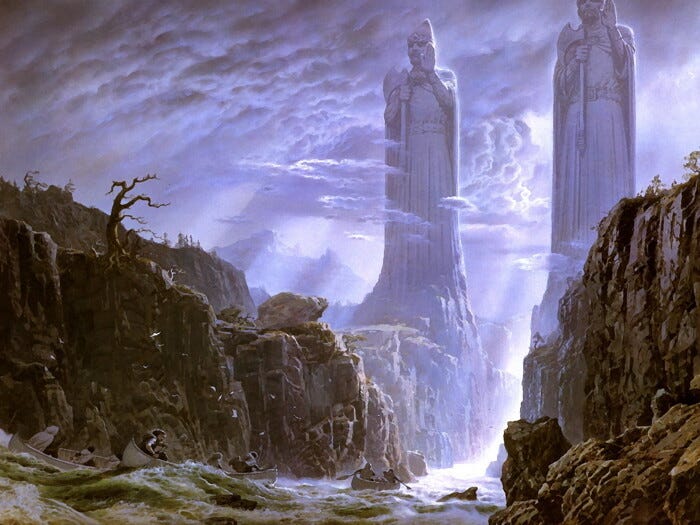
There’s no celebration of futuristic change, and the future serves only to restore the greatness of the past. This Restoration theme concerns Aragorn fixing the mistake made thirty-nine generations back by Isildur, a mistake that allowed the Dark Lord to re-establish power in the East while the Kingdoms of Men weakened. The only chance of survival is to regain that lost strength through an act of restoration - the Return of the King.
8) The pristine forest is sacred
Tolkien’s Past-is-Good ethos extends to the natural environment. Forests, land and rivers are the most ancient and therefore have value far beyond their immediate use as a present-day resource. Unlike a techno-optimist who believes the earth should be artificially transformed in our own image, Tolkien believes things we do not make are fundamentally more sacred.
This is reflected by three sets of characters. Firstly, we have Tom Bombadil and Goldberry, his ‘wife’.
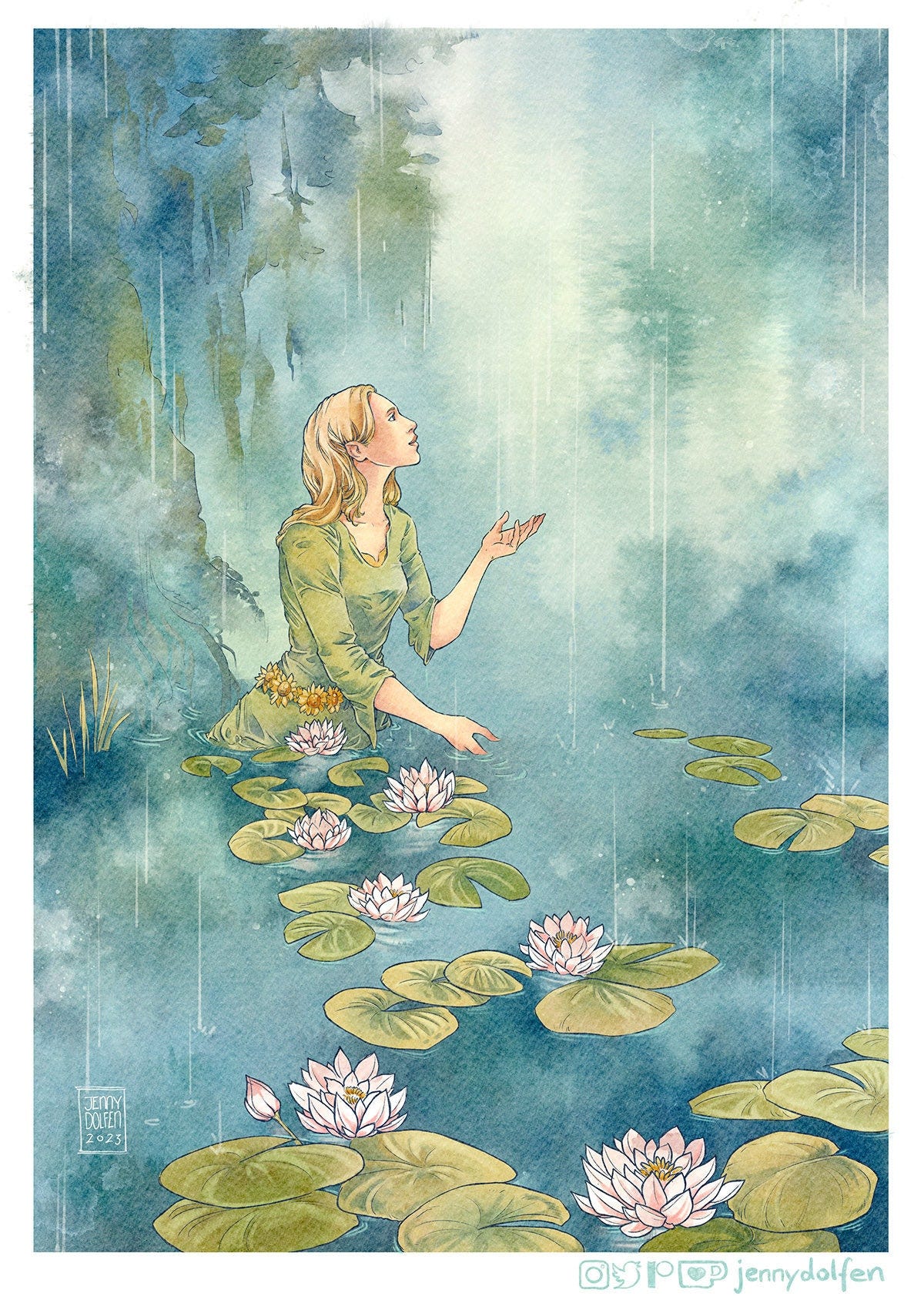
Goldberry is a river spirit, and Tom appears to be an immortal earth spirit. He’s unaffected by the Ring, suggesting that while he’s fundamentally Good, he also exists before and after politics, being disinterested in the affairs of humans.
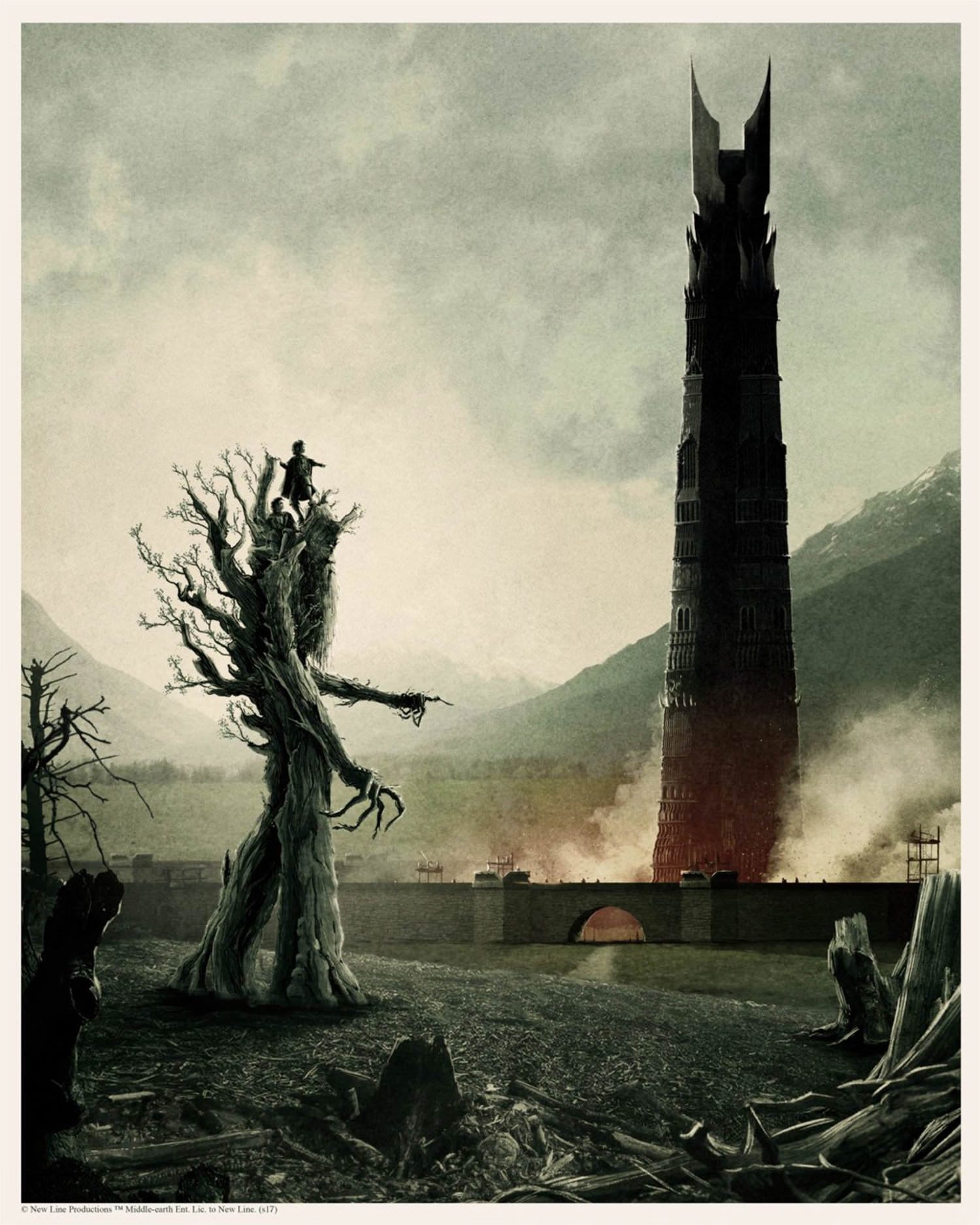
Secondly we have the ancient tree-herds, the Ents. Treebeard is the oldest being in Middle Earth. He’s enraged that Saruman’s orcs ruthlessly cut down the forests to power the mills in the wizard’s headquarters, Orthanc. During their siege on Orthanc, the Ents perform one act of geoengineering - diverting the rivers - but only to flood Saruman’s machines and furnaces.
Finally, we have the Entwives. They used to be united with the Ents, but settled down to control growth in ordered farms. This represents the transformation of ancient wild grasses into cultivated crops. The Ents, who represent untended primary forest, have been cleaved from their wives by civilisation, and long to find them again.
9) Greed and excessive ambition is bad
As mentioned, the corrupt Mr. Ferny in Bree price gouges the ‘market price’ for his pony from the hobbits, thereby displaying his lack of honour. An honourable person isn’t guided by what they can get. They’re bound by what is morally right.
At a bigger scale, the dwarves shun the Precautionary Principle, digging ever deeper in their quest for mithril, driven not only by greed but also by enchantment at their own ingenuity and artistry. They go too deep and so rouse the Balrog in Khazad-dûm, a hell-beast so dark that not even Sauron controls it.
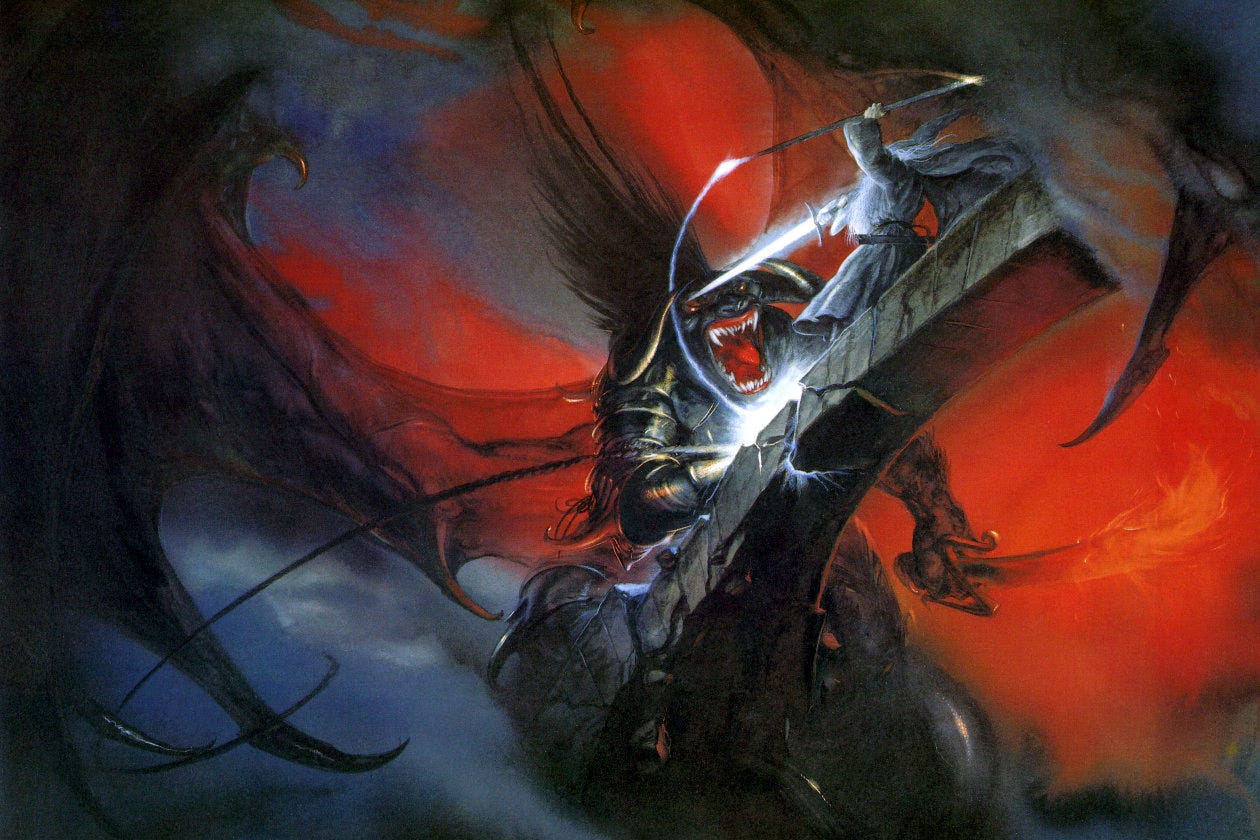
This has echoes of the Greek myth of Prometheus. The dwarves are like the hubristic titan who steals fire from the gods, leading to Pandora opening a box of evils.
We also have Gollum, a creature possessed by an object of power - ‘my precious’. In contrast, we have Aragorn, a man represented in verse by the lines, All that is gold does not glitter, Not all those who wander are lost. He’s a hidden gem, biding his time, humble but hiding an inner richness beyond money or the petty grasping of the ambitious.
10) The Burkean community is good. The industrialized state is not
The Shire is where the book begins and ends. Unlike the Kingdoms of Men, which are full of woe and heroism, it’s a beacon of stability, where the songs are about wine, food and good cheer.
It’s not a utopia. It has normal community politics, like the snobbish Sackville-Baggins clan who irritate Bilbo, but the community muddles on in quiet comfort. They reject radical change and are suspicious of foreign adventures. They are masters of going unnoticed, having no imperialistic political expansion drive, or economic growth drive. But, while they often appear complacent, the hobbits are resilient and surprisingly brave.
The Shire is an embodiment of Burkean conservativism. The hobbits seem ‘little’, and yet are strongly knitted together through tradition. Their community is like an organism that’s slowly evolved over time in dialogue with its environment. The hobbits may slowly alter, and be altered by, that environment, but shun radical re-shaping of it.
This ideal is thrown into turmoil in the book’s penultimate chapter, called The Scouring of the Shire. Frodo, Sam, Merry and Pippin return to find their home industrialised, its trees felled and its bridges guarded by thugs who’ve formed a kind of centralised State.
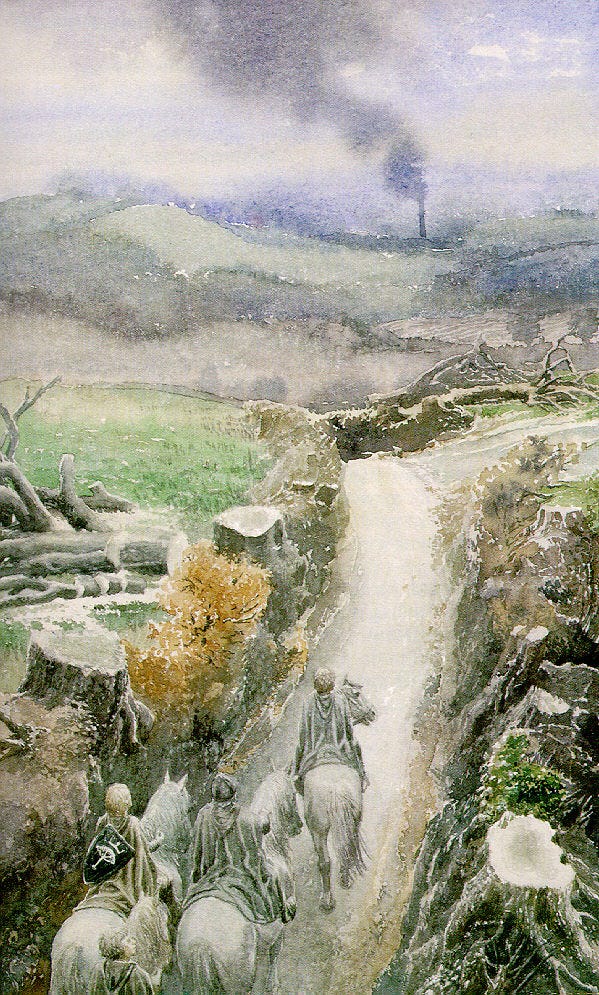
There’s an anti-state message here, but it’s not a market-orientated individualist libertarianism. It’s communitarian in nature. The industrial State obliterates the community that previously governed itself locally. The community is King, and although it can still have hierarchy in it, the inequality within it is dampened by the communitarian ethos.
For balance, we must also highlight the dark side of the Shire, which is its small-minded worldview. Tolkien is not a fascist fixated on race war, but he was a man of the colonial era, and it shows in his references to Sam of the Shire encountering the elephants of the Haradrim of the South. They are dark-skinned mercenaries to the Dark Lord, using Asiatic scimitars. In Sam’s imagination, these men and their elephants are like characters out of a storybook. He’s like a British lad from a country village, goggle eyed at pictures of distant Africa and India. He’s not so much hardcore racist as orientalist, captured by a sense of dark mysticism surrounding realms beyond the rolling green hills of ye olde England. It’s a kind of simultaneous fear and fascination of the exotic Other.
Which Tower for Thiel and Trump?
These ethics of Middle Earth are playing out at a time of war, in which Middle Earth is split between four towers. There’s Gondor’s Minas Tirith versus Mordor’s Minas Morgul and Barad-dûr, all while Saruman lurks in Orthanc.
Our Thiel-funded companies think they’re the heroes. Perhaps Thiel imagines himself as a Gandalf roaming around mobilising the forces of Good, with Trump as the Returning King Aragorn marching into Minas Tirith to restore the lost glory of The West. In any case, they’ll imagine Saruman as the ‘liberal elite’ - the media, universities, and leftists - corrupted by the dark Sauron of Marxism, Wokeness, China, Islam, Multiculturalism and Satan.
Anduril means the ‘Flame of the West’. In the context of Trump, it’s beyond a dog-whistle. It’s a full-out bullhorn reverberating with Crusader imagery. Right-wingers will imagine the ‘reforging’ of the sword as the clearing out of weakness and wokeness, which is imagined to cause cultural decay, pollution of the moral character, and the Fall of Western Civilisation. Anduril cleaves through liberal sanctuary cities and pushes the ‘orcs’ back over the Mexican border, before launching strikes against the Eastern Darkness.
This MAGA worldview, though, is not shared by Tolkien. Here’s six reasons why.
1) They’ve got the warrior ethos wrong
Palmer Luckey, and US Secretary of War Pete Hegseth, are no Faramirs. They do love the missile for its power and the M16 for its swift violence. They worship a Cult of the Warrior. Hegseth makes dehumanising gloats about blowing boats into pieces, and shows contempt for international rules of engagement, seeing those as crutches for the weak. The administration has a siege-warfare mentality, trying to starve out dissenting countries, demanding respect through demonstrations of overwhelming power, whether that be via punitive tariffs or airstrikes
2) They display no aristocratic decorum
The culture of Trump’s entourage is that of the bombastic city merchant, openly gloating about wringing the best deal for themselves. Trump sends loyalists to extract advantage on behalf of American corporations, like Paolo Zampolli who brags about forcing Uzbekistan to buy $20 billion in Boeing aircraft. There’s open enrichment of the Trump family. Convicted fraudsters can basically buy pardons. This is the vibe of a sleazy champagne party in a glitzy hotel suite full of high-class hookers. This isn’t Aragorn.
3) They show contempt for the natural environment
The ‘drill baby drill’ ethos of the MAGA elite is about restoring red-blooded capitalism to ride rough-shod over the environment. They imagine reviving the old factories and mills for the rustbelt, but the true focus is on US Big Tech, with fossil fuels enlisted to power the AI data centres to grind the Chinese into submission. This isn’t Tolkien’s imagined Restoration.
4) They don’t care about the Past
The MAGA elite do mobilise a 1950s vision of American masculinity, but the bigger picture is about domination of the future through overwhelming force and removal of AI safeguards. A key member of the extended Trump Universe is Marc Andreessen, whose VC firm is a major funder of Anduril. He openly scorns the Precautionary Principle, saying:
“Our enemy is the Precautionary Principle, which would have prevented virtually all progress since man first harnessed fire… The Precautionary Principle… is deeply immoral, and we must jettison it with extreme prejudice.”
This ‘throwing caution to the wind’ approach is the literal opposite of Burkean conservatism. Everything is about relentless ‘move fast and break things’ acceleration, a gleefully nihilistic embrace of endless growth for its own sake. It’s a radical capitalism that would obliterate Hobbit villages through deals, deals, deals.
5) They take no responsibility
Palantir’s ‘Save the Shire’ t-shirt, much like the Department of War’s memes, acts as a dehumanisation strategy - your enemies are orcs - but also as an infantalisation strategy. When Palantir’s models help a drone kill a generic ‘baddie’, that’s a real person with an actually lived life, parents and economic circumstances that moulded who they were. The Palantir engineer lives in a fantasy metaphor, rather than facing the body parts. This isn’t Aragorn, who faces his own actions.
6) They inspire fear, not love
Trump, under the convenient cover of dismantling an ill-defined ‘deep state’, has attacked every branch of the balance of power, from media and universities to the Fed and the judiciary. Not only has he centralised power into the executive, but he’s centralised it into himself, making his own being coterminous with the state while cultivating fawning sycophancy. Through Tolkien’s eyes, that’s authoritarian.
Where is Mordor, really?
In his essay There Never Was a West, David Graeber dismantles the notion of The West as a historical reality, but in the right-wing imagination the spirit of The West supposedly resides in North America. South American countries aren’t part of it, because West kinda just means ‘white’. This is why Anduril is deployed to the Southern Border.
For the world’s population beyond fortress America, though, there’s an increasing sense that the ‘Shining City on the Hill’ has a slightly Mordor-ish tinge to it.
Let’s look at a final scene from the LOTR. When in Minas Tirith, the hobbit Pippin befriends Bergil, the nine year-old son of Beregond. The boy is intent upon staying to fight in the besieged city. He has no bloodlust for war, but believes going into battle is the honourable path. The forces stacked against them are terrible, and most terrible are the winged Nazgûl, the wraiths who fly upon giant beasts and whose screams strike terror into all.
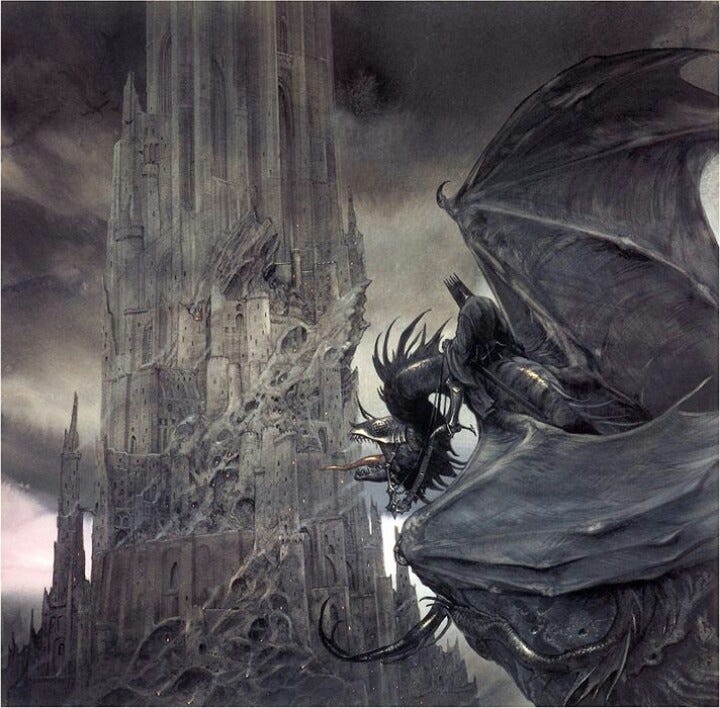
If we’re being brutally honest, the kids who look the most like Bergil right now aren’t American. The US military has low motivation, and heavily relies upon screaming fighter jets to spread fear, attacking enemies that are much weaker than themselves at a distance. While the US goes into a frenzy at the possibility of casualties, the kids on the fast boats on the Straits of Hormuz ride in full knowledge that they might very well be going to their deaths.
I’m not here to romanticise conservative Iranian mullahs, but ask yourself whether you truly believe the spirit of Minas Tirith resides in the gilded palace of Mar-a-Lago?
Tolkien would have loved neither the mullahs nor Trump, but that doesn’t mean Trump is Sauron. Trump is more like Denethor, the bitter old Steward of Gondor, cunning but full of mistrust, refusing to take the counsel of others, and angry that Faramir turned down the chance to force the ring from Frodo and bring it to him as a great gift. Trump, like Denethor, has moments of clarity, and even honour, but overall is riven through with vanity.
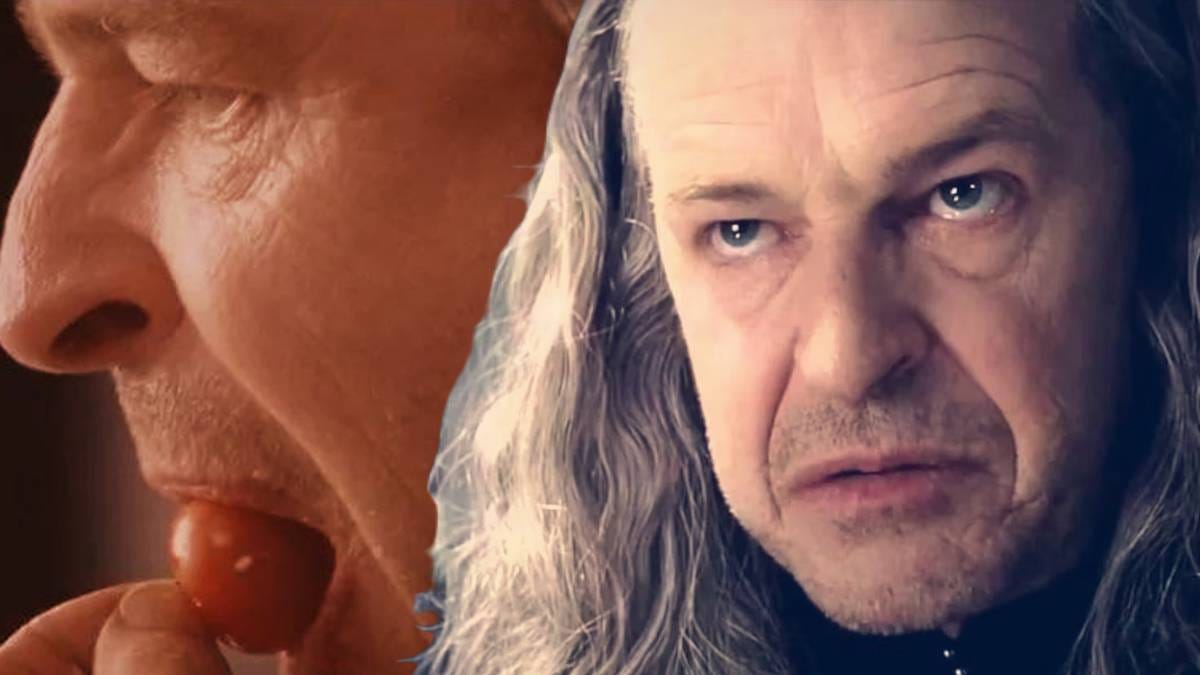
To others, Trump perhaps displays elements of Theoden, in the days when this king of Rohan was bewitched by the sycophantic spell of Wormtongue.
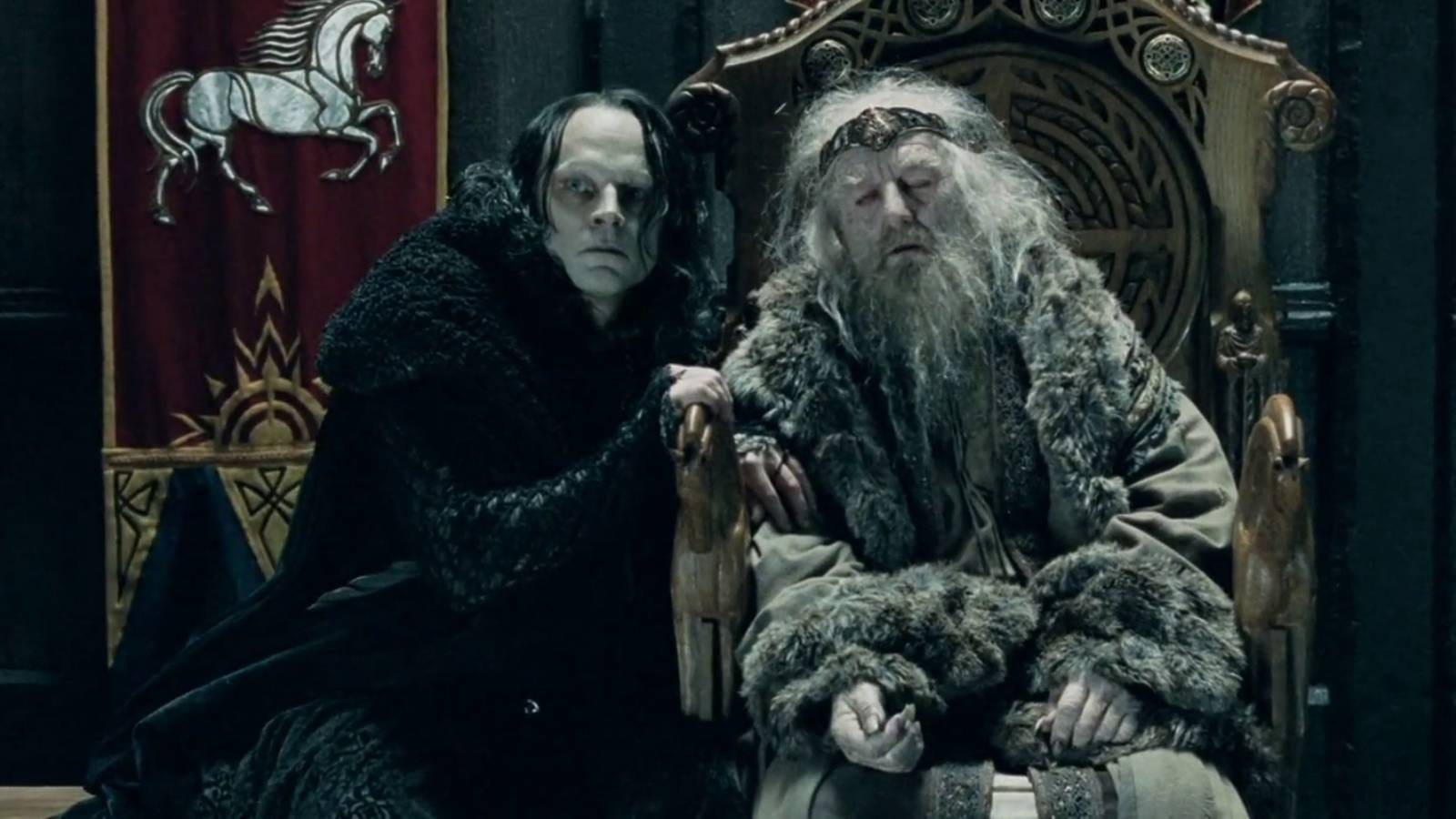
It’s not exactly hard to find entourages of slithering Wormtongues around Trump, but I’m not going to cast Thiel as one of them. Rather, I’ll give him the honour of being Saruman. Like Saruman, he once was light, but now is an agent of the true Sauron.
To me, Sauron isn’t a person. Sauron is our unequal economic system.
We all take part in the Scouring of the Shire, not because we want to, but because we feel compelled to. We’re a communal, interdependent, species, and yet are pushed to claw each other while the rich get richer and monopolise control of ever greater amounts of society’s assets, making our competitive struggle ever more desperate. Some people call this system capitalism, but regardless of its title, Mordor isn’t a single place. It’s an element inside of us all.
We see the rainforest ents being destroyed, and the thuggish geopolitical struggles for AI dominance, a technology that doesn’t make us happy, and yet there we are clicking ‘buy’ on Amazon Prime. We don’t know how to escape this feeling of being pulled into a vortex of meaninglessness, and that’s the creeping Darkness many people sense, whether they be hippies, anarchists, village-dwellers or religious folk. But wormtongues are everywhere, giving false stories about where this darkness resides.
The ‘flame of the West’ doesn’t reside in the White House ballroom or the Big Tech boardroom, and yet both seem intent on slowly stealing all of Middle Earth. Erebor, the lonely mountain and lair of the magnificent dragon Smaug is in the process of being turned into a Thiel-funded bank headed by Luckey and Lonsdale to fund military AI. May the dragons of Middle Earth fry your accursed data centres.
This is the corporate capture of Tolkien’s imaginative commons. It was supposed to be a world where kids and adults alike could explore, but now its being fenced off and privatized, with its names being made synonymous with venture-capital funded billionaires and the US government. The dreamy-eyed kid, whether in Toronto, Timbuktu, Toledo or Tehran, will now have the face of Lonsdale trying to superimpose itself over Faramir’s. This is a true corruption, and they’re making billions from it.
In the 1800s, when the American Fur Company was shipping beaver pelts from the American frontier, there were robber barons in the US, but also a perception that opportunity abounded. In this context the American capitalist class could lean into classical-liberal ideology, speaking of Freedom and an American Dream in which everyone could get a bigger piece of an expanding pie.
That story is decaying. The frontier is gone and the pie is stagnating, so billionaires will put a new, darker spin on libertarianism. They own the assets in a world where capitalism increasingly feels like a zero-sum game, so they’ll tell you to fight others to get what’s left. They’ll say, let the market decide who is strong and weak, and let the state crack down on those who complain about that.
So, I see you - the American AI Surveillance and War Company - selling your technologies to the FBI and ICE to locate ‘undesirables’, and I hear you framing it as an existential battle for Freedom. But, on behalf of myself and all true Tolkien fans, I reject your chosen name.
You are not Palantir Technologies. You are Orthanc Inc. You are not Anduril. You are Shelob Industries, a spider on the border spinning webs of fear. Tolkien was deeply sceptical of your technology, and if he were here, he’d mobilise the Ents against you.
I’d also love to here your interpretations of Tolkien, what you think I got right and what you’d alter or add. Please do leave your insights in the comments!
As a lifelong Tolkien enthusiast I think you have missed a key aspect of his philosophy. His mother converted to a Catholic when he was 8, and from that age he was raised in the pre-Vatican II tradition. That was vehemently anti-utilitarian. The concept of the "greater good" is anathema. There is good, which is outside humanity and is eternal, and there is evil. Humans strive to become good, and join with the angels and saints at God's side. Evil works to prevent this through temptation and appeals to our selfish urges and desires.
The difference between Aragorn and Denethor - note spelling ;) - is that unlike Denethor, he did not let despair overwhelm him. He had faith in the ultimate triumph of good over evil. He understood that the first act in achieving that triumph is to hold strong to that belief. The difference between Faramir and Boromir was that Boromir gave in to temptation, and rationalised it as being "for the greater good". This is the attraction of Utilitarianism. We can use it to justify evil acts because we pretend, or imagine, that such a "greater good" exists. It does not. Good is personal. It's about our individual struggle. An act is either good or it is not. The old way of putting this, which Catholicism taught, was "the end never justifies the means". That is at the heart of Tolkien's philosophy. Gandalf or Aragorn could not take the ring to wield it for good, because it, the means, was evil. It corrupted and twisted the wielder.
We can see the appeal to utilitarianism (as a form of temptation) everywhere in LOTR and in practice in our world. So many acts of evil are justified on the grounds of the "greater good". But, evil acts can never deliver good in the true sense. They corrupt us and they erode our eternal soul. At least, that is the traditional Catholic view - I would say that they do corrupt us, and that they allow us to pretend that selfish acts or short-term expedience can make the world better. In the end, the only way to make the world better is by us all becoming better people. We can only do this by sticking to our principles and values.
Enjoyed. Thanks. My only doubt/reservation is that as I’m sure you know, Tolkien’s legendarium as a whole (of which LOR was a small part), was really a mythology about elves primarily, and he has a kind of metaphysics as well as a politics, in which humans are well advised to realise that they are somehow between orcs and elves in a kind of tacit Neoplatonic emanation. In this sense more could be said about the underlying theories of freedom in play, and how humans being freer than orcs but less free than elves implicates any tacit political theory. It feels like Tolkien thinks there is a meaningful sense in which we become free, rather than merely being free. The absence of democracy is also noteworthy, though there is a nod to it in the way the shire organises itself. Anyway. Well done. 👍