

2025, in summary
The AI-Trump nexus, and my top pieces this year

I don’t know about you, but 2025 seemed a helluva bumpy ride. I put this down to the collision between two topics, one a long-term trend, and the other a short-term reaction.
The long-term trend is the ongoing march of capitalist automation, which is currently manifesting in a near-obsession with AI, and all-out gold-rush between all the giants of big tech, who have long since dropped any pretence of having any social responsibility or doing no evil.
The short-term topic is Trump, and all the reactionary stuff his team has been unveiling this year.
To me, the biggest story of 2025 isn’t actually AI, or Trump, but rather the merging of the two. We’re seeing the fusion of the long-term automation drive in the global economy with the short-term America-First story. The US big tech class has managed to hitch their interests to the clash-of-civilizations mythology coming out of the US far right, and have pushed the idea that the a US capitalist class free from regulation will become standard-bearers for a revival of ‘Western Civilization’.
If there’s one thing I think y’all should read soon, it’s David Graeber’s amazing 2007 essay called There Never Was a West, in which he demolishes the idea of there being something called ‘The West’, and also the idea that democracy was ‘invented’ within it. It has a lot of relevance for the current moment.
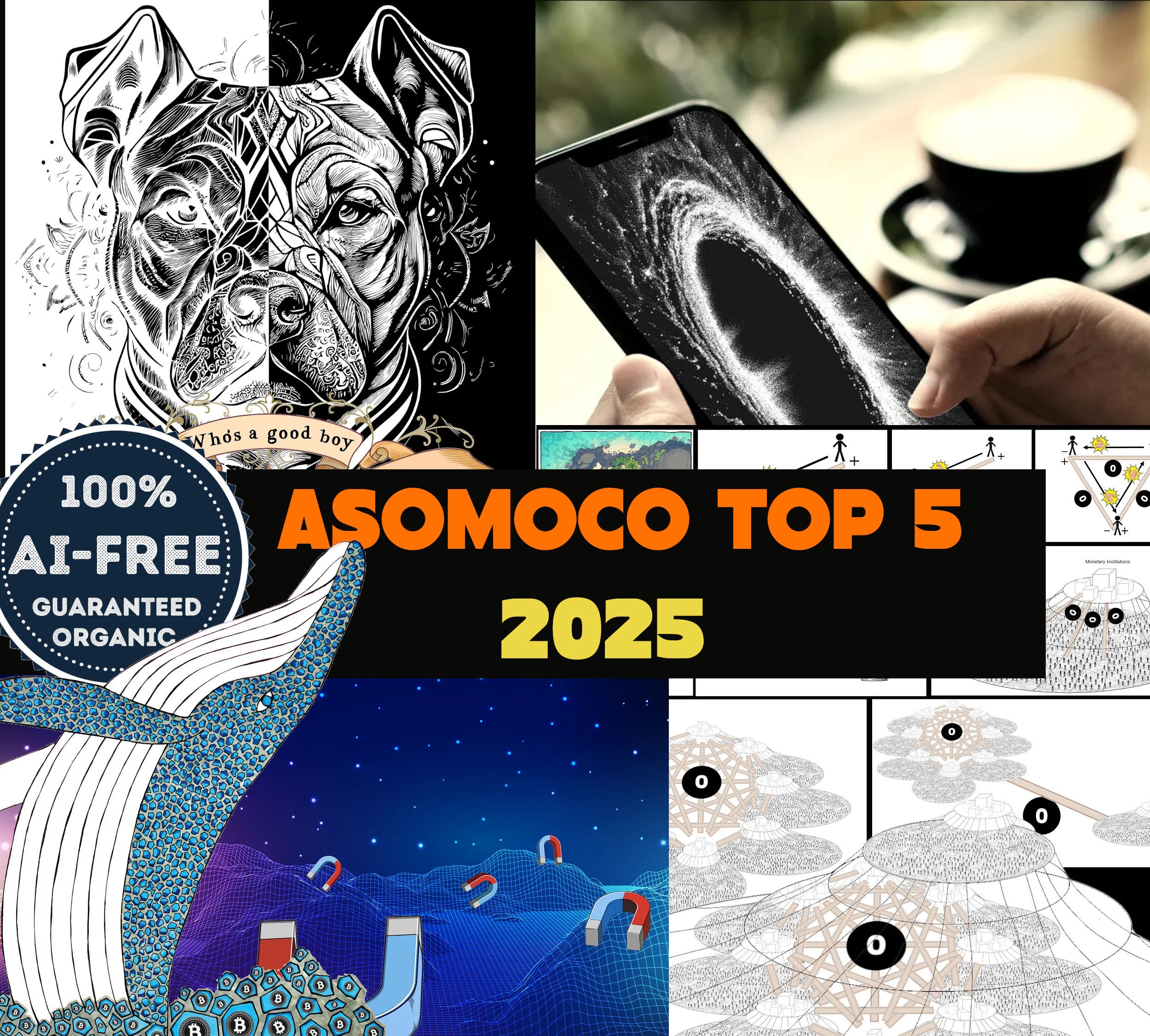
Each year I also release a list of my most popular essays. In 2025, my most successful pieces have all reflected the AI-Trump nexus in various ways. Here’s the Top 5.
1) The global money system in 10 pictures
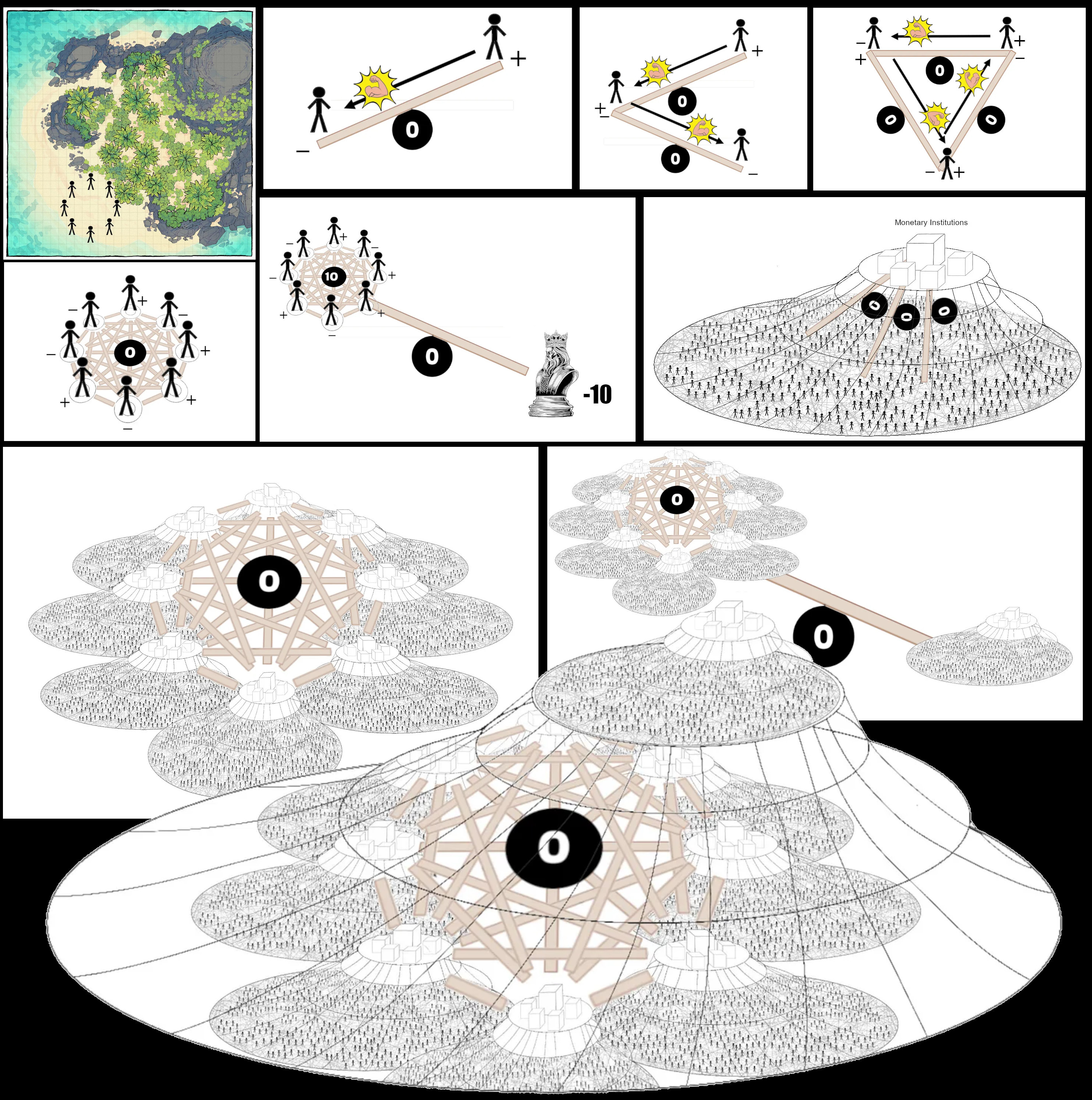
Many people would love to be able to understand big macroeconomic topics like the 2025 Trump tariffs and the geopolitics of stablecoins, but picturing the processes of our global economy is mind-boggling. This is one reason why I often literally try to draw pictures of otherwise invisible systems.

So, in September I sketched out 10 images that allow you to glimpse the global monetary system, starting from first principles and then abstracting upwards to the transnational US dollar reserve system. I also made a video version of it here.
2) Making capitalism bad again

A big story of 2025 was the attack on so-called ‘woke capitalism’ by Trump, and the subsequent wave of corporate spinelessness, as all the giants of big business dropped previous commitments to diversity or sustainability, revealing that those commitments were always just aesthetic rather than deep.

In my essay, Making Capitalism Bad Again, I dived into this. What we call ‘liberalism’ is the nice face of capitalism, but the liberal face of capitalism presents us with an impossible ideal - to be a good boy and a bad boy simultaneously. You’re supposed to be a self-interested market competitor but to simultaneously care about those you outcompete or the resources you swallow up. In the language of sustainable or responsible capitalism, you’re supposed to ‘do good by doing well’.
This creates deep cognitive dissonance, which creates a desire to escape the dissonance. This helps us to make sense of Trump’s re-embrace of ‘badness’, now framed in positive terms as ‘the warrior ethos’.
3) Against the factory farming of creativity

We live with this story that the corporate sector is ever-so innovative, and yet the innovation is incredibly predictable, almost as if it operates on auto-pilot. The standard path is just automation, to take some previously organic process and to render it as an industrial one, making the subsequent things produced feel increasingly ‘factory-farmed’.

In my essay Against the Factory Farming of Creativity, I show how this plays out in the world of generative AI. Generative AI is a machine purpose-built to take any form of human creativity that comes out of any organic process of production, and to industrialise it.
I cut through the idea that this ‘democratises’ creativity, and also show how this is leading to a general distrust in creativity. Many people are now struggling to detect AI, which means they’re also struggling to detect its absence, a process that - to use the terminology of Walter Benjamin - is eroding the ‘aura’ of creative works, their sense of authenticity and backstory.
4) An open letter to all those building AI in 2025

Continuing in the AI theme, I decided to write an open letter to all those involved in developing the platforms, explaining to them their actual historical role in the global economy - which is to serve the interests of shareholders and military commanders - and urging them to be authentic about this, rather than just burying their heads in the sand.

Here’s a little excerpt:
I’d like you to not fall into the trap of those people who pioneered the Internet. They were full of optimism, but later cried tears at the fact that it’s now used for massive surveillance, data extraction and centralisation of power. So many of them are now very wealthy from those very processes, but still tell stories about how they naively hoped that somehow the tech wouldn’t be enlisted to enrich small groups of elites while empowering increasingly authoritarian regimes.
Those people were, in the nineties, in the same situation that you find yourself in now. You’re having fun developing AI, and you’re probably getting very rich off it, and you want to tell yourself, and others, some feel-good story about this.
Here’s a request. Please don’t.
5) How to turn your phone addiction into a ripped body

Coming in at Number 5 is a more optimistic piece. Right now, social media platforms are like portals left constantly open, through which all sorts of digital pollution constantly leaks into our worlds. In this piece, I turn to the anthropology of fetish objects to offer a little life-hack, showing how we can develop rituals to both open and close the portals, and to minimise the pollution.

And yes, it is possible to develop rituals that allow you to transform your phone addiction into a ripped body.
Honourable mentions…
I’d also like to mention a couple other pieces that have done pretty well this year:

In which I show that libertarian ideology is built on the totally ahistorical idea of humans being detached individuals rather than attached group animals (and also show that capitalism is an ‘anxious-avoidant’ style of economy).

In which I show how corporations use their frontline employees as emotional shock-absorbers - a bufferland between the public and senior management - and how the latter benefits when the public vents their frustration at the employees rather than at the managers.

In which I show how the Bitcoin market lacks a true class of fundamental traders who authentically assess the underlying ‘fundamentals’, and how this makes that market incredibly vulnerable to massive downswings.
Finally, I’ve got into video
You might have noticed that I made a lot more videos this year. That’s because I’m diversifying, and also because I find video an interesting creative format. My top three video pieces this year were:

In which I help a beginner to get a start in understanding the controversial world of MMT, or modern monetary theory.

In which I help you to understand the four key moves used by tech evangelists to promote endless automation, and how to begin deconstructing these.

In which I go through 10 core reasons why you should continue to resist cashless society.
In closing, thanks for your support this year, and I look forward to continuing the journey with you again in 2026.
Much love,
Brett
Thank you Brett for all your great work. As the BRICS and associated political blocs work to circumvent the payment channels that are controlled by the Western Empire, communities, small enterprises, and people in general must get serious about taking control of their own power to allocate credit and circumvent the need for political currencies by which elites control our economic, political, and social transactions. I am finding AI useful for some of the tasks involved in doing that.
Good to have a list of your top pieces. Seems an appropriate time, with the new year just around the corner, to say “thanks” for all the effort and innovative methods you’ve employed to make money comprehensible. Your contributions are a good read (or a good watch, as it may be), always informing and enlightening.
Oh — and wishing you and your readers, especially the ones who go to the trouble of commenting, a Happy New Year.