


For many years now I’ve written essays on the culture and politics of Bitcoin. In each one I try to explore a new angle on the phenomenon. This is my latest, covering some themes I’ve been wanting to grapple with for some time now. It was partly inspired by the recent New York Times investigation that attempted to unveil Satoshi Nakamoto, the pseudonymous founder of Bitcoin. I hope you enjoy!
Paying subscribers can listen to the audio essay here! (38 minutes)

In 2018 I stood before a urinal in a convention centre in Tokyo, and unzipped my fly. It was late at night, and I was at Satoshi’s Vision, a big gathering hosted by a breakaway sect of Bitcoiners. They’d assembled there from around the world to make a claim on the future of Bitcoin. They’d forked its code in a new direction, and saw this as staying true to the path set out by Satoshi Nakamoto, the mysterious founder of the crypto-token.
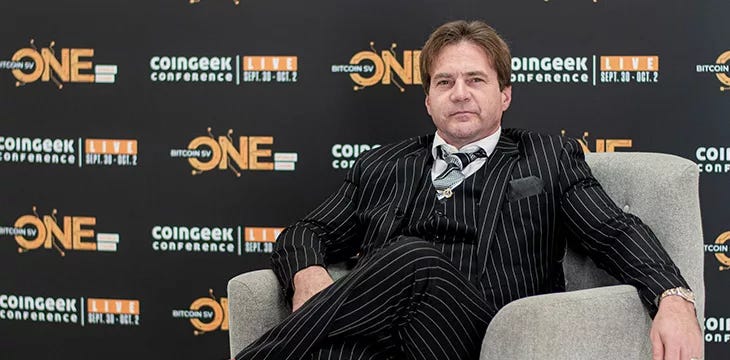
A man stumbled into the space to my right. He was sloshed and started taking a piss while swaying from side to side. This was Craig Wright. He was at Satoshi’s Vision because, for a long time, he had claimed that he was Satoshi.
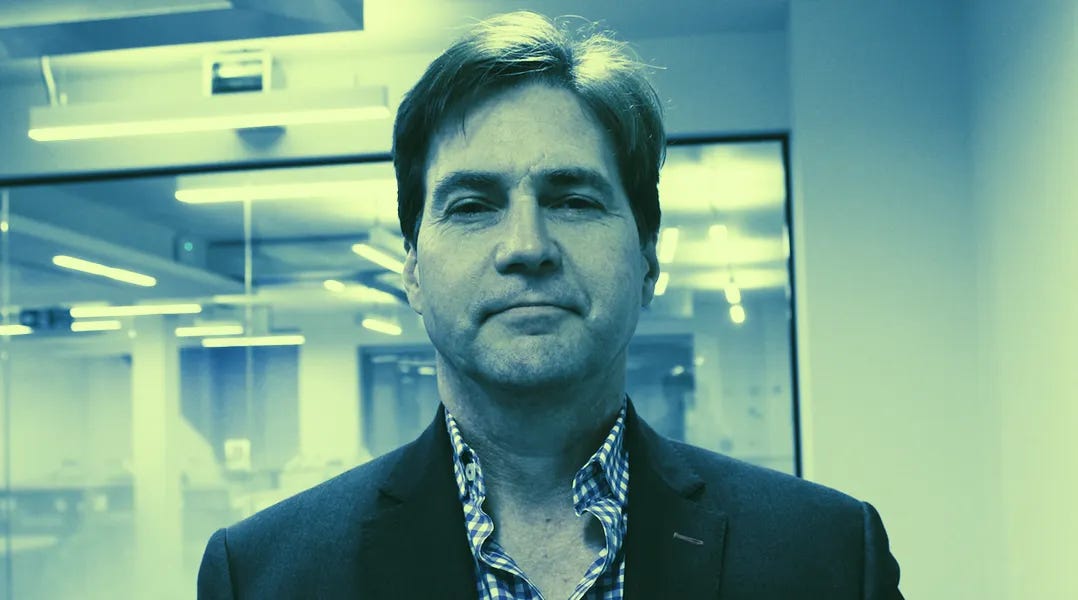
Few believed him, but this question of Who is Satoshi? is more like a religious rite for the Bitcoin community. It’s always been an integral part of the myth-making around the token, and the point isn’t actually to answer the question. The point is to continue asking it, forever.
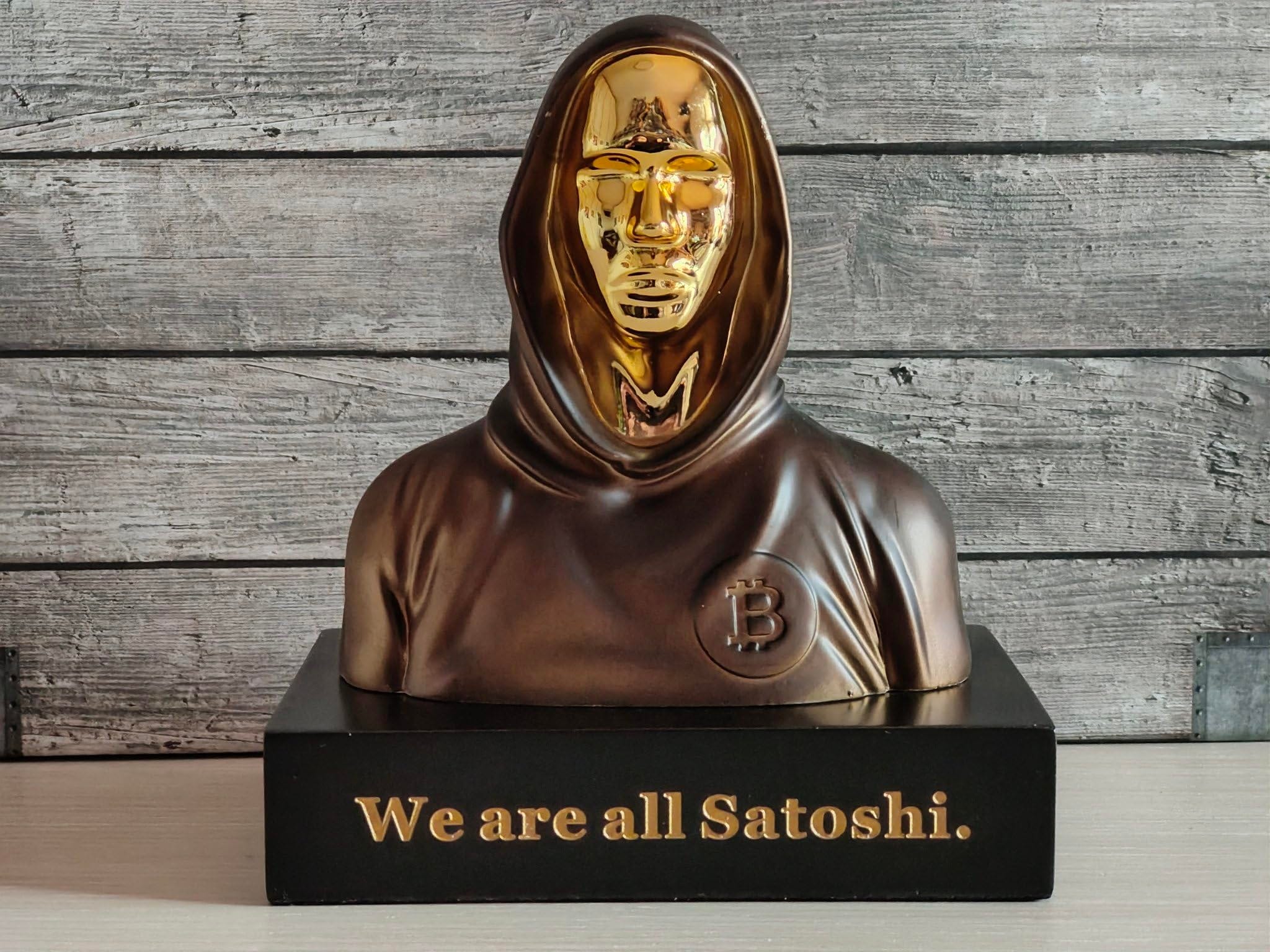
Like all good symbols, the shrouded figure of Satoshi is supposed to be simultaneously defined-yet-vague. You’re supposed to see the outline of a figure, solid enough to be real, yet open-ended enough to allow you to project your own imagination into it. To pull back Satoshi’s hood, and to reveal a specific face, would be to destroy that open-endedness.

Standing at the urinal, I reflected on what would happen if Craig were to be Satoshi. Rather than being transcendent and mystical, Satoshi would be stinking of booze, struggling with his fly, splashing water on his face to clean up before returning to the hall to have a string of slightly cringe conversations. Satoshi would be revealed to be a somewhat awkward Australian guy with a frumpy suit.
Earlier in the evening, Craig had been given a speaking slot, and he’d insisted on entering the auditorium to the soundtrack of Metallica’s Enter Sandman. He ran down the aisle towards the stage with his hands in the air like a rock star, but the sound-man cut the track too early, leaving Craig with a good fifteen seconds of silence as he struggled to get his microphone set up. It was more than enough time for a wave of embarrassment to wash over everyone. Nobody wanted this guy to be Satoshi.
Anybody claiming to be Satoshi should learn from the playbook of old emperors. At a biological level an ancient Pharaoh is just a random guy who has to go to the toilet like anyone else, and who’ll smell if he doesn’t bathe, and who has good days and bad days. If he had to walk among his followers and make normal conversation, they’d be forced to recognise this, so he mustn’t do that. Rather, he must adorn himself in alienating garb, walk in a theatrical manner, hold a ridiculously ornate staff, and say perplexing things while talking about himself in the third person. These weird performances are designed to make him seem part of another world. He is a God-King, not a human.
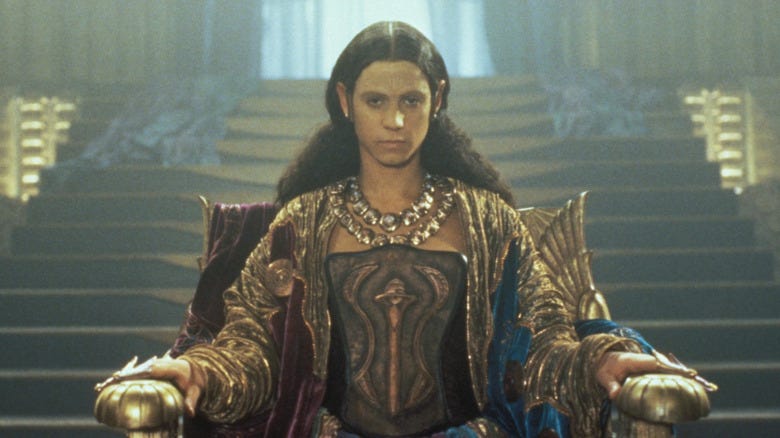
Aristocrats throughout history have trained their children to behave like this, and these ritual modes of behaviour are designed to project an image of being on a higher level to other biologically-identical members of the species. Cult leaders do a similar thing. Take, for example, a guru like Osho, who was very good at creating an image of transcendent holiness - of occupying a higher spiritual plane - a practice that involves a lot of acting skill. Osho would take long pauses while holding a person in a stare, and then open his hands slowly like a rising sun and speak with a hypnotic tone of voice that made everything he said seem deeply reasonable and profound.
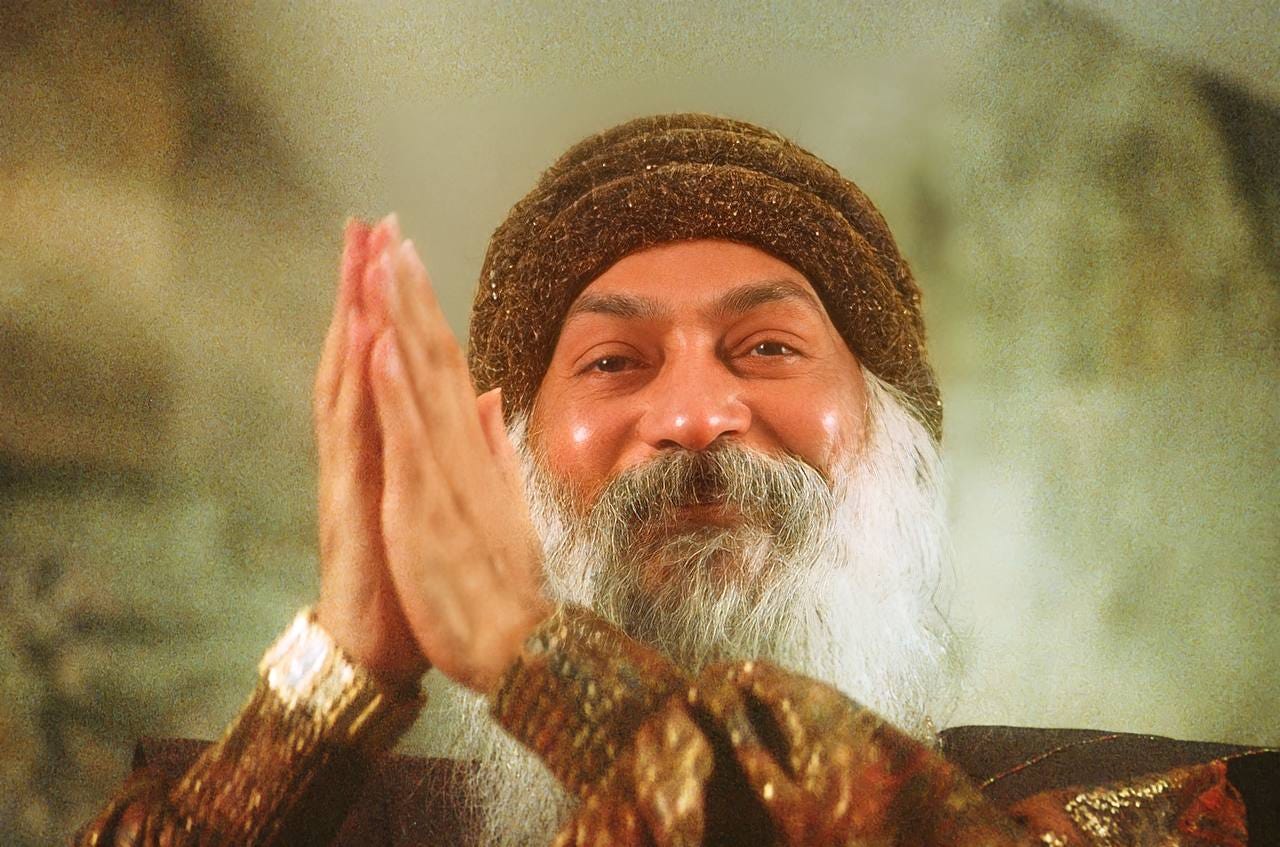
These are techniques for becoming a living symbol - simultaneously real yet unreal - but Craig Wright is not going to pull this off. Craig is a mathematician who makes dad jokes about his PowerPoint slides.
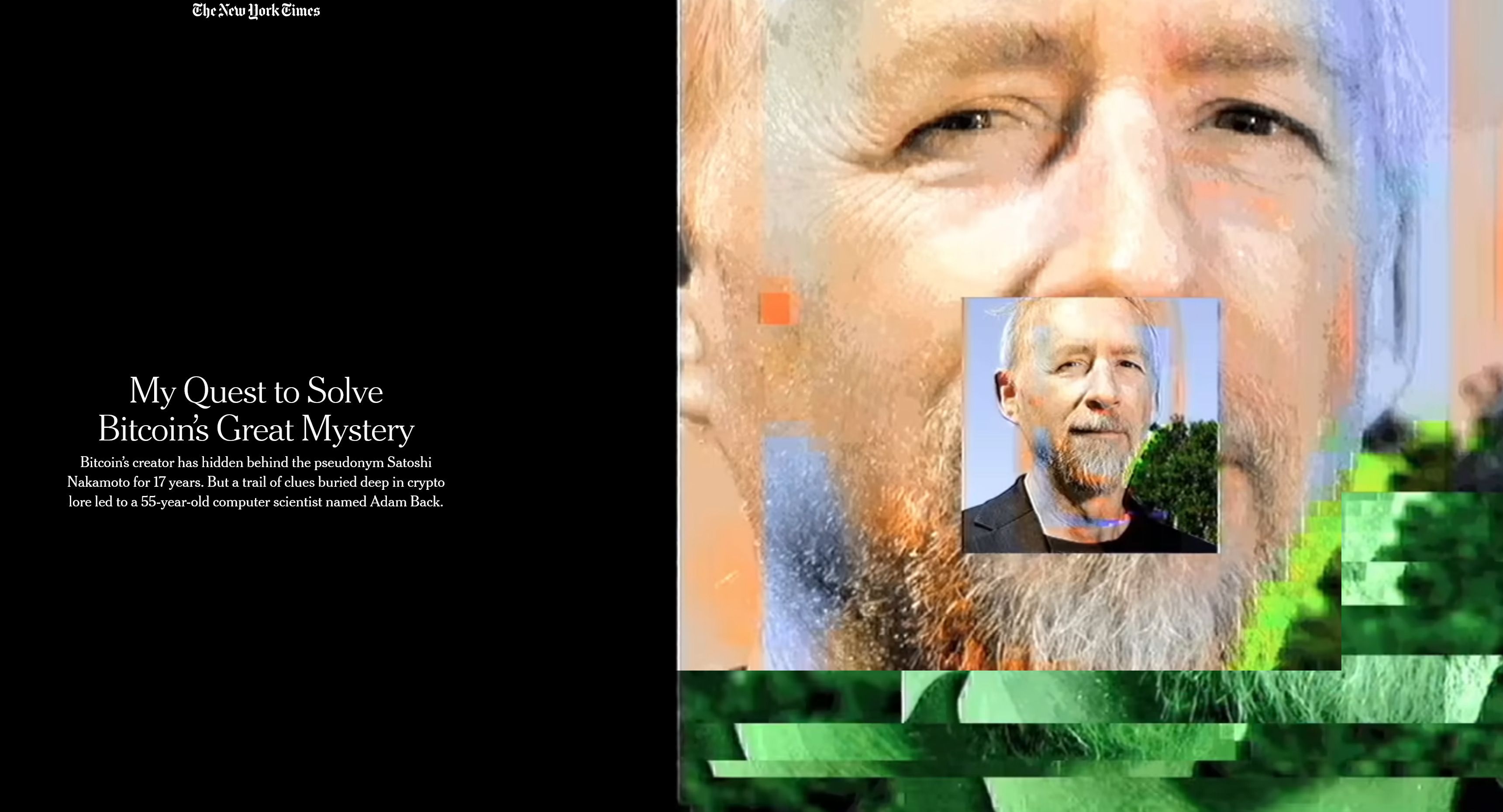
I don’t say this to be mean, or to pick on Craig in particular. The majority of candidates for being Satoshi are cryptography nerds, and the chances of any of them being able to maintain a sense of transcendent holiness is very low. For example, last week the New York Times published an investigative article claiming that the British cryptographer Adam Back is Satoshi. Adam has denied the claim, which is good for the mythological storyline, because if he actually said ‘oh yes, it is me’, people would throw up their hands in disbelief, and quickly move on in search of the next candidate. The ritual practice is to speculate on an answer that nobody truly wants answered.
But why is this the case? Why is the the unanswered question so symbolically important within Bitcoin culture?
Here’s why. The eternal mystery of Satoshi is one of five pillars that hold up the Bitcoin token. I will unpack this statement in the article that follows, but at their core, Bitcoin tokens are hollow, and that hollowness needs to be padded out in order to give them a feeling of substance. The myth of Satoshi is one of those padders.
Step back for a moment, and clear your mind of all the rhetoric, imagery, news reports and claims made about Bitcoin by supporters, detractors, politicians, tech bros, journalists or anyone. Travel back in time to a world where it doesn’t yet exist, and watch how it begins.
In the beginning, some unknown person simply digitally wrote out the number 50. This number was the first known instance of ‘bitcoins’.
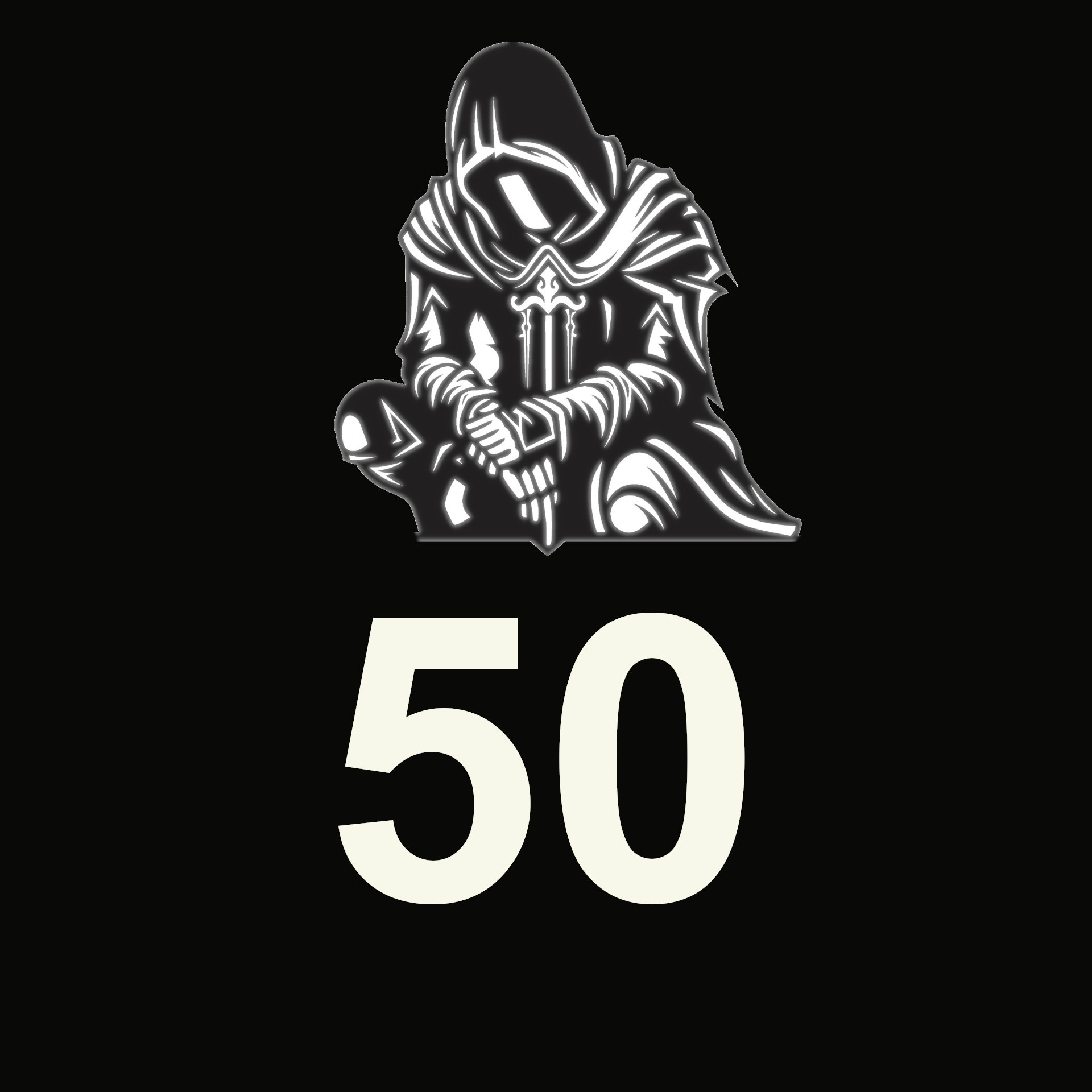
The number was written out in the context of a particular architecture, and that architecture had very interesting characteristics. Firstly, the system was designed to have an arbitrary limit on how many times numbers like this could be written out. This created a sense of scarcity of numbers, like there was a finite supply of them that could ever be written into existence.
Secondly, the system allowed for the numbers to be moved around. The 50 could be split into two 25s which could be sent to different destinations.
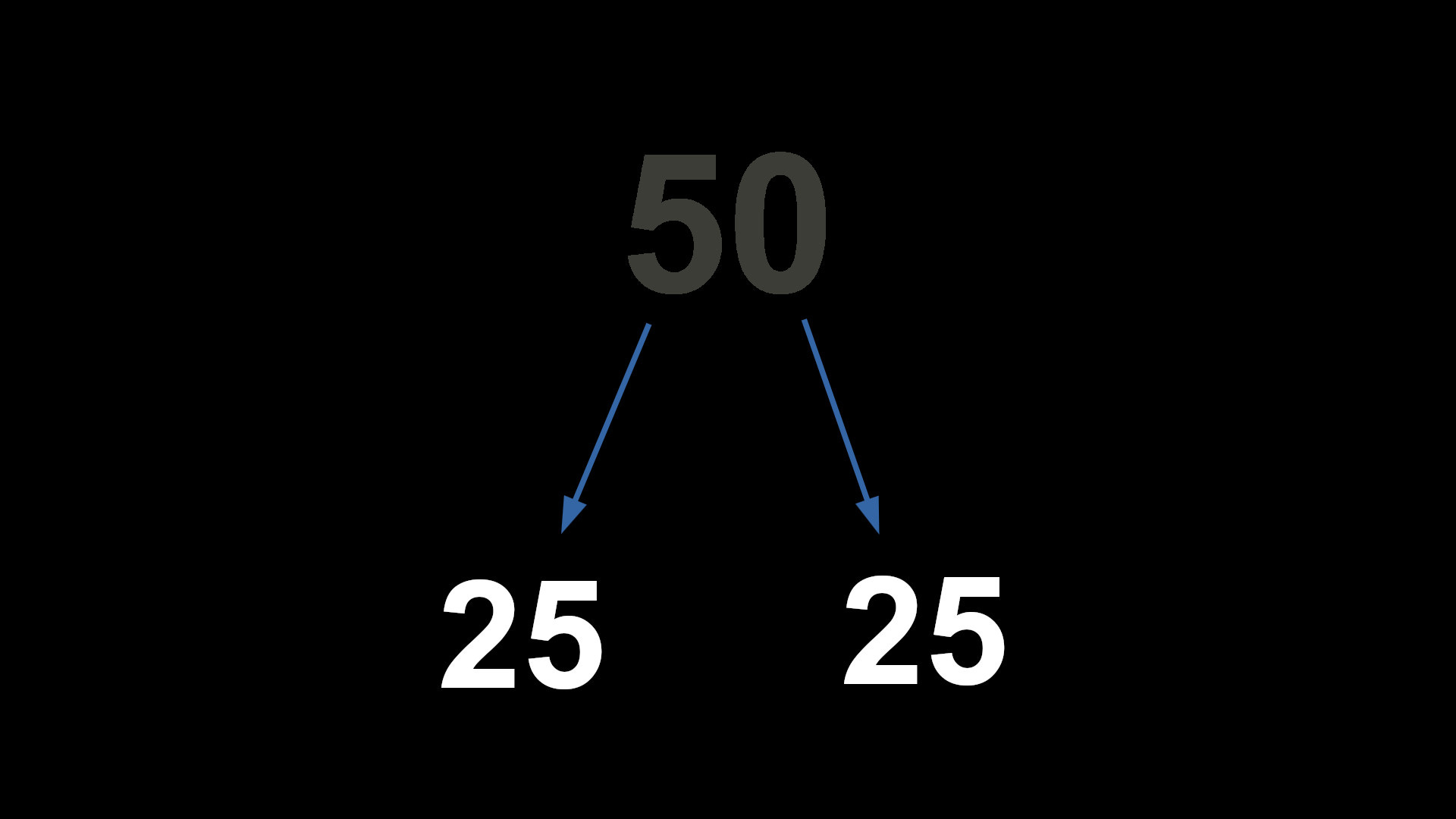
Thirdly, the most ingenious element of the system was that it had a mechanism for linking those two acts. People got to write out new numbers as a reward to themselves for recording the movement of the old numbers.
Fourthly, the system also had a mechanism for managing the incentives that emerged from that. To prevent the system from being flooded by new acts of writing out new numbers, it made it deliberately hard to write them out, and the difficulty would increase as more people tried. This means energy had to be used.
These four elements make up the deep ontological core of the Bitcoin system. If we push away all the jargon around it, ‘bitcoins’ are just limited edition, movable numbers written out after energy is expended.
Once you start to see this, though, the obvious question to ask is, what exactly are these movable numbers? Are they just numbers?
To answer this question, it’s worth meditating upon a physical metaphor for the same process. Imagine hiking up Mount Everest and then etching out the number 50 on a small piece of flat rock when you’re on the summit. This is a number written out after energy is expended. Now imagine hiking down with that and showing people. Here is a piece of rock with the number 50 written on it. Let’s split it into two portions of 25.
Are these just numbers, or are they something else?
The act of writing something down creates a series of etched marks, but the context in which this is done makes a very big difference. Imagine a child scrawling out letters to create the sentence ‘I will build a skyscraper’. Those words are an imaginative leap for the kid, but in the end they are just words. Now imagine a construction company writing out similar words on a legal contract. These are now a speech act, a binding promise which will be recognised by a legal authority. If the company fails to do what they’ve promised, they cannot say to a judge, ‘but your honour, these were just words’.
No, those words have been activated by the legal system, and imbued with real power.
Similarly, if your bank had a massive data hack, and found that it had lost all the records of balances in its customer accounts, it couldn’t go to the judge and say ‘but your honour, those were just numbers’. No, those were not just numbers. Those were legally recognised credit instruments - IOUs - etched into accounts, with active legal power.
In fact, the entire US dollar system is a vast, multi-layered system of credit activated under systems of law and military might. The US dollar, and the national currencies beneath it, is not mere numbers, and it doesn’t need mysticism to work. It’s a giant vortex, like a globe-spanning economic tornado, and like any tornado, it doesn’t care whether you feel it to be real or not. It is real, and any attempt to imagine otherwise is just fantasy.
The numbers written out in the Bitcoin system, however, are not credit instruments recognised under systems of law, and they do not form an economic tornado. They literally are just numbers - so in their pure form - they are very fragile. Once you see this, it becomes apparent why mysticism is so important within Bitcoin. It is needed in order to build up a cult around the numbers, and to make them feel more solid than they really are.
This process has been highly successful, so let’s look at the five key pillars of this cult. Each pillar is a cultural adornment used to give the numbers more substance or body.
Pillar 1: Mathematical beauty

The 2008 Bitcoin white paper, where the original plan for the system was sketched out, is short, neat and remarkably simple, but you sense that the simplicity has been wrenched out of decades of complex work. It’s a recipe that brings together different components, forged in different contexts, and combines them into a striking new fusion.
If you’re a mathematically-minded person, this design has beauty in itself. It is incredibly elegant.
So, for a certain small sub-set of people - maths nerds, engineers, physics students - this elegance was enough to imbue the early Bitcoin system with a kind of mysticism. Maths does have a history of being associated with mystical thought: for example, Pythagoras and his followers saw certain numbers and geometric arrangements as being spiritually important. There is sacred geometry.
More generally, though, maths is unique in treating numbers as nouns - object-like entities with some kind of thing-ness in themselves. A pure mathematician who does pure abstract maths, exists in a world where numbers don’t reference external things. When they say ‘2 + 3 = 5’, they are speaking as if 2 and 3 each had a self-contained life-force that was combining to create a new being called 5. Numbers are seen as actors, or - at the very least - objects that can be acted upon.
So, one early constituency that was drawn towards Bitcoin were these mathematical mystics who loved numbers for their own sake. They saw in the Bitcoin system a beautiful playground, a way to create numbers as defined objects and make them move around and interact with each other. The system’s consensus mechanism could overcome chaos, and sync into unity a harmonious single record of action between numbers, like a mystic rose.
Pillar 2: The Faceless Face
To a mathematical mystic, it doesn’t matter that much whether or not the numbers are connected to anything in the real world, but for the average person it does matter.
When most people look at the number 50 standing by itself, they don’t see some kind of actor in a mathematical universe. They just see 50, and then think ‘what is this?’ In the practical real world, numbers are supposed to point to something. 50 years. 50 kilometres. Room number 50 in the hotel. 50 people at the party.
By itself, 50 is just an empty signifier. It’s an adjective without a noun. It is hollow.
So, in the early days, Bitcoin’s pristine mathematical world seemed detached from anything of substance on the real planet Earth. A person encountering the system could see the numbers being created, and moving around, but would sense that they referenced nothing in particular, or alternatively, that they referenced something we could not fully grasp. They seemed to point to an abstract empty centre.
The term ‘empty centre’ draws in the history of theology, which is an old academic discipline that builds itself around some unprovable article of faith that cannot be experienced by the senses. Christians, for example, speak about a God that cannot be directly seen, heard, felt, tasted or smelled, but nevertheless create an entire culture around this unknowable centre.
I know this, because I was brought up as a Christian. For Christians, trying to push the your mind to see God is like trying to see the horizon in a black hole. You are told that it exists, but you’d never presume to actually fully grasp it.

Some religious groups even prohibit trying to fully grasp god. Jewish mystics, for example, write the name of God as YHWH, and refuse to pronounce it. The letters are seen as an abbreviation, because the true nature of the deity cannot be held in a word. You’re supposed to just leave it as an article of faith. In fact, mystics within many religions will try to draw close to the empty centre through ecstatic dance or meditation, but will only ever hope to catch tangential moments of union with it.
There’s a peculiar bodily sensation associated with this. People within religions are immersed in a culture that constantly references something that can never been fully touched. You’re always on the edge of grasping it, and can take part in discussions about it that seem scholarly, but the empty centre itself always remains just out of reach.
Within religions, these discussions can be used to give form to the empty centre - the act of talking about an unknowable entity can make it appear more concrete - but the average person still wants some imagery for their mind to hold onto. So, when I was in church as a little boy, we would paste an image over the discussion. When asked to imagine ‘God’, we’d think of an old bearded guy in the sky.
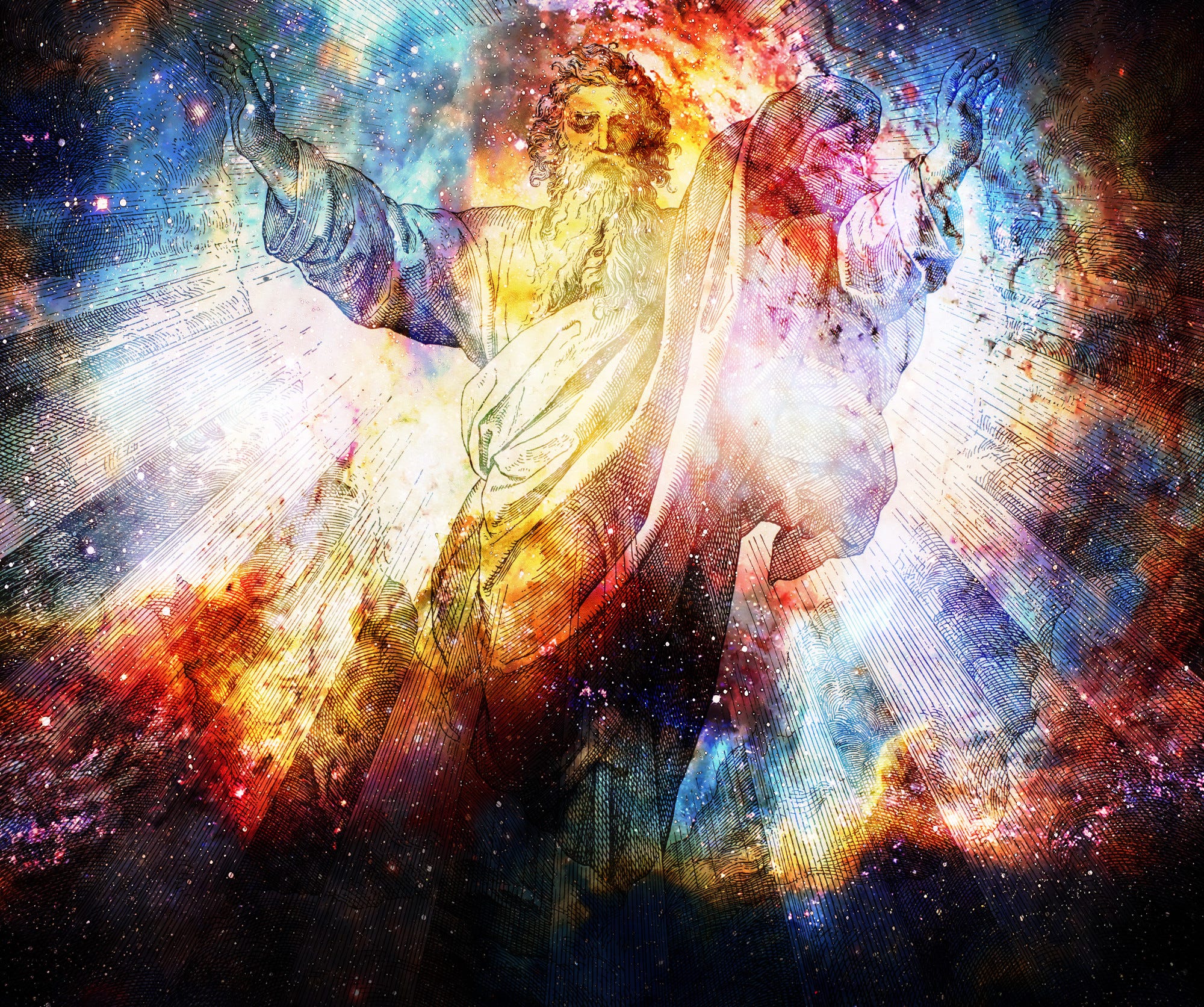
Nobody presumed that this image was accurate. It was a metaphoric stand-in. You were not supposed to try to build an accurate picture, or to be so presumptuous as to imagine you could hold it in your puny little mind.
This gets us a little closer to understanding the ritualistic use of the question Who is Satoshi? within Bitcoin culture. Satoshi functions as a face put over the empty centre of Bitcoin, but the face is not supposed to be accurate. It is supposed to give some symbolic form to the empty centre of the system.
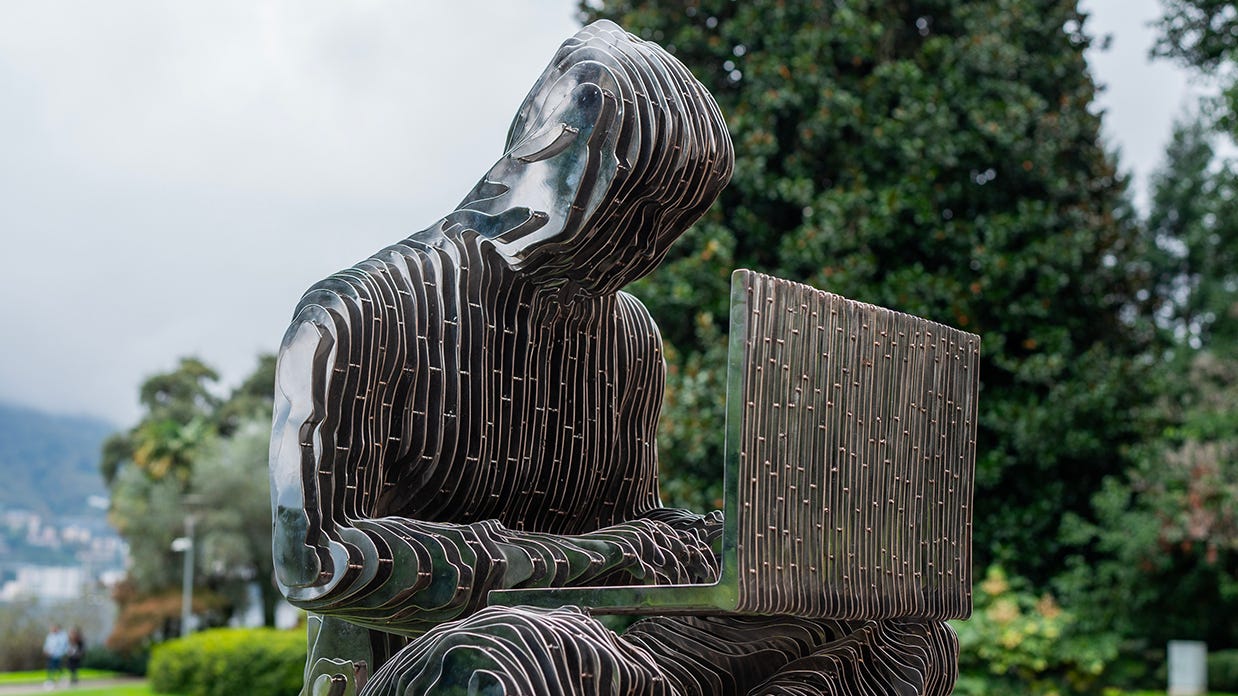
Every popular representation of Satoshi always features a figure without a specific face, shadowed by hoods or masks. This concrete-yet-ephemeral being stands in as a totem for the otherwise abstract numbers. It has historically also been used to give the numbers a little bit of mystery and zing, like the number 50 with a crackle of spark rippling through it. It can be used to germinate a wider sense of intrigue.
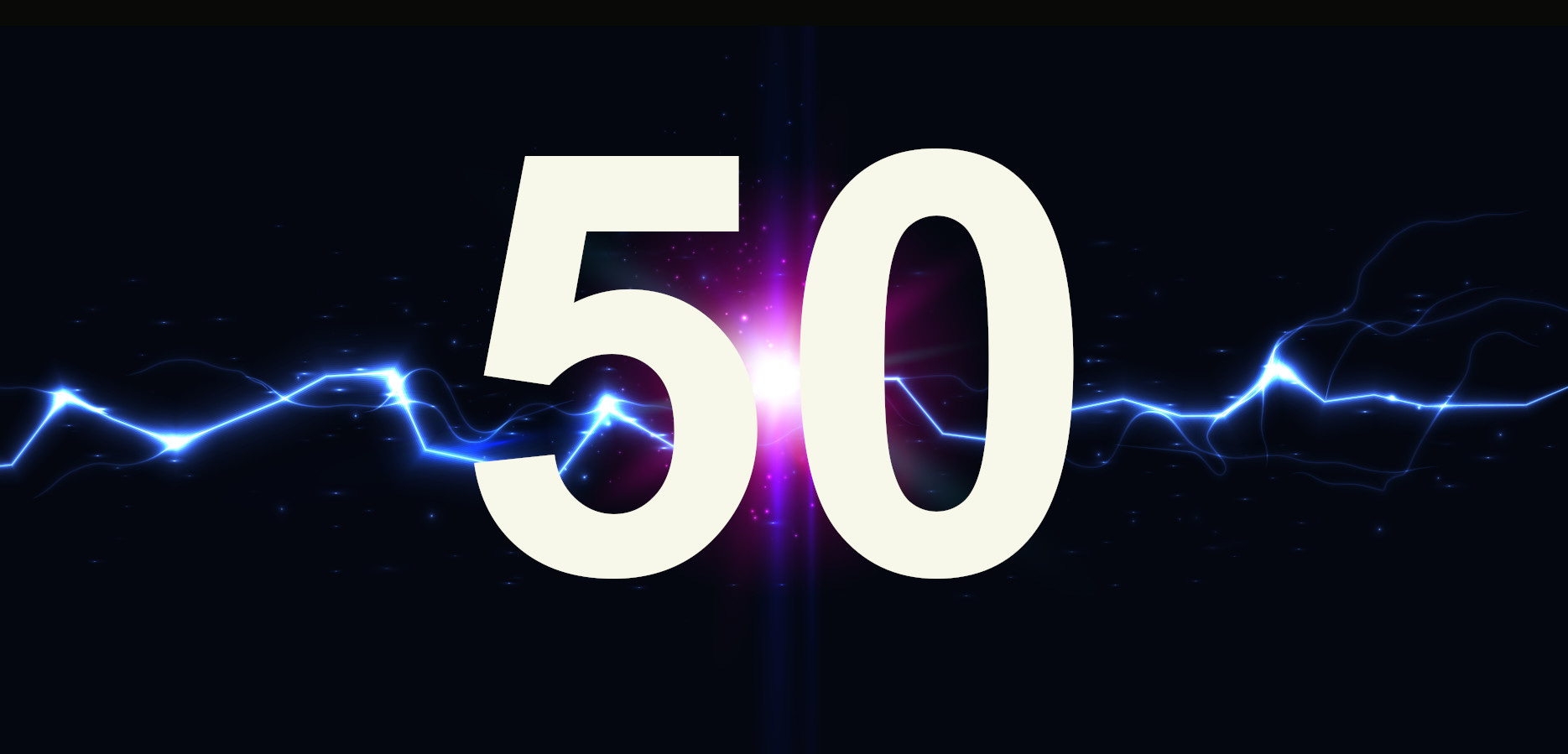
The importance of the shrouded Satoshi figure cannot be overstated, because the little crackle of mystique behind the number 50 draws the mind of an adherent to the question Who is Satoshi, rather than the much more straightforward question of what is this number?
Back in 2018, the reason I was at Satoshi’s Vision was to ask that latter question, and it wasn’t a welcome question. A passionate community had built around the numbers, debating new methods to secure them, or to build more user-friendly apps for moving them around, and they believed the question of what are these to be irrelevant, something to be brushed aside with annoyance. Nowadays we now have hundreds of thousands of pages written about all the cryptography around them, and countless Youtube videos giving their ten cents about what you should pay for them. Waves of pseudo-scientific analysis are written about these numbers every day, but the dark secret at the core of Bitcoin is that nobody truly knows what the numbers are.
This, though, takes us to the third pillar. Words.
Pillar 3: Just Words
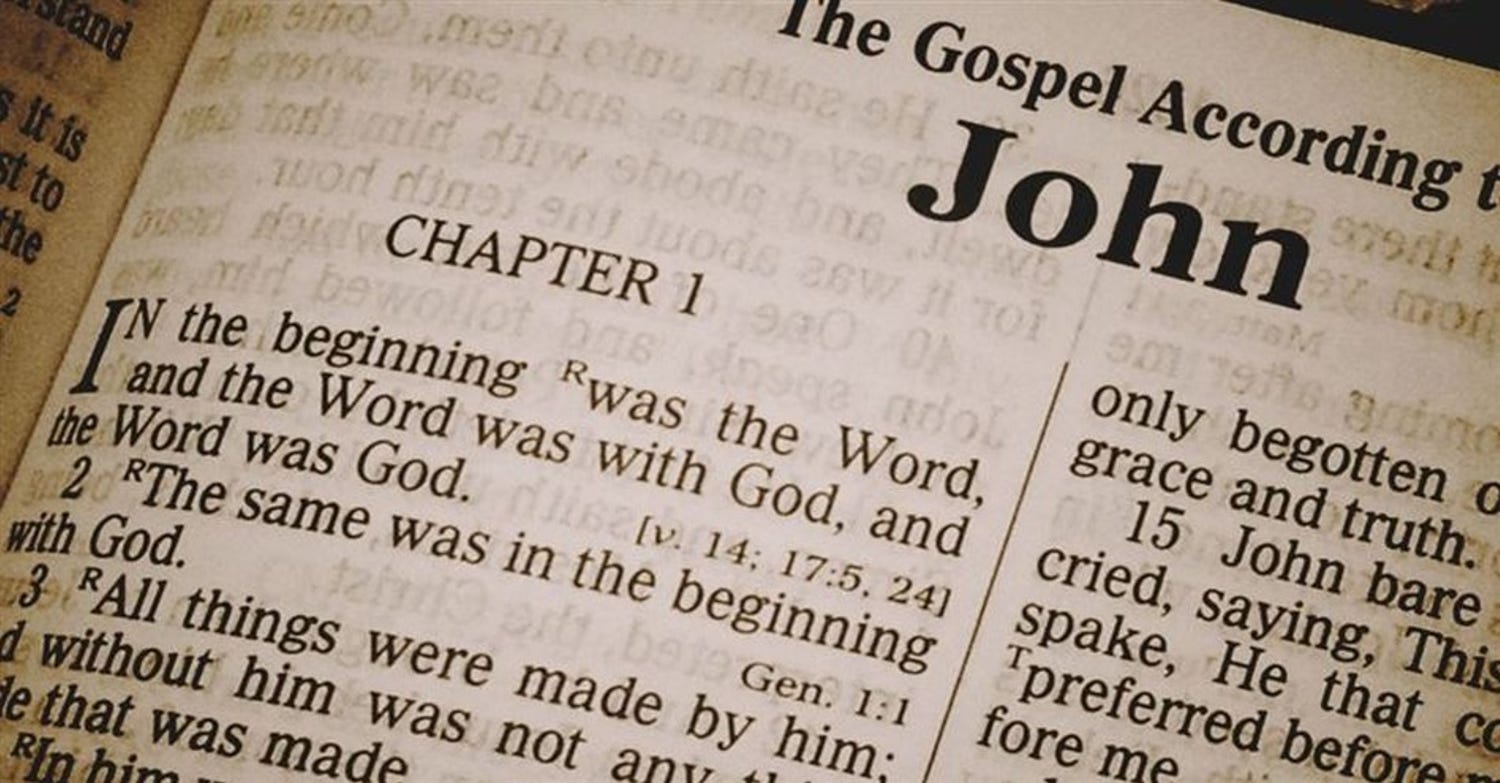
In the beginning was the Word, and the Word was with God, and the Word was God
This is the opening line of the Gospel of John in the Christian Bible. It references Genesis, in which God speaks the world into existence.
This is but one of many religious texts concerning the power of words to create or shape reality. For example, the ancient Aramaic phrase Abracadabra reputedly means I create as I speak (or, I create like the word). In Taoism the act of naming is seen to create objects, breaking them off from some otherwise infinite whole that cannot be named.
The moral of the story here is that many ancients across the world sensed that words have power beyond mere description. They can be used to charge stuff up and make thing happen. They can have a kind of life of their own.
With this in mind, let’s look at the opening words of the Bitcoin white paper.
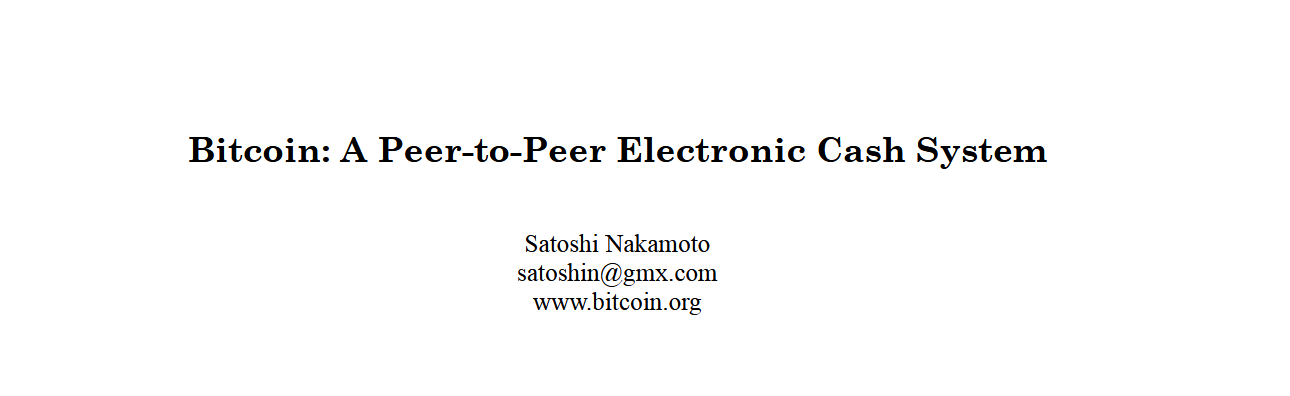
There are two very important acts of naming here. The first is the word ‘coin’, found within ‘Bitcoin’. The second is ‘cash’, found in the subtitle. Both are used to evoke the broader concept of money.
What’s fascinating about this is that the paper goes on to lay out a system for writing out numbers and moving them around in chains, but Satoshi just calls these ‘coins’.
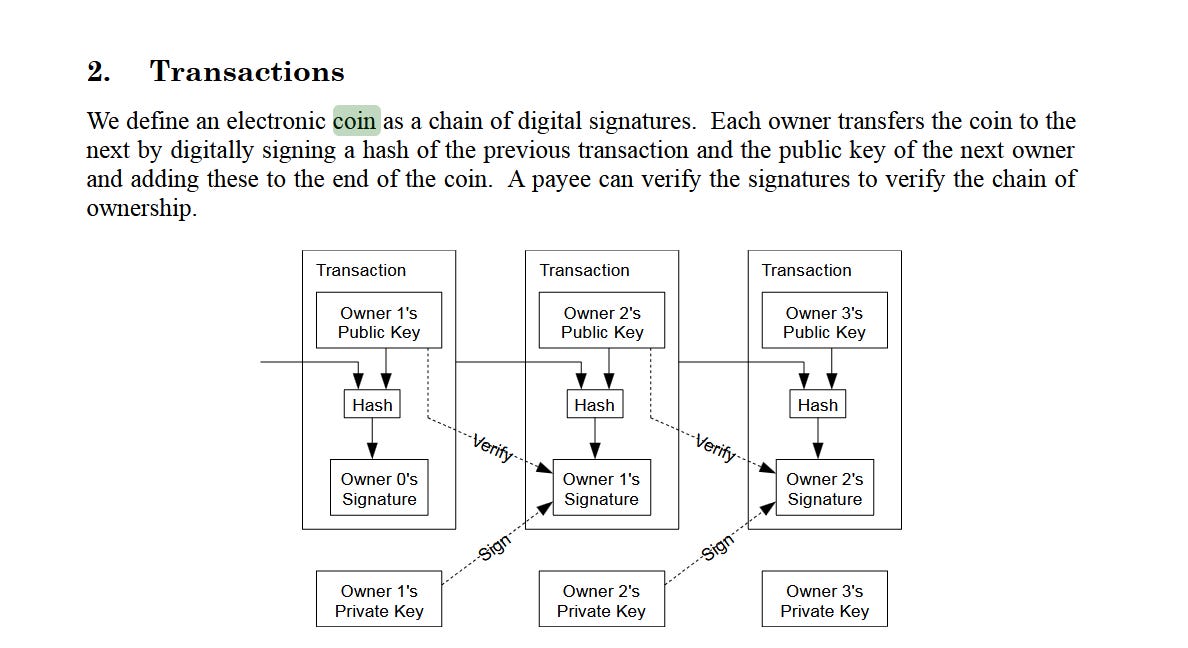
Forget the technical jargon above. What Satoshi is talking about is that process of taking a 50, and then passing it on to another, and so on. This is a ‘coin’.
So, from the very outset, the Bitcoin system has always had a separate linguistic layer used to give metaphoric substance to the numbers.
The next act of naming was the term ‘token’. It was not found in the original paper, but it came into widespread usage in the years after. In the pre-digital world, a token would be imagined as a small symbolic object. In its most primal form, it’s a blank token like this (to see the other forms, see The Six Tokens).

To create an image of a digital ‘token’ in your mind, you have to take that original ‘50’ that was written out in the Bitcoin system, and imagine it as 50 units of 1.
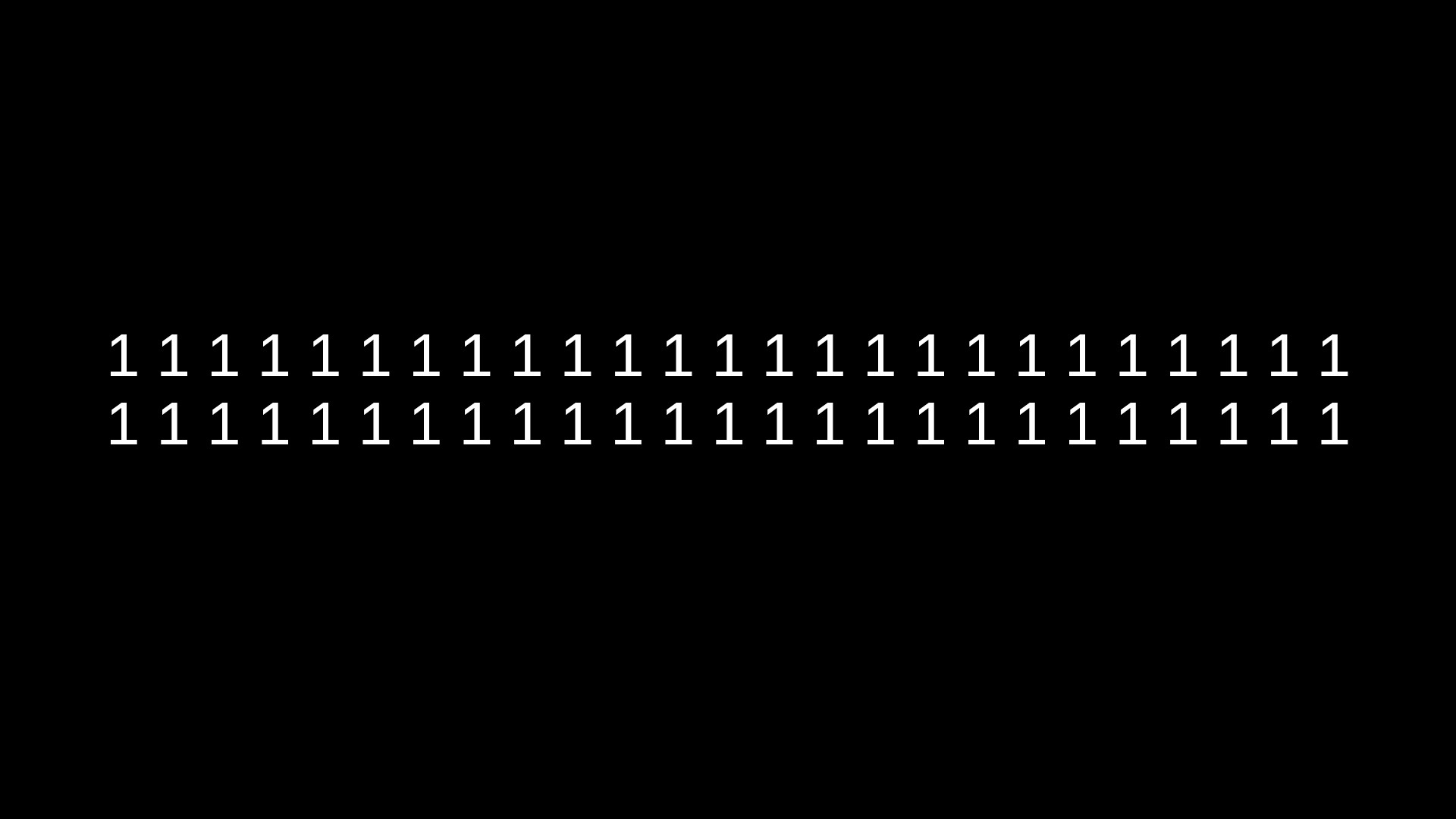
You then zoom in on a 1 and imagine it as a discrete object.
This is a Bitcoin Token. I have 1 of them.
Of course, what you actually have is the mathematical object called ‘1’, but by affixing that term ‘token’ to it, you now turn it into an adjective, freeing it from its previous life as a noun. It now refers to something beyond itself. 1 token, rather than just 1.
This is a simple yet profoundly effective linguistic move. It makes the numbers seem like they are referring to objects.
The next linguistic phase was to build an entire vocabulary of monetary language around these ‘tokens’ or ‘coins’. This was a purely cultural practice. The growing Bitcoin community introduced words like ‘crypto-currency’, ‘digital gold’ and so on. Equally important was the addition of a little acronym - “BTC” - after the numbers. 1 BTC. This mimicked the cultural conventions around monetary systems.
These are just linguistic operations separate from the system itself. They are used to generate mental imagery around the numbers, adorning them as it were.
Here’s a thought experiment. Try to imagine yourself as a bitcoin, and imagine yourself moving around the system. In your own terms, you are a number within a mathematical universe that places rules for how you can move and interact with others. The linguistic layer is detached from you. It’s like something you hear muffled in the distance, the clamouring chatter of some community of people beyond the mathematical world. They speak about you as being something other than a number. They say, “That 1 is a token. It is money. It is digital gold.”
Pillar 4: Golden JPEGS, and energy
Physically, Bitcoin is colourless and textureless binary code etched onto computer drives around the world, so it has no real sensory information that a human can detect. We can, however, place stand-in sensory information over it. Here, for example, is a PNG file of something totally unrelated to Bitcoin, which is used to visually represent it.

While words like ‘coin’ can generate metaphoric imagery in the mind of a listener, a picture like this simply forces an image into the mind of a watcher.
Here is a bitcoin. It is literally a golden coin with digital circuitry on it.
Effectively it is a logo, but one that actually purports to show the ‘coin’. The Internet now hosts millions of these JPEGs, PNGs and GIF files, and by now a big percentage of the world’s population has seen this visual representation. It’s the primary image of ‘Bitcoin’ that comes up from a web search, and almost every journalist uses it when writing an article about the subject.
Notice of course that the image is rendered in a gold colour. This is a not-so-subtle attempt to create a metaphor of ‘digital gold’.
There is a lot to say about gold, but the first thing I’d stress is that you need to make a distinction between the actual history and cultural life of gold - which is very interesting - and the symbolic usage of the mythology of gold in present-day politics (which is also very interesting).
Those are two different things, but when it comes to Bitcoin, we’re talking about the latter phenomenon. The vast majority of people know absolutely nothing about the actual history of gold and how it functioned, but they do harbour a mental image of gold as a kind of platonic ideal for how money is ‘supposed to be’, even though none of them have ever experienced as such.
More specifically, this phenomenon is very important within conservative libertarian culture. If you’d like to explore why, check out my piece The Archipelago: Why your inner libertarian dreams of digital gold. In that piece, I explain how gold mythology functions within the conservative imagination to promote the (false) idea that economies are just collections of sovereign individuals engaging in voluntary trade.
That’s quite a complex topic, so for now, let’s just accept that there’s a conservative political valence to the use of gold imagery in Bitcoin.
That said, this imagery was also chosen because there weren’t many other options. As mentioned earlier, the numbers found in the actual monetary system - such as those you might see on your bank balance - are written out in the context of a huge credit vortex that gives them incredible coercive power. The numbers in your bank account can literally make people do things, and its not because they’re ‘gold’. It’s because they are activated and operate within a much bigger institutional system that everyone is forced to use whether they want to or not.
The numbers written out in Bitcoin, by contrast, are just numbers. And, while the various aspects of mythology - such as the figure of Satoshi and the words - go some way in giving them form, they still feel pretty flimsy to many people. They are not given form by a globe-spanning credit structure, so the best chance they have of mimicking ‘money’ is to associate themselves with that folk imagination of money-as-gold.
Nowadays of course, actual gold does not function as money - it is bought and sold for money - but it does have a huge and resilient market, much of which is based upon a historic fetish for the colour and texture of the polished metal. In fact, actually useful metals tend to get called ‘base metals’ and are less culturally valued, while ‘precious’ metals are associated with vanity, status and religious ritual.
So, the community around Bitcoin settled on imagery of textured gold, trying to evoke the idea of a ‘precious’ digital object.
The final piece of this cultural move, however, calls back the architecture of the system. Bitcoins are limited edition numbers written out after energy is expended.
This provides a neat real-world similarity to gold extraction, which also requires energy. The final masterstroke was again linguistic. The community began to call the process of writing out new numbers ‘mining’, and the metaphor was complete. You ‘mine’ these numbers out of some kind of mathematical ore, and they come out looking like golden digital medallions.
Pillar 5: The Story of V
So, let’s look at what the first four pillars leave us with. Mystical gold-branded limited edition movable numbers with the linguistic conventions of a monetary system pasted over them.
So much of this ‘padding’ around the numbers is testament to the human capacity for storytelling. Bitcoin is a fascinating case study in this ancient art-form. So much storytelling work has been done to create a thick culture around an otherwise thin, or hollow, foundation.
The storytelling effort involves different specialist classes of storytellers building out different elements of the mythology. There are the mathematical mystics, and the cultists interpreting the word of Satoshi. There are crypto-economists using technocratic monetary language to create a story about it as just a rational economic phenomenon. There are the golden myth-makers who speak about it as my precious, and they dovetail with the cult of Bitcoin energy usage, whose stories pretty much amount to if we use so much energy to get it, it must mean it is worth it.
There is one very important early story-telling community that we haven’t covered yet. This was the one that tried to make out that Bitcoin was a rebellion against the system. These storytellers pasted a particular mask over Satoshi. It was that mask from the film V for Vendetta.
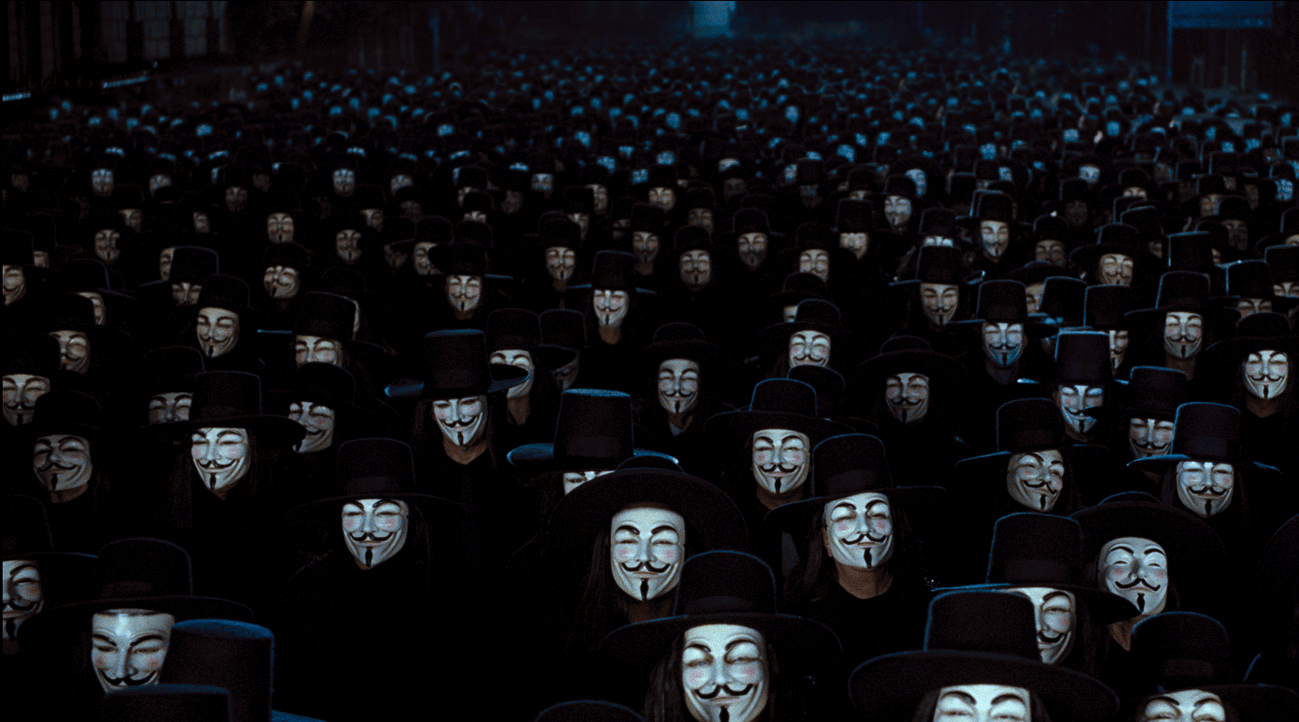
In that film, a masked hero becomes a symbol of resistance to an oppressive fascist regime that attacks immigrants, minorities, gay people and other ‘undesirables’. The mask comes to represent a heroic everyman, not so much a cult leader as a Robin Hood character, fighting from the bottom-up on behalf of the underdog. V is an anonymous vigilante who stands for everyone.
We find a similar phenomenon with the figure of Satoshi. While some created an image of Satoshi as a mystical guru, many others projected an image of a freedom-fighter. This created a story both mystical and rebellious, the kind of thing that could capture the minds of the young, and in particular those young men who felt trapped in a system that seemed to have declining opportunities. In those early years we saw something like a millenarian movement form, one that imagined a revolution, and a sweeping away of an old order.
Cracks in the foundation
Over time, the mythology of Bitcoin has found itself under strain. The story of a mystical Vendetta token on a mission to destroy the corrupt fiat system was exhilarating for many, but as the years passed by, the story started to crack.
You see, ‘fiat currency’ is the basis of the entire capitalist system, and it’s extraordinarily powerful. If you underestimate its power, it will eat your rebellion alive, and no amount of V masks is ever going to change that.
So let’s look at what actually happened. The branded limited edition numbers of Bitcoin were swallowed by the dollar system and turned into tradeable collectibles with a dollar price.
This means the emergent new generations of Bitcoiners started emphasising a different story, one in which the token was a dollar-priced asset rather than a dollar-killer.
The Bitcoin priesthood - all the influencers and industry leaders around it - have for years tried to reconcile these fundamentally incompatible stories. They use all sorts of linguistic and conceptual contortions to try to make out that a dollar-priced asset can indeed take down the US dollar. Some of their moves can indeed be seductive, and if you’d like to see how they work, see my piece The Art of Crypto Kayfabe.

In 2018, however, this strain between the stories actually led to that very Satoshi’s Vision gathering I found myself in. That event was designed to bring together the Bitcoin Cash community. They believed that the mainstream Bitcoin community had lost its way, and forgotten that Satoshi wanted digital cash for commerce, not digital gold for dollar speculation. They split away from the main Bitcoin system and forked their own system into being.
In the end, all of this was totally performative, because the Bitcoin Cash system had exactly the same basic structure as the Bitcoin system, so it also got eaten and became just another dollar-priced token, trading at a discount to the main one.
Looking back, this debate seems kinda quaint, because in years that followed the 2018 squabbles, the Bitcoin scene was taken over by ‘degen’ and HODL culture. Degen stands for “degenerate gambler” while HODL was a cult of holding onto the tokens at all costs. Crypto Twitter became inundated with swarms of lazer-eyed HODLers shaming anyone who doubted the act of speculating on the tokens.
For outsiders this new culture felt very toxic, but it had an internal logic. The jeering bands of nihilistic speculators were performing. If you actually met them at a dinner, they might be polite normal people, but online they indulged in a group fantasy, a bit like a massive multi-player online game. In their imagination, the entire world was rigged against them, but rather than calling out the injustice of that, the idea was to lean into it and play the game harder and dirtier than anyone else.
So, while there have been Bitcoin promoters like my friend Alex Gladstein who have tried to push a progressive story about Bitcoin helping the poor and the oppressed, the degen wing of HODL culture jeers at such do-good-ism. They still hold onto some vestige of that V for Vendetta rebellion idea, but now see buying Bitcoin as a way of saying ‘fuck you’ to both the powers-that-be but also to any well-meaning person who cares about climate change, equality or veganism. This turns up in the pictures of steaks and Lamborghinis deliberately posted by the community to provoke outrage. Here’s a representative example, from Bitcoin evangelist Saifedean Ammous.

This new twist in the culture caught the eye of populist politicians, who fed upon that same kind of nihilistic charge (for more on this, see Making Capitalism Bad Again). They formed an active alliance with the broader crypto industry, and began symbolically supporting it as a means to signal rejection of the mainstream.
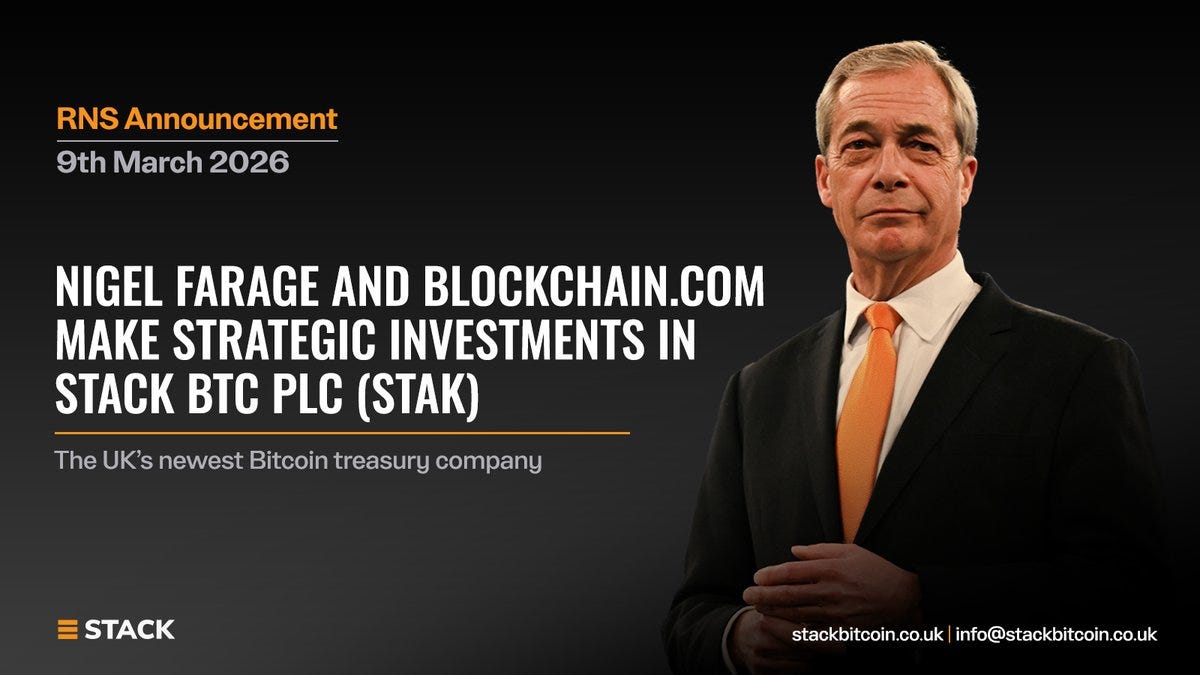
For a long time now, Bitcoin culture has been carnivalesque - a kind of clanging fantasy procession making its way through the Internet - but what’s changed over time is how politicians have exploited it. They now pretend to join the procession, and this is how we’ve ended up with the former UK conservative chancellor Kwasi Kwarteng launching his own Bitcoin treasury company, and why - last month - Nigel Farage invested into it.
Bitcoin is perhaps one of the greatest acts of storytelling of all time. An entire cult built around an empty centre, a black hole, which has come to suck in mainstream business execs, venture capitalists and politicians, none of whom are able to describe what it is. That number 50, so hollow and meek, turned into mystical objects with a giant, and increasingly corrupt, industry around them, with the Trump sons cashing in and Joe Rogan and a thousand other podcasters blah blahing on about it.
Amazing.
In the background, a colossal amount of real world energy is burned to keep this procession going. Look out your window, though, and ask yourself a simple question: has this procession ever passed down my actual street?
Of course not. The procession is built around a pristine mathematical world that does not point to anything in your street. It points only to itself.
Excellent story, decoupling the numbers from the mysticism.
Perhaps BTC means Built To Confuse?
This is the clearest explanation of Bitcoin I've ever read. Great work and thank you.